



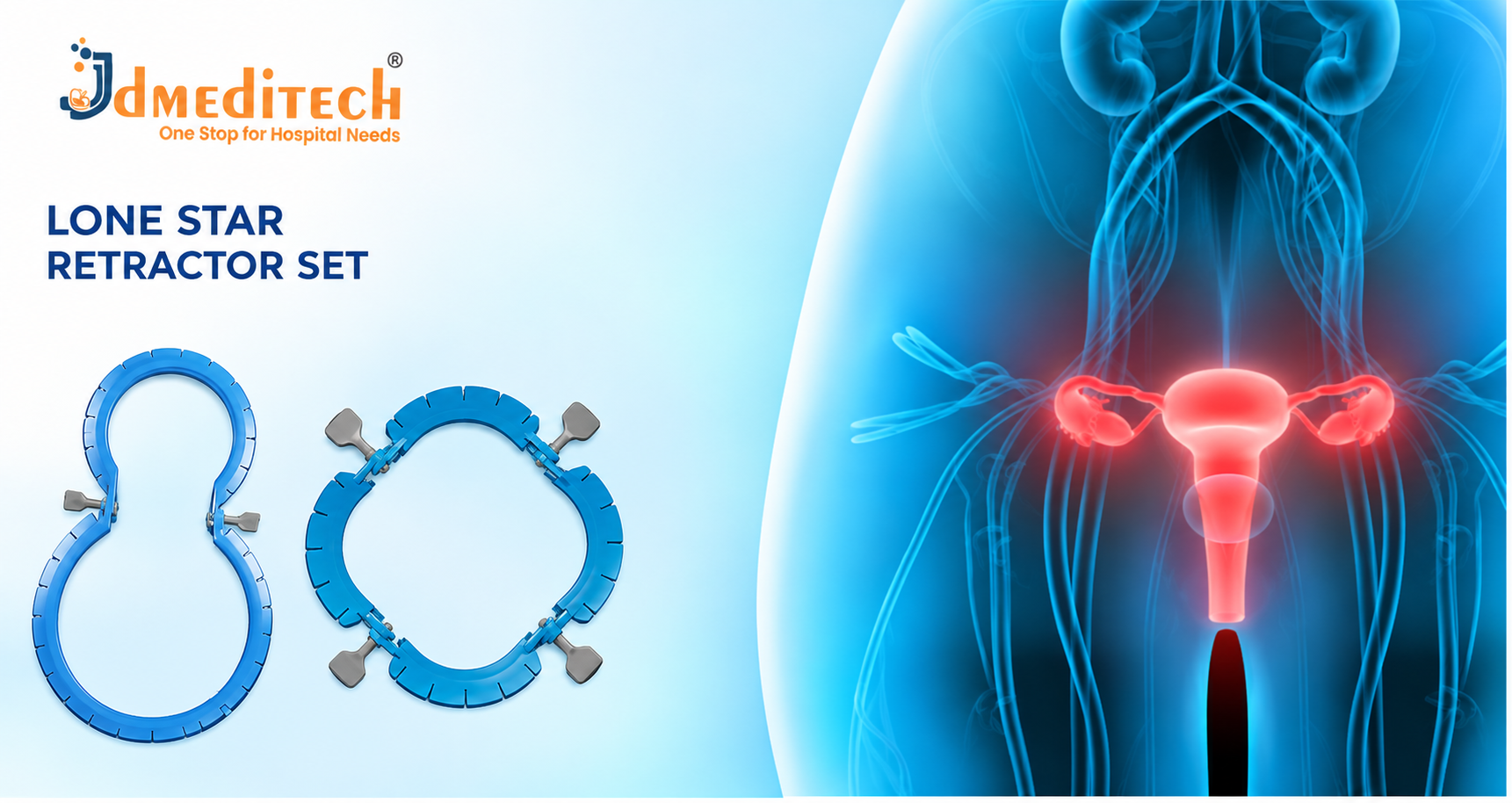
Lone Star Retractor Set – Features, Components, Uses and Benefits
A Lone Star Retractor Set is a self-retaining surgical retraction system used to support exposure during selected surgical procedures. Its frame-based design allows trained surgeons to maintain controlled tissue retraction with compatible accessories.
Furthermore, self-retaining retraction systems can reduce the need for continuous manual holding of conventional retractors. As a result, the surgical team may gain more flexibility when managing the operative field.
JDMeditech supplies surgical instruments and medical equipment for hospitals, surgical centers and medical distributors. Additionally, customers can contact our team for available retractor configurations, technical specifications and quotation inquiries.
What Is a Lone Star Retractor Set?
A Lone Star-style retractor system uses a supporting frame with compatible tissue-retraction accessories.
For example, a surgeon may position the frame around a selected operative site and use suitable elastic stays or hooks to maintain tissue exposure.
Additionally, different frame shapes can accommodate different anatomical areas.
However, exact components, intended uses and compatibility depend on the manufacturer and model.
What Is a Self-Retaining Surgical Retractor?
A self-retaining retractor helps maintain surgical exposure without requiring continuous manual holding.
Unlike a conventional handheld retractor, the system uses a supporting structure to maintain selected tissue positioning.
Furthermore, some designs allow surgeons to adjust retraction at several points around the operative field.
However, excessive tension can damage tissues. Therefore, trained clinicians must control the applied force carefully.
Importance of Surgical Retraction
Surgical retraction helps expose tissues and anatomical structures during operations.
For example, appropriate retraction can improve access to a selected surgical site.
Additionally, suitable instrument positioning may support the surgeon’s view of the operative field.
Therefore, choosing the correct retraction system is an important part of surgical planning.
Common Components of a Lone Star Retractor System
Depending on the selected configuration, a surgical retraction system may include:
- Self-Retaining Retractor Frame
- Ring-Shaped or Contoured Supporting Frame
- Compatible Elastic Stays
- Tissue Retraction Hooks
- Frame Attachment Points
- Optional Instrument Accessories
- Optional Storage or Instrument Tray
However, the image alone does not confirm that every accessory is included in the supplied package.
1. Self-Retaining Retractor Frame
The retractor frame provides the supporting structure for the retraction system.
For example, a ring-shaped frame may surround a selected operative area.
Furthermore, the frame supports compatible retraction accessories.
However, surgeons must select the correct frame size and shape for the intended application.
2. Ring-Shaped Retractor Frame
A ring-shaped frame provides multiple potential attachment positions around the surgical field.
Additionally, compatible stays may allow tissue retraction from different directions.
Therefore, this design can support selected procedures that require circumferential exposure.
3. Contoured Retractor Frame
Some self-retaining retractor systems use contoured frames for specific anatomical requirements.
For example, an oval or other shaped frame may suit a particular operative area.
However, available frame patterns depend on the product model.
4. Elastic Retraction Stays
Compatible elastic stays can connect tissue hooks to the supporting frame.
Furthermore, their elastic properties allow selected tissue positioning during surgical use.
However, stay dimensions, material and single-use status vary by manufacturer.
Therefore, hospitals must verify accessory compatibility before use.
5. Tissue Retraction Hooks
Specialized hooks may support selected tissue retraction tasks when used with a compatible system.
Additionally, different hook designs may suit different clinical applications.
However, inappropriate placement or excessive tension may cause tissue injury.
Therefore, qualified surgeons should use these accessories according to the manufacturer’s instructions.
6. Frame Attachment Points
Attachment points allow compatible retraction accessories to connect to the supporting frame.
For example, multiple positions may support different retraction directions.
Furthermore, surgeons can select appropriate positions according to the operative field.
7. Optional Instrument Accessories
Some configurations include additional compatible accessories.
For instance, a supplier may offer replacement stays or other system-specific components.
However, accessory availability depends on the manufacturer.
Therefore, buyers should request the official packing list.
Features of the Lone Star Retractor System
Depending on its design, a self-retaining surgical retractor may offer the following characteristics:
- Self-Retaining Frame Design
- Multiple Retraction Attachment Positions
- Different Frame Shapes
- Compatible Elastic Retraction Accessories
- Adjustable Retraction Direction
- Open Access to Selected Surgical Areas
- Different Available Frame Sizes
- Manufacturer-Specified Materials
- Reusable or Single-Use Components, As Labeled
- Procedure-Specific Configurations
However, customers should confirm the actual features and approved applications from the manufacturer’s documentation.
Clinical Applications of Self-Retaining Retractors
Surgeons use suitable retraction systems during selected procedures that require controlled tissue exposure.
- Selected Gynecological Procedures
- Selected Vaginal Surgical Procedures
- Selected Perineal Procedures
- Selected Anorectal Procedures
- Selected Urological Procedures
- Other Manufacturer-Approved Surgical Applications
However, not every retractor model is suitable for every listed procedure.
Application in Gynecology Surgery
Gynecological surgeons may use suitable self-retaining retractors during selected procedures.
For example, a compatible system may help maintain exposure of a vaginal operative field.
Additionally, multiple retraction points may support controlled access.
However, the surgeon must select the appropriate frame and accessories.
Application in Vaginal Surgery
Some vaginal surgical procedures require stable tissue exposure.
Furthermore, a suitable retractor system may help maintain the operative field during selected tasks.
However, the clinical team must avoid excessive tissue tension.
Application in Perineal Surgery
Selected perineal procedures may require controlled tissue retraction.
For instance, a suitable frame may support exposure around the operative area.
Additionally, compatible accessories may allow different retraction directions.
Therefore, surgeons should verify the system’s intended application.
Application in Anorectal Surgery
Some anorectal procedures use specialized self-retaining retraction systems.
Furthermore, appropriate exposure may support access to the selected surgical site.
However, the frame design and accessory selection must suit the procedure.
Application in Urological Surgery
Selected urological operations may require specialized tissue retraction.
For example, certain perineal or external genital procedures may use suitable retractor systems.
However, compatibility and intended use depend on the manufacturer and model.
How Does a Self-Retaining Retractor Work?
A self-retaining retractor uses a supporting frame to maintain selected tissue positioning.
First, the surgeon selects a suitable frame and compatible accessories.
Next, the clinical team establishes the required operative exposure according to the approved technique.
During surgery, the surgeon monitors tissue tension and adjusts retraction when necessary.
Afterward, the team removes and manages the instruments according to clinical protocols.
However, only trained surgical professionals should operate the system.
Importance of Controlled Tissue Retraction
Controlled retraction helps surgeons maintain access to selected tissues.
Furthermore, appropriate tension may reduce unnecessary pressure on surrounding structures.
However, excessive force can contribute to tissue injury.
Therefore, clinicians must regularly assess tissue condition during surgery.
Technical Specifications of a Lone Star Retractor Set
Exact specifications vary by manufacturer and model. Therefore, customers should request an official technical datasheet.
| Parameter | Details to Verify |
|---|---|
| Product Name | Lone Star Retractor Set |
| Product Category | Self-Retaining Surgical Retraction System |
| Medical Specialty | Selected Gynecology, Urology and Other Surgical Applications |
| Frame Design | Confirm Available Shapes |
| Frame Dimensions | Confirm Manufacturer Datasheet |
| Frame Material | Confirm Manufacturer Specifications |
| Elastic Stays | Confirm Whether Included |
| Hook Design | Confirm Compatible Accessories |
| Instrument Quantity | Confirm Official Packing List |
| Reusable Status | Verify Each Component |
| Cleaning Requirements | Follow Manufacturer Instructions |
| Sterilization Compatibility | Confirm Validated Method |
| Packaging | Confirm Official Packing List |
| Regulatory Documentation | Verify for Destination Market |
Components and Their Functions
Different components perform different functions within a compatible retraction system.
| Component | General Function |
|---|---|
| Retractor Frame | Provides the Supporting Structure |
| Ring-Shaped Frame | Supports Multiple Attachment Positions |
| Contoured Frame | Supports Selected Anatomical Applications |
| Elastic Stay | Connects Compatible Hook to Frame |
| Retraction Hook | Supports Selected Tissue Retraction |
| Attachment Points | Allow Compatible Accessory Positioning |
Potential Benefits of a Self-Retaining Retractor
A suitable self-retaining retractor can support selected surgical exposure requirements.
For example, its frame may reduce the need for continuous manual retractor holding.
Additionally, multiple attachment points may provide flexibility in retraction direction.
Furthermore, a compatible system may help the team maintain an organized operative field.
However, clinical benefits depend on appropriate instrument selection and professional technique.
Lone Star Retractor Versus Conventional Retractor
A self-retaining retractor uses a supporting structure to maintain selected tissue positioning.
In contrast, a conventional handheld retractor requires continuous manual support.
Furthermore, the two systems differ in their handling and application requirements.
However, neither design suits every procedure.
Self-Retaining Retractor Versus Vaginal Speculum
A self-retaining retractor uses a frame and compatible accessories for selected tissue exposure.
Meanwhile, a vaginal speculum provides exposure through its blade-based design.
Additionally, each instrument has different clinical applications.
Therefore, surgeons should select the correct instrument for the planned procedure.
Importance of Instrument Quality
Surgical retractors require suitable construction and reliable function.
For example, a supporting frame should maintain its intended structural integrity.
Additionally, compatible accessories should meet the manufacturer’s specifications.
Therefore, hospitals should inspect instruments and follow maintenance instructions.
Importance of Accessory Compatibility
Not all elastic stays or hooks are compatible with every retractor frame.
Furthermore, incorrect accessories may affect system function.
Therefore, buyers should confirm model compatibility before purchasing replacement components.
Cleaning and Decontamination
Reusable retractor components require appropriate cleaning after use.
Furthermore, cleaning helps remove contamination before additional reprocessing.
However, some accessories may be single-use.
Therefore, healthcare facilities must follow the manufacturer’s instructions for each component.
Sterilization Requirements
Reusable components used in sterile procedures require validated reprocessing.
For example, certain reusable surgical frames may support specific sterilization methods.
However, sterilization compatibility varies by material and design.
Therefore, staff must verify the manufacturer’s approved method before processing.
Inspection Before Surgical Use
The surgical team should inspect the retraction system before use.
- Confirm Product Identification
- Inspect Frame Integrity
- Check for Visible Damage
- Verify Accessory Compatibility
- Inspect Hooks and Attachment Points
- Confirm Cleaning Status
- Verify Sterilization Status
- Confirm the Required Component Count
Additionally, staff should remove damaged components from clinical use.
Storage and Handling
Proper storage helps protect surgical retraction instruments.
For example, facilities should avoid excessive mechanical pressure on reusable frames.
Furthermore, staff should store sterile and non-sterile components according to their labeling.
Consequently, appropriate handling supports instrument maintenance.
Potential Risks of Surgical Retraction
Improper surgical retraction may contribute to tissue injury.
- Excessive Tissue Tension
- Local Tissue Trauma
- Pressure-Related Injury
- Hook-Related Tissue Damage
- Contamination or Infection
- Instrument or Accessory Failure
However, individual risks depend on the procedure, instrument design and clinical technique.
Safety Precautions
Qualified surgical professionals should use the system according to its approved indications.
Furthermore, the operating team must verify frame and accessory compatibility.
Additionally, clinicians should monitor tissue tension during use.
Therefore, hospitals should follow established surgical safety and infection prevention protocols.
Applications in Hospitals
Hospitals may use suitable self-retaining retractors during selected surgical procedures.
Furthermore, operating teams can maintain dedicated instrument inventories for approved applications.
However, the required configuration depends on the procedure.
Applications in Gynecology Departments
Gynecology departments may require specialized retraction systems for selected vaginal or pelvic operations.
For example, surgeons may request a particular frame shape or accessory configuration.
Additionally, the department should verify approved clinical applications.
Applications in Surgical Centers
Surgical centers may maintain self-retaining retractors for selected procedures.
Furthermore, organized instrument systems support equipment preparation.
However, facilities must verify their clinical capabilities and instrument requirements.
Applications for Medical Distributors
Medical distributors should confirm frame dimensions, materials and accessory compatibility.
For example, buyers may request different frame designs or replacement components.
Additionally, destination-market regulations may affect documentation requirements.
Consequently, distributors should request an official technical proposal.
How to Choose a Lone Star Retractor Set
Hospitals and procurement teams should review several factors before purchasing.
- Intended Surgical Application
- Frame Shape
- Frame Dimensions
- Frame Material
- Accessory Compatibility
- Elastic Stay Configuration
- Hook Design
- Component Quantity
- Reusable or Single-Use Status
- Cleaning Requirements
- Sterilization Compatibility
- Packaging
- Regulatory Documentation
Furthermore, the operating surgeon should confirm the selected configuration.
Why Choose JDMeditech?
JDMeditech supplies surgical instruments and medical equipment for hospitals, surgical centers and medical distributors.
Furthermore, our team can assist customers with available retractor configurations, technical information and quotation requests.
- Surgical Retractor Product Inquiries
- Self-Retaining Retractor Information
- Gynecology Instrument Requests
- Instrument Configuration Support
- Technical Specification Assistance
- Medical Distributor Inquiries
- International Export Inquiries
However, exact product availability, component quantities and regulatory documentation require confirmation.
Frequently Asked Questions About Surgical Retractors
1. What Is a Lone Star Retractor Set?
It is a self-retaining surgical retraction system that uses a supporting frame and compatible accessories to maintain selected tissue exposure.
2. What Is the Main Purpose of the Retractor?
Its primary purpose is to help maintain access to selected tissues during appropriate surgical procedures.
3. What Components May Be Included?
Depending on the configuration, the system may include a supporting frame, compatible elastic stays and tissue hooks.
4. Is the Retractor Used in Gynecology?
Some compatible systems support selected gynecological procedures. However, approved applications depend on the model.
5. Can the Retractor Be Used in Perineal Surgery?
Certain systems support selected perineal procedures. Nevertheless, surgeons must verify the intended use.
6. What Is a Self-Retaining Retractor?
It is a surgical instrument designed to maintain selected tissue positioning without continuous manual holding.
7. Are Elastic Stays Included?
Not necessarily. Buyers should confirm the official packing list.
8. Are the Components Reusable?
Reusable status varies by component. Therefore, customers should check the product labeling.
9. Can the Retractor Be Steam Sterilized?
Some reusable components may support steam sterilization. However, facilities must verify the validated method.
10. What Materials Are Used?
Materials vary by manufacturer and product model. Therefore, buyers should request the official specifications.
11. Are Different Frame Sizes Available?
Availability depends on the manufacturer and selected product range.
12. Can Hospitals Request Replacement Accessories?
Replacement accessory options depend on the supplier. Additionally, compatibility must be verified.
13. Who Can Use the Retractor?
Appropriately trained surgical healthcare professionals should use the system according to its intended purpose.
14. What Should Buyers Check Before Ordering?
Buyers should confirm the frame design, dimensions, accessories, reprocessing requirements and regulatory documentation.
15. Where Can Customers Request Product Information?
Hospitals, surgical centers and medical distributors can contact JDMeditech for available product information and quotations.
Conclusion
In conclusion, a Lone Star Retractor Set provides a frame-based system for selected surgical retraction applications.
For example, compatible frames and accessories may support controlled tissue exposure during appropriate procedures.
Additionally, a self-retaining design can reduce the need for continuous manual retractor holding.
Therefore, hospitals should select retraction systems according to surgical requirements, manufacturer specifications and established safety protocols.
JDMeditech – One Stop for Hospital Needs
Website:
www.jdmeditech.com
Related Surgical and Gynecology Products
- Gynecology Surgical Instruments
- Vaginal Retractors
- Vaginal Speculum
- Vaginal Hysterectomy Set
- Cesarean Delivery Set
- Normal Delivery Set
- Hysteroscopy Instruments
- Uterine Manipulators
- Gynecology Operation Table
Medical Disclaimer
This article provides general educational and product information only. It does not replace professional medical advice, surgical training or manufacturer instructions. Qualified healthcare professionals must select and use surgical instruments according to approved indications, product specifications and applicable safety requirements.




