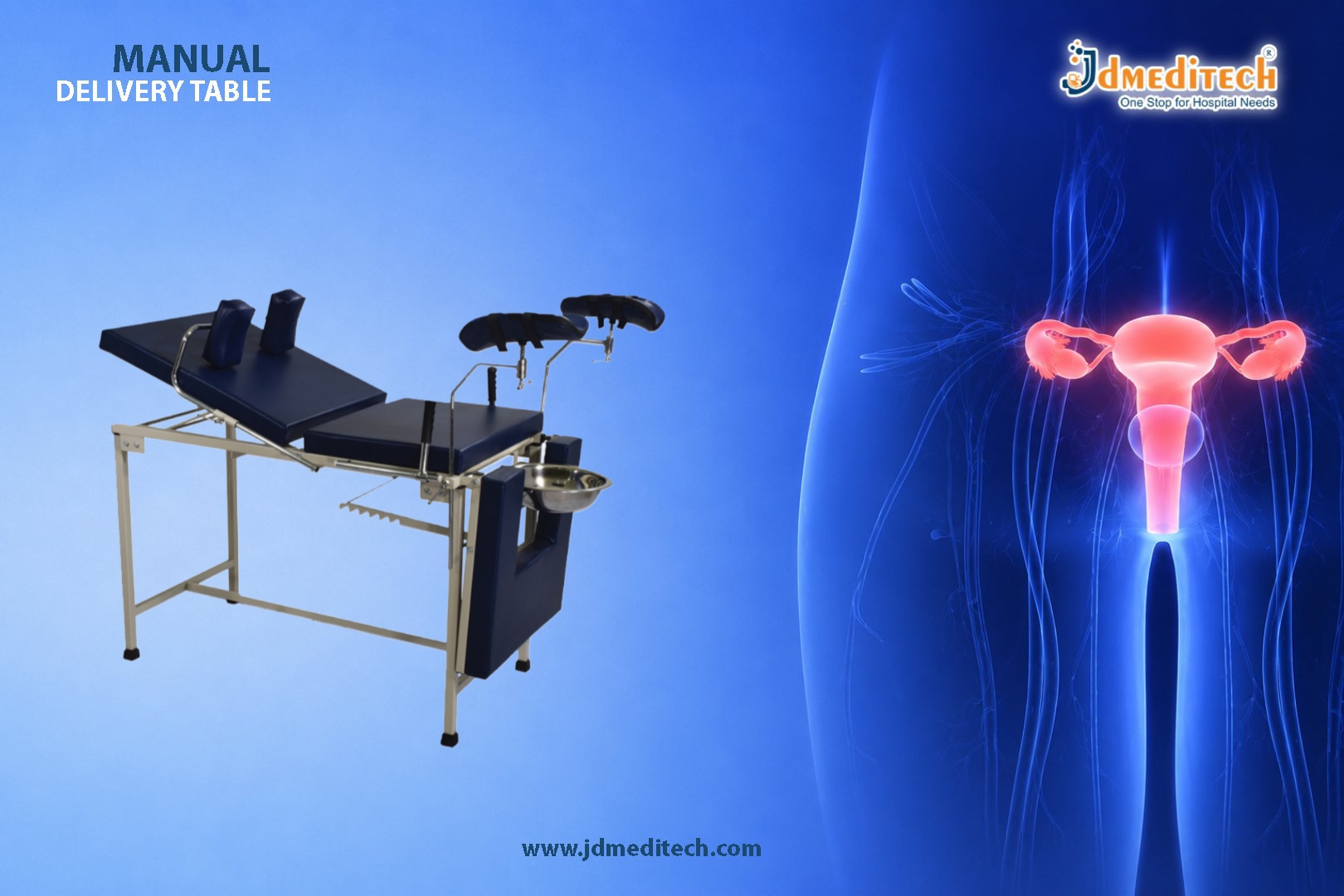
A Manual Delivery Table is an essential piece of equipment in maternity hospitals, obstetric centers, nursing homes, and healthcare clinics. Designed to support safe and efficient childbirth procedures, these tables provide comfort for mothers while allowing healthcare professionals to perform delivery procedures with greater precision and convenience.
Built with durable materials and ergonomic features, a maternity delivery table ensures proper patient positioning, easy accessibility, and smooth operation during labor and delivery. Whether used in routine childbirth or assisted obstetric procedures, a high-quality manual delivery table contributes significantly to patient safety and clinical efficiency.
What is a Manual Delivery Table?
A Manual Delivery Table is a specially designed obstetric table used during labor, childbirth, gynecological examinations, and post-delivery procedures. Unlike electrically operated systems, manual delivery tables use mechanical adjustments for height positioning, backrest movement, and leg support.
These tables are widely preferred in hospitals and clinics because of their reliability, cost-effectiveness, and low maintenance requirements. Their robust structure and user-friendly design make them ideal for continuous use in demanding maternity environments.
Importance of Manual Delivery Tables in Maternity Care
Safe childbirth requires proper patient support and efficient access for medical staff. A manual labour delivery table plays a critical role in ensuring smooth birthing procedures by offering:
- Stable patient positioning
- Comfortable support during labor
- Better accessibility for doctors and nurses
- Efficient obstetric workflow
- Improved hygiene and infection control
The table’s design allows healthcare professionals to perform examinations, deliveries, and emergency interventions with greater ease and accuracy.
Key Features of a Manual Delivery Table
Durable Stainless Steel Construction
Most obstetric delivery tables are manufactured using high-grade stainless steel or powder-coated metal frames. This ensures durability, corrosion resistance, and long service life in medical environments.
Adjustable Backrest and Leg Sections
Manual adjustment mechanisms allow smooth positioning of the backrest and leg supports to provide maximum comfort and proper birthing posture for patients.
Comfortable Mattress Support
Soft cushioned mattresses help reduce patient discomfort during labor and delivery procedures while ensuring easy cleaning and sterilization.
Lithotomy Poles and Leg Holders
The inclusion of adjustable lithotomy crutches and leg supports provides secure patient positioning during delivery and gynecological procedures.
Smooth Mobility
Many delivery tables include lockable castor wheels for easy transportation and secure placement inside labor rooms or operation areas.
Easy Cleaning and Maintenance
The seamless surface and medical-grade materials help maintain hygiene standards and support quick cleaning after procedures.
Applications of Manual Delivery Tables
Manual delivery tables are widely used in various healthcare settings, including:
Maternity Hospitals
Used for labor, childbirth, and postpartum procedures in dedicated maternity wards.
Gynecology Clinics
Suitable for gynecological examinations and minor obstetric procedures.
Nursing Homes
Provides dependable support for safe childbirth in small healthcare facilities.
Rural Healthcare Centers
Manual systems are highly beneficial in locations where advanced electrical equipment may not be practical.
Emergency Obstetric Care
Helps healthcare professionals manage emergency delivery situations efficiently.
Advantages of Using a Manual Delivery Table
Reliable Performance
Manual systems operate without electricity, making them dependable even during power interruptions.
Cost-Effective Solution
Compared to fully automatic systems, manual delivery tables are more affordable while still offering essential functionality.
Low Maintenance
Mechanical components require minimal servicing, reducing long-term operational costs.
Enhanced Patient Comfort
Ergonomic positioning improves maternal comfort during labor and delivery.
Better Accessibility for Medical Staff
The adjustable design allows healthcare providers to work comfortably and efficiently during procedures.
Factors to Consider When Choosing a Manual Delivery Table
Selecting the right maternity delivery table is important for ensuring patient safety and operational efficiency. Key considerations include:
Build Quality
Choose tables made from durable stainless steel or high-quality coated metal materials.
Weight Capacity
Ensure the table can safely support different patient sizes and delivery requirements.
Adjustment Mechanism
Smooth and easy manual controls improve usability for healthcare professionals.
Hygiene Standards
Look for tables with easy-to-clean surfaces and infection-resistant materials.
Mobility and Stability
Lockable wheels and a stable frame ensure safe positioning during procedures.
Maintenance Tips for Manual Delivery Tables
Proper maintenance helps extend the lifespan and reliability of obstetric equipment.
Regular Cleaning
Disinfect the table thoroughly after every use to maintain hygiene standards.
Inspect Mechanical Components
Check adjustment levers, hinges, and moving parts regularly for smooth operation.
Lubricate Moving Parts
Periodic lubrication helps maintain easy manual adjustment and prevents wear.
Check Mattress Condition
Replace damaged or worn mattresses to maintain patient comfort and cleanliness.
Perform Routine Safety Checks
Inspect the table structure and wheel locks regularly to ensure patient safety.
Why Healthcare Facilities Prefer Manual Delivery Tables
Many hospitals and maternity centers continue to choose manual labour delivery tables because they combine durability, simplicity, and reliability. Their easy operation and minimal maintenance requirements make them ideal for both high-volume hospitals and smaller healthcare facilities.
In regions where uninterrupted electrical power may not always be available, manual systems provide dependable support for safe and efficient childbirth procedures.
Future of Obstetric Delivery Equipment
Modern maternity equipment continues to evolve with improved ergonomic designs, infection-control features, and enhanced patient comfort. While advanced electronic systems are increasingly available, manual delivery tables remain highly relevant due to their practicality, affordability, and consistent performance.
Healthcare facilities are increasingly focusing on durable and patient-friendly equipment that supports both medical staff efficiency and maternal well-being.
Conclusion
A Manual Delivery Table is an indispensable part of modern maternity and obstetric care. Its durable construction, ergonomic support, and reliable functionality help ensure safe and smooth childbirth procedures across hospitals, clinics, and nursing homes.
By providing proper patient positioning, enhanced comfort, and efficient accessibility for healthcare professionals, these tables contribute significantly to quality maternal healthcare. Choosing a high-quality manual delivery table ensures long-term performance, improved workflow, and dependable birthing care in every medical setting.
Get Connected:
+91 79909 93062 | +91 63513 72032 | exports@jdmeditech.com