



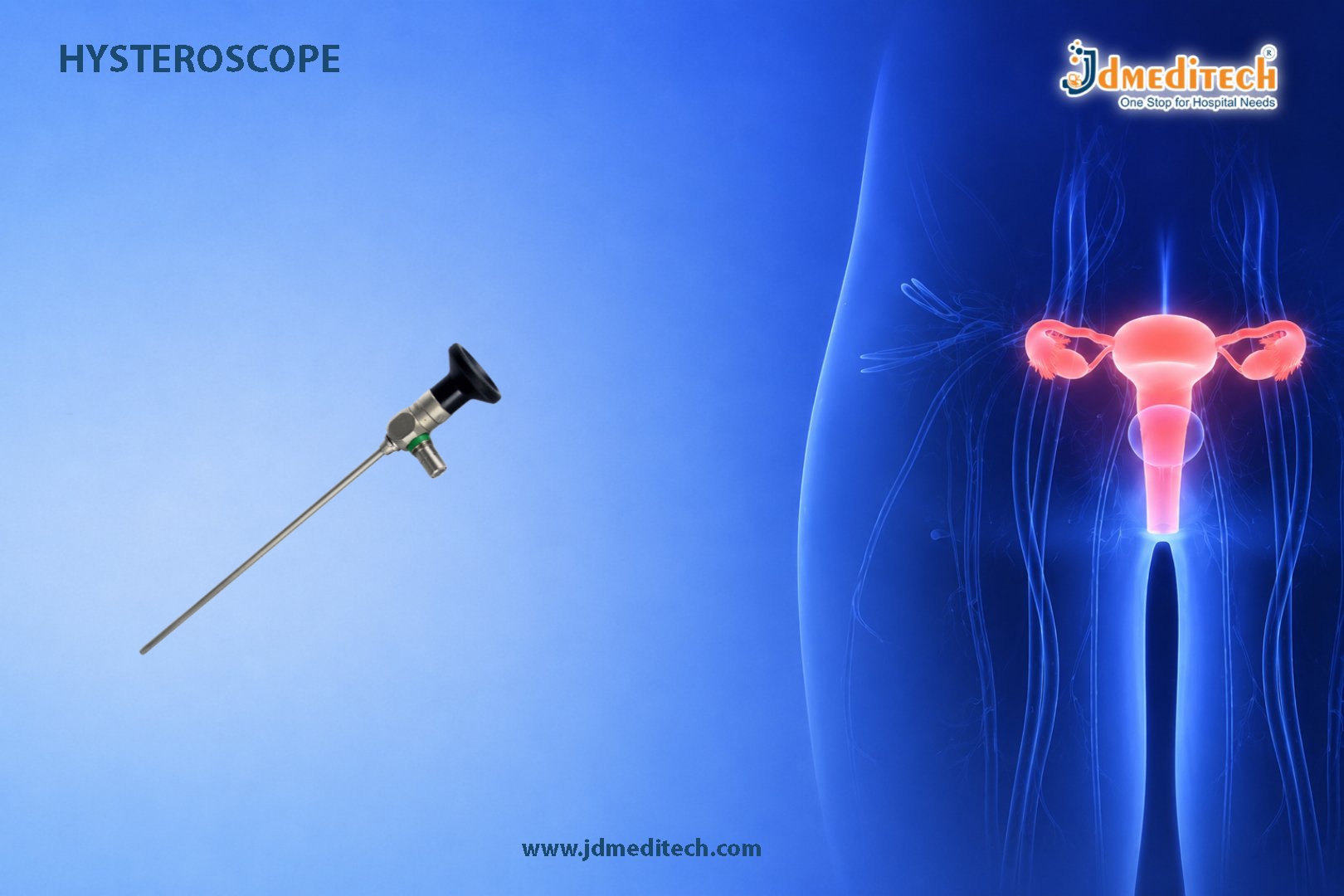
A hysteroscope is a specialized medical endoscopic instrument used for the visual examination of the uterine cavity. Designed with advanced optical technology, the hysteroscope enables gynecologists to diagnose and treat various intrauterine conditions with exceptional precision and minimal invasiveness. As modern gynecological procedures continue to evolve, hysteroscopy has become an essential technique for accurate uterine assessment, fertility evaluation, and minimally invasive surgical interventions.
The growing demand for safe, effective, and patient-friendly gynecological procedures has increased the importance of high-quality hysteroscopes in hospitals, fertility clinics, and surgical centers worldwide.
What is a Hysteroscope?
A hysteroscope is a thin, tubular endoscopic device equipped with a high-definition optical system and light source. It is inserted through the cervix into the uterus, allowing direct visualization of the uterine cavity without the need for large surgical incisions.
Hysteroscopes are commonly used for both diagnostic and operative procedures. Diagnostic hysteroscopy helps identify abnormalities inside the uterus, while operative hysteroscopy allows surgeons to perform minimally invasive treatments using specialized surgical instruments.
Key Features of a Hysteroscope
High-Definition Visualization
Modern hysteroscopes provide clear and magnified imaging of the uterine cavity, enabling accurate diagnosis of gynecological conditions.
Minimally Invasive Procedure
Hysteroscopy eliminates the need for open surgery in many cases, reducing patient discomfort, recovery time, and surgical complications.
Slim and Ergonomic Design
The compact and lightweight design ensures smooth insertion and improved maneuverability during procedures.
Durable Construction
Manufactured using premium-grade stainless steel and medical-grade materials, hysteroscopes are designed for long-term clinical reliability and repeated sterilization.
Compatibility with Surgical Instruments
Operative hysteroscopes support the use of graspers, scissors, biopsy forceps, and electrosurgical devices for advanced intrauterine procedures.
Efficient Illumination System
Integrated fiber optic technology delivers bright illumination for enhanced visualization during examination and treatment.
Types of Hysteroscopes
Diagnostic Hysteroscope
Diagnostic hysteroscopes are smaller in diameter and primarily used for uterine cavity examination, infertility investigations, and abnormal bleeding assessment.
Operative Hysteroscope
Operative hysteroscopes feature larger working channels that allow insertion of surgical instruments for therapeutic procedures.
Flexible Hysteroscope
Flexible hysteroscopes provide enhanced patient comfort and easier navigation during outpatient procedures.
Rigid Hysteroscope
Rigid hysteroscopes offer superior image quality and stability, making them ideal for surgical interventions.
Clinical Applications of Hysteroscopy
Hysteroscopy is widely used in gynecology for diagnostic and therapeutic procedures.
Evaluation of Abnormal Uterine Bleeding
Doctors use hysteroscopy to identify the underlying causes of abnormal or excessive menstrual bleeding.
Diagnosis of Uterine Polyps and Fibroids
Hysteroscopes enable accurate detection and removal of intrauterine polyps and submucosal fibroids.
Infertility Assessment
Hysteroscopy helps evaluate uterine abnormalities that may affect fertility or implantation success.
Endometrial Biopsy
The procedure allows direct-guided tissue sampling for pathological examination.
Adhesion Removal
Intrauterine adhesions or scar tissues can be safely treated using operative hysteroscopy.
Removal of Retained Products
Hysteroscopy assists in removing retained tissue following miscarriage or childbirth.
Septum Resection
Congenital uterine septa can be corrected using minimally invasive hysteroscopic techniques.
Advantages of Using a Hysteroscope
Accurate Diagnosis
Direct visualization significantly improves diagnostic accuracy compared to blind procedures.
Reduced Surgical Trauma
The minimally invasive nature of hysteroscopy minimizes tissue damage and postoperative pain.
Faster Recovery
Most hysteroscopic procedures allow rapid patient recovery and shorter hospital stays.
Improved Patient Safety
Lower risks of infection, bleeding, and surgical complications make hysteroscopy a preferred gynecological approach.
Enhanced Surgical Precision
High-quality optics and instrument compatibility improve procedural control and treatment effectiveness.
Cost-Effective Treatment
Minimally invasive procedures reduce hospitalization costs and recovery-related expenses.
Importance of Quality in Hysteroscopes
The performance of a hysteroscope directly impacts procedural outcomes and patient safety. High-quality hysteroscopes provide:
- Superior image clarity
- Reliable fluid management compatibility
- Smooth instrument handling
- Corrosion resistance
- Long operational lifespan
- Consistent sterilization performance
Healthcare facilities should always choose hysteroscopes manufactured according to international medical standards to ensure optimal clinical efficiency.
Sterilization and Maintenance of Hysteroscopes
Proper cleaning and sterilization are essential to maintain device performance and prevent cross-contamination.
Cleaning Procedure
Immediately after use, the hysteroscope should be thoroughly flushed and cleaned to remove biological residues.
Sterilization Compatibility
Most hysteroscopes are compatible with standard hospital sterilization methods, including autoclaving and low-temperature sterilization systems.
Routine Inspection
Regular inspection of optical systems, seals, and working channels helps maintain optimal functionality.
Safe Storage
Proper storage in protective trays prevents mechanical damage and extends instrument lifespan.
Role of Hysteroscopy in Modern Gynecology
Hysteroscopy has transformed gynecological diagnostics and surgery by enabling minimally invasive uterine procedures with exceptional accuracy. The technology supports improved patient outcomes, shorter recovery periods, and enhanced procedural efficiency.
With increasing advancements in optical imaging and minimally invasive surgical systems, hysteroscopes continue to play a critical role in modern women’s healthcare and fertility treatment.
Conclusion
The hysteroscope is an essential gynecological endoscopic instrument that provides precise visualization for accurate uterine examination and minimally invasive treatment. Its advanced optical performance, ergonomic design, and surgical versatility make it indispensable in modern gynecological practice.
From infertility investigations to operative procedures, hysteroscopy offers safer, faster, and more effective uterine management while improving patient comfort and clinical outcomes. Choosing a high-quality hysteroscope ensures reliable performance, enhanced surgical precision, and long-term healthcare efficiency.
Get Connected:
+91 79909 93062 | +91 63513 72032 | exports@jdmeditech.com




