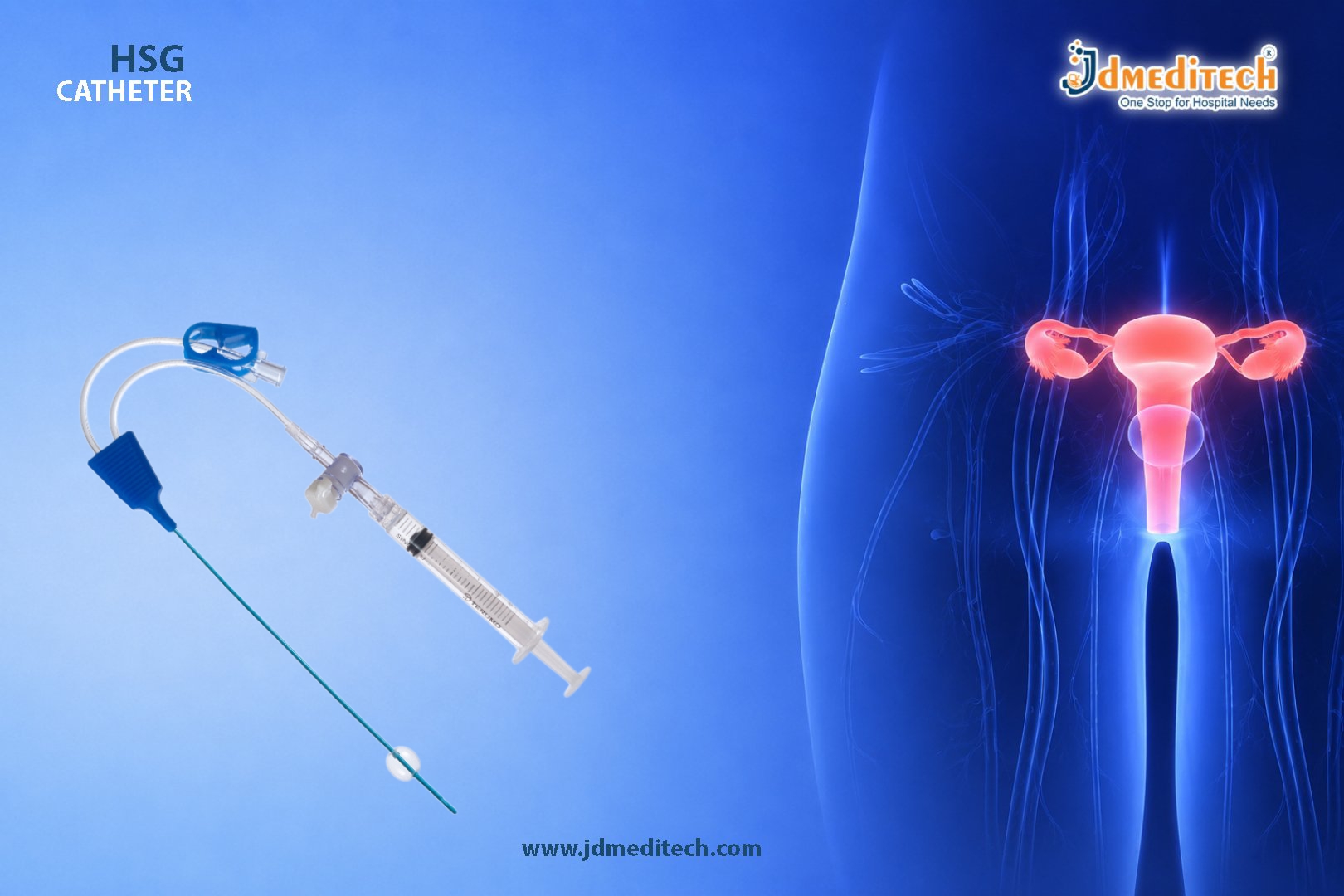
An HSG catheter plays an essential role in hysterosalpingography (HSG), a diagnostic procedure that helps doctors evaluate the uterus and fallopian tubes. Gynecologists and fertility specialists commonly use this procedure to identify infertility issues, tubal blockages, and uterine abnormalities. During the examination, the catheter delivers contrast media smoothly into the uterine cavity, allowing clear imaging under fluoroscopy or X-ray guidance.
Modern HSG catheters improve procedural accuracy while also increasing patient comfort. In addition, their flexible structure and atraumatic design help clinicians perform procedures more efficiently and safely. As a result, healthcare professionals can obtain reliable diagnostic images with minimal discomfort to the patient.
This blog explains the features, benefits, applications, and importance of HSG catheters in modern fertility and gynecological care.
What is an HSG Catheter?
An HSG catheter is a specially designed medical device that doctors use to inject contrast dye into the uterus during an HSG procedure. Once the contrast media enters the uterine cavity, it flows through the fallopian tubes, helping doctors identify blockages or abnormalities through imaging.
Unlike standard catheters, HSG catheters offer better control during contrast delivery. Furthermore, they help reduce leakage and improve image clarity throughout the procedure.
Healthcare professionals use HSG catheters because they provide:
- Smooth cervical insertion
- Controlled contrast flow
- Better imaging accuracy
- Reduced contrast leakage
- Improved patient comfort
Consequently, these catheters have become essential tools in fertility clinics, hospitals, and diagnostic imaging centers.
Why HSG Procedures Matter in Fertility Evaluation
Doctors frequently recommend HSG procedures during fertility investigations because they provide important information about reproductive health. For example, the procedure allows specialists to check whether the fallopian tubes remain open and whether the uterine cavity appears normal.
Additionally, HSG procedures help diagnose several gynecological conditions, including:
- Blocked fallopian tubes
- Uterine abnormalities
- Scar tissue and adhesions
- Fibroids or polyps
- Congenital uterine defects
- Recurrent pregnancy-related complications
Therefore, accurate contrast delivery through a high-quality HSG catheter directly supports reliable diagnostic outcomes.
Key Features of HSG Catheters
Flexible Catheter Body
Manufacturers design HSG catheters with soft medical-grade materials that support easy navigation through the cervical canal. As a result, clinicians can perform smoother insertions with less patient discomfort.
Atraumatic Tip Design
The rounded atraumatic tip minimizes tissue irritation during placement. Moreover, it helps reduce trauma and improves patient safety throughout the procedure.
Balloon Retention Mechanism
Many HSG catheters include an inflatable balloon that secures the catheter inside the uterus. Consequently, the balloon helps prevent dye backflow and maintains stable positioning.
Controlled Contrast Delivery
The catheter allows smooth and consistent contrast injection. Therefore, doctors can obtain clearer visualization of the uterus and fallopian tubes.
Leak-Resistant Performance
A secure sealing mechanism minimizes contrast leakage during imaging. In turn, this feature improves procedural efficiency and imaging quality.
Sterile Disposable Design
Most manufacturers supply HSG catheters in sterile, single-use packaging. Thus, healthcare facilities can maintain high infection-control standards.
Types of HSG Catheters
Balloon HSG Catheter
This catheter features an inflatable balloon that stabilizes placement and reduces contrast leakage. Because of this design, many fertility specialists prefer balloon HSG catheters for improved imaging control.
Non-Balloon HSG Catheter
Non-balloon catheters offer a simpler structure and work well for routine HSG procedures. In addition, they allow quick insertion and easy handling.
Mini or Pediatric HSG Catheter
Manufacturers design smaller HSG catheters for patients who require minimally invasive access or specialized anatomical support.
Benefits of Using HSG Catheters
Improved Imaging Accuracy
Controlled contrast flow produces clearer images of reproductive structures. Therefore, doctors can make more accurate fertility assessments.
Enhanced Patient Comfort
Soft materials and atraumatic tips reduce pain and discomfort during insertion. As a result, patients experience a more comfortable procedure.
Faster Procedure Completion
Easy catheter placement and stable positioning help clinicians complete procedures efficiently. Consequently, healthcare providers can improve workflow in busy diagnostic centers.
Better Contrast Retention
Balloon-assisted designs minimize leakage and maintain proper contrast pressure. Thus, imaging quality improves significantly.
Support for Minimally Invasive Diagnostics
HSG catheters support outpatient fertility evaluations with minimal recovery time. Furthermore, they help reduce procedural complications.
Applications of HSG Catheters
Doctors and fertility specialists use HSG catheters in several diagnostic applications, including:
- Fertility investigations
- Tubal patency testing
- Uterine cavity evaluation
- Pre-IVF assessments
- Recurrent miscarriage investigations
- Post-surgical reproductive examinations
Because of their precision and reliability, HSG catheters remain important devices in reproductive healthcare.
How Doctors Perform an HSG Procedure
Doctors usually complete HSG procedures within a short time. During the procedure:
- The patient lies comfortably on the examination table.
- The doctor inserts a speculum into the vagina.
- The doctor cleans and prepares the cervix.
- The clinician gently inserts the HSG catheter into the uterus.
- If required, the clinician inflates the balloon for secure positioning.
- The doctor slowly injects contrast media through the catheter.
- The imaging system captures X-ray or fluoroscopic images of the uterus and fallopian tubes.
Because modern HSG catheters provide smooth contrast flow, clinicians can achieve more accurate and reliable imaging results.
Factors to Consider When Choosing an HSG Catheter
Catheter Flexibility
Flexible catheters improve maneuverability and patient comfort during insertion.
Balloon Quality
A high-quality balloon system provides better retention and minimizes contrast leakage.
Contrast Flow Control
Clinicians should choose catheters that ensure smooth and consistent dye delivery.
Sterility Standards
Sterile disposable catheters improve patient safety and reduce contamination risks.
Device Compatibility
Healthcare providers should select catheters compatible with standard syringes and imaging equipment.
Importance of High-Quality HSG Catheters
High-quality HSG catheters help healthcare professionals improve diagnostic performance and patient care. In addition, they reduce procedural difficulties and improve imaging consistency.
Reliable HSG catheters offer several advantages, such as:
- Better imaging clarity
- Improved diagnostic confidence
- Reduced patient discomfort
- Faster procedures
- Lower complication risks
On the other hand, low-quality catheters may cause leakage, poor positioning, or inadequate imaging results.
Future Trends in HSG Catheter Technology
Medical device companies continue to improve HSG catheter technology to enhance safety and performance. For example, manufacturers now focus on:
- Softer biocompatible materials
- Advanced balloon retention systems
- Improved ergonomic handling
- Better flexibility and maneuverability
- Enhanced contrast flow precision
As technology advances, HSG procedures will likely become even safer, faster, and more comfortable for patients.
Conclusion
The HSG catheter remains an essential device for accurate hysterosalpingography procedures. Its flexible design, smooth insertion capability, and controlled contrast delivery help doctors evaluate reproductive health with greater precision.
Moreover, modern HSG catheters improve patient comfort while supporting reliable fertility diagnostics. Because of their efficiency and safety, healthcare professionals continue to rely on these devices for effective gynecological imaging and fertility assessment.
Get Connected:
+91 79909 93062 | +91 63513 72032 | exports@jdmeditech.com