



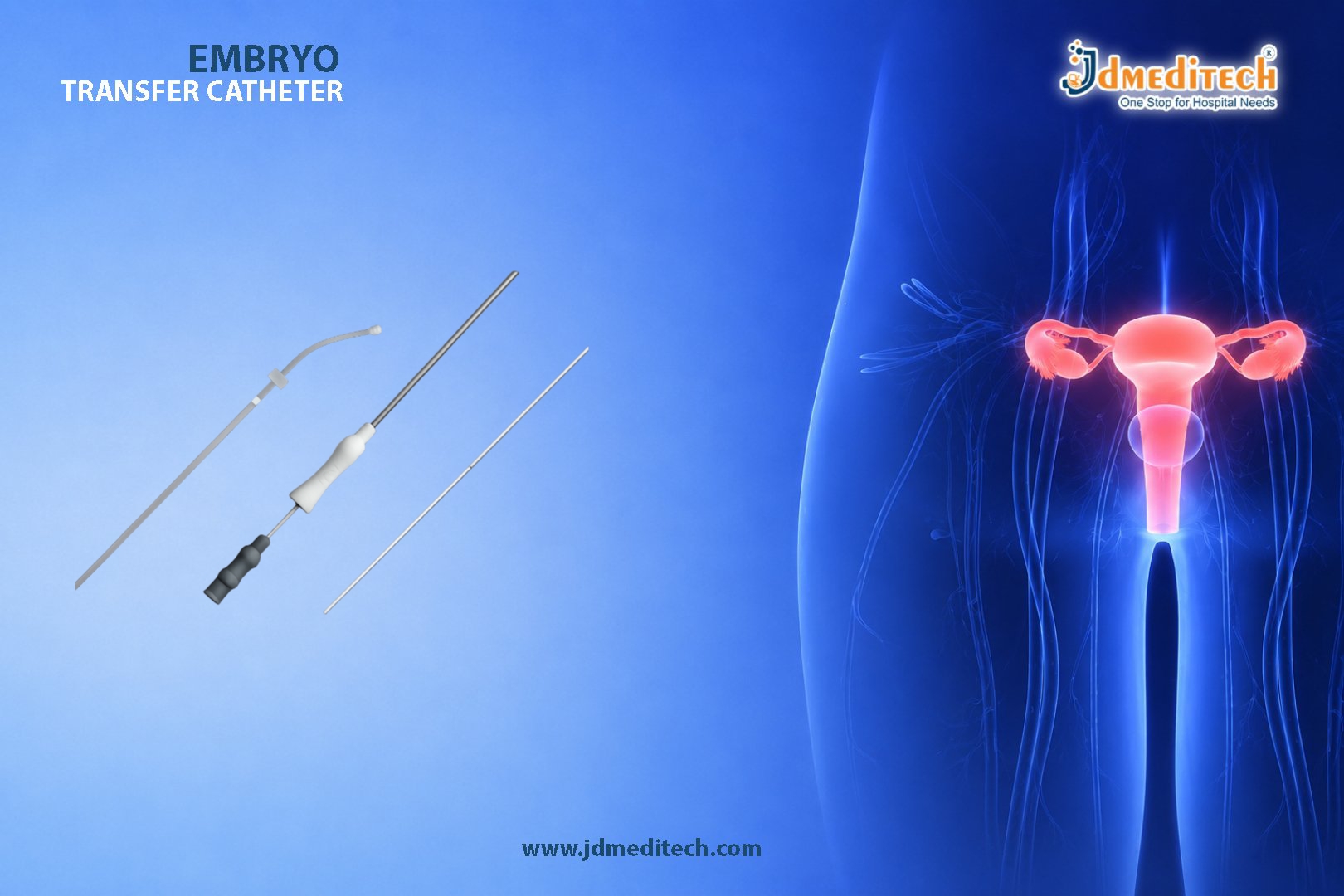
Embryo transfer is one of the most critical stages in an IVF (In Vitro Fertilization) cycle. The success of this delicate procedure depends not only on embryo quality and clinical expertise but also on the precision of the medical instruments used during transfer. An Embryo Transfer Catheter is specially designed to enable smooth, accurate, and atraumatic placement of embryos into the uterine cavity.
Modern fertility clinics rely on high-quality embryo transfer catheters to improve procedural accuracy, patient comfort, and implantation success rates. With soft-tip construction, excellent flexibility, and superior navigation, these catheters help fertility specialists perform embryo transfer procedures with greater confidence and control.
What is an Embryo Transfer Catheter?
An Embryo Transfer Catheter is a sterile, flexible medical device used during IVF treatment to transfer fertilized embryos into the uterus. It is carefully engineered to minimize trauma to the uterine lining while ensuring precise embryo placement.
The catheter is usually composed of:
- A soft inner catheter for gentle embryo delivery
- A firmer outer sheath for enhanced support and navigation
- Smooth atraumatic tips for patient comfort
- Graduated markings for accurate depth placement
The design allows clinicians to perform embryo transfer procedures safely while reducing uterine irritation and procedural complications.
Importance of Embryo Transfer in IVF Success
The embryo transfer stage is considered the final and most sensitive step of IVF treatment. Even with healthy embryos, improper transfer technique or unsuitable instruments can impact implantation outcomes.
A high-quality Embryo Transfer Catheter helps:
- Ensure accurate embryo placement
- Reduce uterine contractions
- Minimize cervical trauma
- Improve procedural efficiency
- Enhance patient comfort
- Support higher implantation success rates
Because of its direct role in embryo placement, the catheter becomes an essential component of fertility treatment protocols.
Key Features of an Embryo Transfer Catheter
Soft and Flexible Tip
The soft distal tip minimizes trauma to the uterine lining and allows smooth passage through the cervical canal.
Excellent Navigation
Advanced catheter flexibility enables easier navigation in challenging anatomical pathways.
Clear Graduations
Depth markings assist clinicians in accurate embryo placement within the uterine cavity.
Sterile and Disposable
Single-use sterile packaging helps maintain maximum hygiene and infection control.
Smooth Embryo Delivery
The internal lumen is designed for controlled and gentle embryo release.
Radiopaque Visibility
Some models include radiopaque material for better visualization during guided procedures.
Types of Embryo Transfer Catheters
Soft Embryo Transfer Catheters
These are highly flexible and designed to reduce trauma during embryo transfer.
Firm Catheters
Used in difficult cervical cases where additional support is required for insertion.
Echogenic Catheters
Enhanced ultrasound visibility improves transfer precision during ultrasound-guided IVF procedures.
Dual-Lumen Catheters
Designed with separate channels for improved procedural handling and control.
Applications in Fertility Treatments
Embryo Transfer Catheters are widely used in:
- IVF procedures
- Frozen embryo transfer (FET)
- Assisted reproductive technologies (ART)
- Fertility clinics and IVF centers
- Ultrasound-guided embryo placement
- Reproductive medicine procedures
These devices are indispensable in modern infertility management and reproductive healthcare.
Benefits of Using High-Quality Embryo Transfer Catheters
Improved Implantation Accuracy
Precise embryo placement can positively influence implantation outcomes.
Reduced Patient Discomfort
Soft and atraumatic catheter designs improve patient experience during the procedure.
Better Clinical Efficiency
Easy handling and flexibility support smooth procedural workflow.
Lower Risk of Trauma
Gentle insertion reduces the chances of bleeding or uterine irritation.
Enhanced IVF Procedure Control
Clinicians gain better control during embryo release and catheter navigation.
Factors to Consider When Choosing an Embryo Transfer Catheter
Selecting the right catheter is important for procedural success. Key considerations include:
- Softness and flexibility
- Catheter diameter
- Ultrasound visibility
- Ease of insertion
- Embryo loading compatibility
- Sterility standards
- Manufacturer quality compliance
Clinics often select catheters based on physician preference and patient anatomy.
Role of Ultrasound Guidance During Embryo Transfer
Ultrasound-guided embryo transfer has become a standard practice in many IVF centers. Echogenic embryo transfer catheters improve visualization and help physicians position embryos accurately within the uterine cavity.
This technique helps:
- Increase procedural precision
- Reduce failed transfers
- Improve patient safety
- Support successful implantation
Infection Control and Sterility Standards
Since embryo transfer is an extremely sensitive reproductive procedure, maintaining sterility is essential. Disposable embryo transfer catheters are individually packed and sterilized to reduce contamination risks.
Important safety measures include:
- Single-use application
- Sterile handling protocols
- Proper storage conditions
- Compliance with medical device standards
High-quality manufacturing standards ensure reliability and patient safety.
Future Advancements in Embryo Transfer Technology
The field of assisted reproduction continues to evolve with innovations aimed at improving IVF outcomes. Modern developments include:
- Enhanced ultrasound-visible materials
- Advanced atraumatic catheter tips
- Improved ergonomic designs
- Better flexibility and memory retention
- Precision-guided embryo placement systems
These innovations help fertility specialists perform more accurate and comfortable procedures.
Conclusion
An Embryo Transfer Catheter plays a vital role in the success of IVF and assisted reproductive procedures. Designed for precision, flexibility, and patient comfort, these specialized catheters support safe and accurate embryo placement within the uterus.
With advanced soft-tip designs, smooth navigation, and reliable embryo delivery performance, embryo transfer catheters have become indispensable tools in modern fertility clinics. Choosing a high-quality catheter can significantly contribute to procedural efficiency, patient satisfaction, and improved IVF outcomes.
Get Connected:
+91 79909 93062 | +91 63513 72032 | exports@jdmeditech.com




