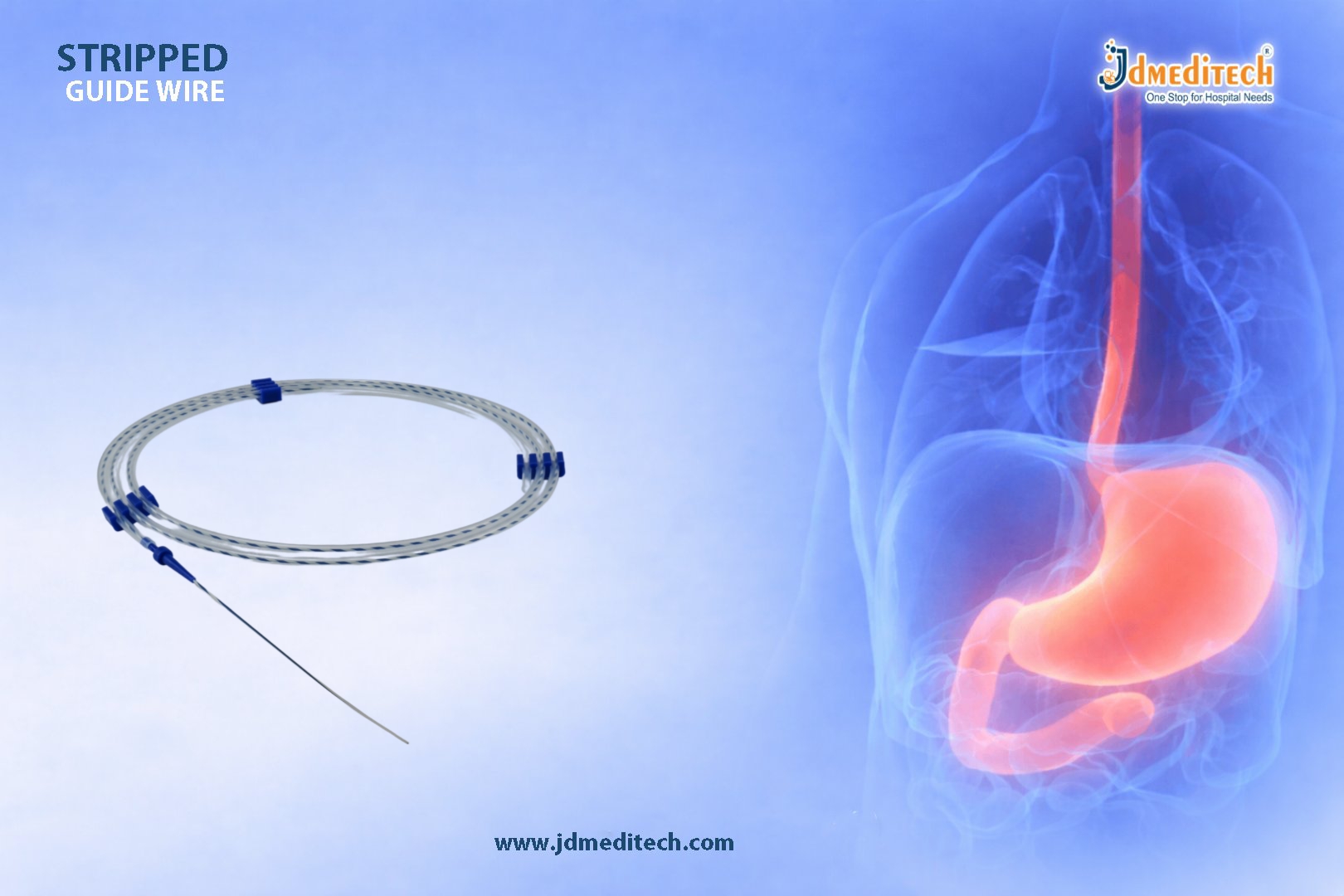
A Stripped Guide Wire is an essential medical device widely used in urology, endourology, interventional radiology, and minimally invasive surgical procedures. Designed for smooth navigation through narrow anatomical pathways, this highly flexible guide wire helps physicians safely guide catheters, dilators, stents, and other surgical instruments during diagnostic and therapeutic procedures.
Today, stripped guide wires play a major role in modern minimally invasive interventions because they provide excellent maneuverability, controlled access, and improved procedural precision. Moreover, their flexible construction allows easier navigation through tortuous anatomy while minimizing tissue trauma.
As a result, stripped guide wires have become indispensable tools in advanced surgical and endoscopic procedures requiring safe and controlled instrument guidance.
What Is a Stripped Guide Wire?
Understanding the Medical Device
A Stripped Guide Wire is a thin, flexible wire designed to establish and maintain access within the body during minimally invasive procedures.
The term “stripped” generally refers to a guide wire with a specially processed or exposed flexible section that enhances maneuverability and navigation through complex anatomical structures.
During medical procedures, the guide wire is first inserted into the target pathway. Subsequently, other instruments such as catheters, sheaths, stents, or dilators are advanced over the wire with greater precision and control.
Therefore, the guide wire acts as a stable pathway for safe instrument placement.
Why Stripped Guide Wires Are Used
Importance in Minimally Invasive Procedures
Doctors use stripped guide wires to facilitate safe access during various diagnostic and therapeutic interventions.
Common purposes include:
- Smooth catheter placement
- Instrument guidance during endourology procedures
- Ureteral access support
- Stent placement assistance
- Navigation through narrow anatomical pathways
- Reduced tissue trauma during instrument advancement
- Improved procedural accuracy
Furthermore, the flexible design helps physicians maneuver through curved or obstructed passages more effectively.
Key Features of Stripped Guide Wires
Advanced Design Characteristics
Modern stripped guide wires are engineered with several important features that improve procedural performance and patient safety.
High Flexibility
The wire bends smoothly through complex anatomical structures without excessive resistance.
Smooth Surface Finish
A smooth outer surface minimizes friction during instrument advancement.
Excellent Torque Control
Physicians can guide the wire accurately even in difficult pathways.
Kink Resistance
The guide wire maintains structural stability during manipulation.
Hydrophilic or PTFE Coating
Some guide wires include specialized coatings to improve lubricity and navigation.
Radiopaque Visibility
Enhanced visibility under fluoroscopy allows accurate positioning during procedures.
As a result, these features contribute to safer and more efficient surgical access.
Common Medical Applications of Stripped Guide Wires
Procedures That Use Guide Wires
Stripped guide wires are widely used across multiple medical specialties.
Urology and Endourology
Guide wires assist during:
- Ureteroscopy
- PCNL procedures
- Ureteral stent placement
- Cystoscopy
- Urethral dilatation
- Stone retrieval procedures
Interventional Radiology
They help guide catheters during vascular and nonvascular interventions.
Gastroenterology
Guide wires support endoscopic access procedures within the digestive tract.
Cardiology
Specialized guide wires are used during angioplasty and catheter-based cardiac procedures.
Consequently, guide wires remain essential components of minimally invasive medicine.
How a Stripped Guide Wire Works
Step-by-Step Instrument Guidance Process
Guide wires help establish a safe pathway for instrument insertion during medical procedures.
Initial Wire Placement
First, the physician carefully inserts the guide wire into the target anatomical pathway.
Navigation Through Anatomy
Next, the flexible tip navigates through narrow or curved structures safely.
Confirmation of Position
Imaging guidance such as fluoroscopy may confirm accurate placement.
Advancement of Instruments
Afterward, catheters or surgical instruments are passed over the guide wire.
Maintenance of Access
The guide wire maintains continuous access throughout the procedure.
Completion of the Procedure
Finally, the guide wire is removed after successful instrument placement or treatment completion.
As a result, the procedure becomes safer, smoother, and more controlled.
Types of Stripped Guide Wires
Different Guide Wire Variations
Several types of stripped guide wires are available depending on procedural requirements.
Straight Tip Guide Wires
These wires are commonly used for routine access procedures.
Angled Tip Guide Wires
Angled tips improve navigation through tortuous anatomy.
Hydrophilic Guide Wires
These wires feature lubricious coatings for smoother advancement.
Stiff Guide Wires
Stiffer wires provide enhanced support for larger instruments.
Hybrid Guide Wires
Hybrid designs combine flexibility and support in a single device.
Therefore, physicians select the guide wire according to procedural complexity and anatomical needs.
Benefits of Using Stripped Guide Wires
Advantages in Surgical and Endoscopic Procedures
Stripped guide wires offer numerous clinical and procedural advantages.
Major benefits include:
- Smooth instrument guidance
- Improved procedural precision
- Enhanced flexibility
- Reduced tissue trauma
- Better navigation through narrow passages
- Increased procedural safety
- Faster instrument placement
- Reliable anatomical access
- Improved surgical efficiency
Moreover, modern guide wire technology helps reduce complications during minimally invasive procedures.
Materials Used in Stripped Guide Wires
Advanced Medical-Grade Construction
Manufacturers use specialized materials to improve durability, flexibility, and patient safety.
Common materials include:
- Stainless steel
- Nitinol alloys
- PTFE coatings
- Hydrophilic polymers
- Radiopaque materials
As a result, these materials help optimize wire performance during complex interventions.
Safety Considerations During Guide Wire Use
Important Procedural Precautions
Although stripped guide wires are highly safe when used properly, careful handling remains essential.
Key safety considerations include:
- Avoiding excessive force
- Confirming correct wire positioning
- Maintaining sterile technique
- Monitoring fluoroscopic guidance
- Preventing wire kinking or looping
- Using appropriate wire type for the procedure
Therefore, experienced medical professionals should always handle guide wires during interventions.
Choosing the Right Stripped Guide Wire
Factors That Influence Selection
Doctors choose guide wires based on several procedural and anatomical factors.
Important considerations include:
- Procedure type
- Anatomical complexity
- Required flexibility
- Support requirements
- Coating preference
- Wire diameter and length
- Compatibility with surgical instruments
Consequently, selecting the correct guide wire improves procedural success and patient safety.
Role of Stripped Guide Wires in Endourology
Importance in Modern Urologic Procedures
In endourology, stripped guide wires are especially valuable because they help maintain precise urinary tract access during delicate procedures.
They are frequently used for:
- Kidney stone management
- Ureteral stenting
- Flexible ureteroscopy
- Percutaneous nephrolithotomy (PCNL)
- Urethral procedures
Furthermore, their flexibility and smooth navigation help reduce trauma within the urinary tract.
Maintenance and Sterility Considerations
Ensuring Safe Device Handling
Proper handling and sterility are essential for safe guide wire usage.
Healthcare professionals should:
- Use sterile packaging
- Inspect wires before use
- Avoid damaged or kinked wires
- Follow manufacturer recommendations
- Dispose of single-use devices appropriately
As a result, strict procedural protocols help maintain patient safety and device performance.
Future Advancements in Guide Wire Technology
Innovations in Minimally Invasive Access Devices
Modern medical technology continues to improve guide wire performance and procedural outcomes.
Future developments may include:
- Enhanced hydrophilic coatings
- Improved torque control
- Advanced shape-memory materials
- Better radiopacity
- Reduced friction technology
- Smart navigation systems
Therefore, guide wire innovation continues to support safer and more precise minimally invasive procedures.
Conclusion
Advanced Access Support for Modern Minimally Invasive Procedures
The Stripped Guide Wire remains an essential medical device for achieving smooth, controlled, and precise instrument guidance during minimally invasive procedures. With its high flexibility, superior maneuverability, and reliable access support, the guide wire plays a critical role in modern urology, endourology, interventional radiology, and other advanced medical specialties.
Most importantly, modern stripped guide wires help improve procedural efficiency while reducing tissue trauma and enhancing patient safety. Therefore, with continued advancements in guide wire technology, minimally invasive interventions will continue to become safer, faster, and more effective.
Get Connected:
+91 79909 93062 | +91 63513 72032 | exports@jdmeditech.com