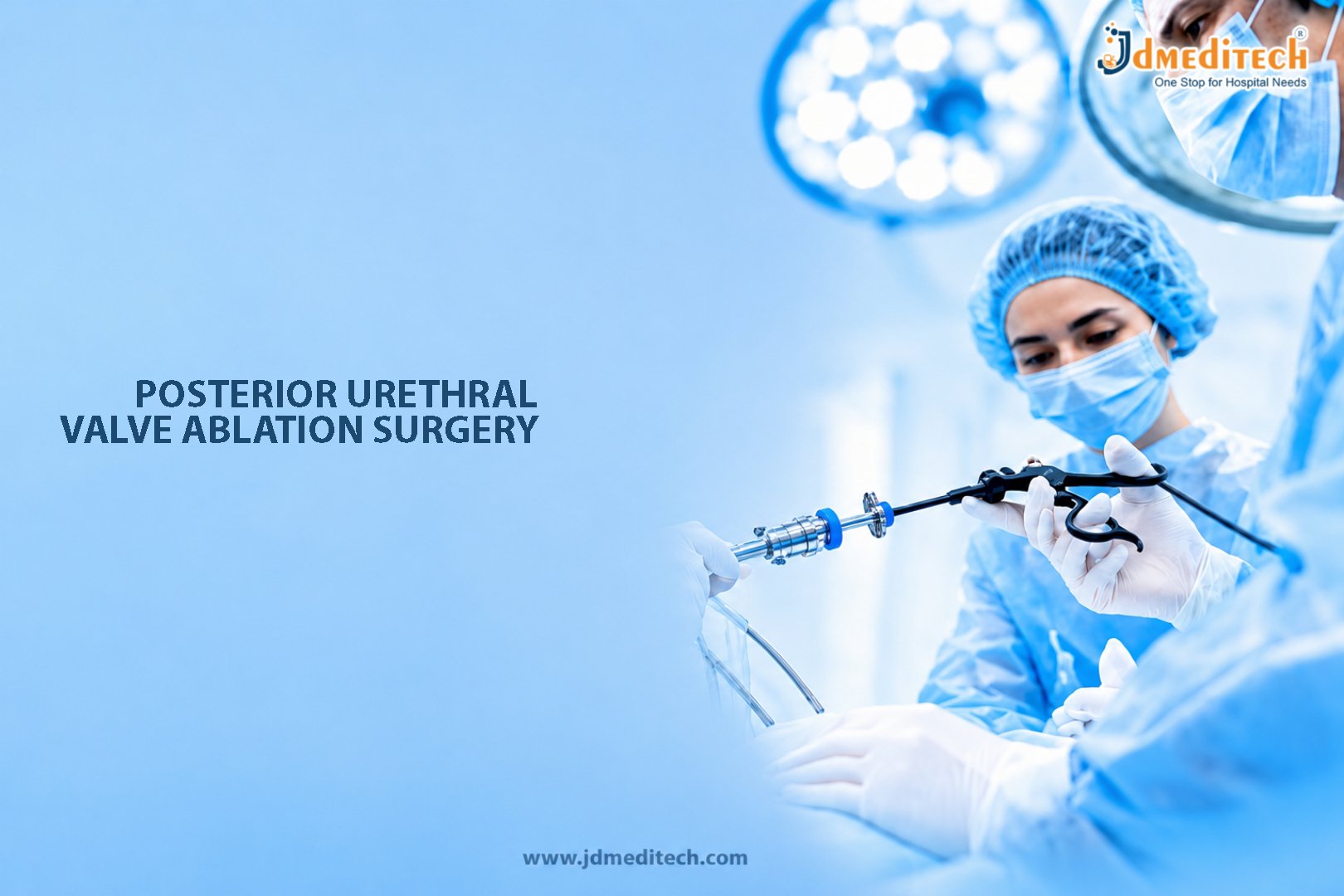
Posterior Urethral Valve (PUV) Ablation Surgery is a specialized endoscopic urologic procedure performed to treat posterior urethral valves, a congenital condition that causes blockage in the urinary tract of male infants and children. This obstruction affects the normal flow of urine from the bladder and may lead to bladder dysfunction, recurrent urinary tract infections, kidney damage, and growth-related complications if left untreated.
With advances in pediatric urology, posterior urethral valve ablation has become a safe and highly effective minimally invasive surgery. The procedure removes the obstructing valve tissue using an endoscopic instrument, helping restore normal urine flow and protect long-term kidney function.
What Are Posterior Urethral Valves?
Posterior urethral valves are abnormal folds of tissue located in the posterior urethra, the part of the urethra closest to the bladder. These valves partially or completely block urine outflow and are present from birth.
This condition occurs only in boys and is considered one of the most common causes of urinary tract obstruction in male infants.
Common Symptoms of Posterior Urethral Valves
Symptoms may vary depending on the severity of obstruction and the child’s age.
In Newborns and Infants
- Poor urinary stream
- Difficulty passing urine
- Swollen abdomen due to enlarged bladder
- Failure to thrive
- Fever due to urinary infection
- Breathing difficulty caused by low amniotic fluid during pregnancy
In Older Children
- Recurrent urinary tract infections
- Daytime wetting or bedwetting
- Weak urine flow
- Frequent urination
- Kidney function abnormalities
- Delayed growth
Early diagnosis and timely surgery are essential to prevent permanent kidney damage.
What Is Posterior Urethral Valve Ablation Surgery?
Posterior urethral valve ablation surgery is a minimally invasive endoscopic procedure designed to remove or destroy the obstructing valve tissue inside the urethra.
During the surgery, a pediatric cystoscope is inserted through the urethral opening without making external cuts. The surgeon identifies the abnormal valve tissue and carefully ablates it using specialized instruments or energy sources.
As a result, urine can flow normally from the bladder, reducing pressure on the urinary system and kidneys.
Why Is Posterior Urethral Valve Ablation Needed?
Doctors recommend this surgery to relieve urinary obstruction and prevent complications associated with long-standing blockage.
Main Goals of the Procedure
- Improve urine flow
- Reduce bladder pressure
- Protect kidney function
- Prevent recurrent urinary infections
- Improve bladder emptying
- Minimize long-term urinary complications
Without treatment, posterior urethral valves can lead to chronic kidney disease and severe bladder dysfunction.
Diagnostic Evaluation Before Surgery
A detailed evaluation helps confirm the diagnosis and assess the severity of urinary obstruction.
Common Diagnostic Tests
Ultrasound Examination
Ultrasound helps evaluate:
- Enlarged bladder
- Thickened bladder wall
- Kidney swelling (hydronephrosis)
- Dilated ureters
Voiding Cystourethrogram (VCUG)
VCUG is the most important imaging test for diagnosing posterior urethral valves. It shows:
- Dilated posterior urethra
- Bladder abnormalities
- Vesicoureteral reflux
Blood and Urine Tests
These tests assess:
- Kidney function
- Presence of infection
- Electrolyte imbalance
Cystoscopy
Direct visualization using a cystoscope confirms the diagnosis during surgery.
How Posterior Urethral Valve Ablation Surgery Is Performed
The procedure is performed under general anesthesia by a pediatric urologist.
Step-by-Step Surgical Procedure
Step 1: Administration of Anesthesia
The child is placed under general anesthesia to ensure comfort and safety during surgery.
Step 2: Introduction of the Cystoscope
A small pediatric cystoscope is gently inserted through the urethra into the bladder.
Step 3: Identification of Valve Tissue
The surgeon carefully identifies the obstructing posterior urethral valve.
Step 4: Valve Ablation
The valve tissue is incised or ablated using:
- Electrocautery
- Cold knife
- Laser energy in selected cases
This creates a wider passage for urine flow.
Step 5: Bladder Drainage
A urinary catheter may be temporarily placed to help bladder drainage after surgery.
Benefits of Posterior Urethral Valve Ablation Surgery
This minimally invasive surgery offers several important advantages.
Key Benefits
- No external surgical incision
- Improved urinary flow
- Reduced bladder outlet obstruction
- Preservation of kidney function
- Short hospital stay
- Faster recovery
- Reduced risk of recurrent infections
- Better long-term urinary health
Additionally, early intervention significantly improves long-term outcomes.
Recovery After Posterior Urethral Valve Ablation
Recovery is generally smooth, although regular follow-up remains important.
What to Expect After Surgery
- Mild discomfort during urination for a short period
- Temporary urinary catheter in some cases
- Observation for urine output and kidney function
- Antibiotics if infection is present
Most children can return home within a few days after surgery.
Follow-Up Care
Regular follow-up may include:
- Ultrasound scans
- Urine tests
- Kidney function monitoring
- Bladder function assessment
Long-term monitoring is essential because some children may continue to have bladder dysfunction even after successful valve removal.
Possible Risks and Complications
Although posterior urethral valve ablation is considered safe, certain complications may occur in rare cases.
Potential Risks Include
- Bleeding
- Urinary tract infection
- Residual valve tissue
- Urethral stricture
- Persistent bladder dysfunction
- Vesicoureteral reflux
- Kidney impairment in severe cases
Experienced pediatric urologists take extensive precautions to minimize these risks.
Long-Term Outlook After Surgery
The long-term prognosis depends on:
- Severity of obstruction
- Degree of kidney damage before treatment
- Age at diagnosis
- Bladder function
Children diagnosed and treated early usually experience excellent outcomes with improved urinary function and better kidney preservation.
However, lifelong monitoring may still be necessary in some patients.
When to Consult a Pediatric Urologist
Parents should seek immediate medical attention if a child experiences:
- Weak urinary stream
- Difficulty urinating
- Recurrent urinary infections
- Swollen abdomen
- Poor growth
- Urinary dribbling or wetting problems
Prompt evaluation can help prevent serious complications.
Conclusion
Posterior Urethral Valve Ablation Surgery is an advanced endoscopic procedure that effectively relieves bladder outlet obstruction caused by posterior urethral valves. By restoring normal urine flow, this minimally invasive surgery helps protect kidney function, improve bladder health, and enhance the child’s overall quality of life.
Early diagnosis, expert surgical care, and regular follow-up play a crucial role in achieving successful long-term outcomes. With modern pediatric urologic techniques, most children can lead healthy and active lives after treatment.
Get Connected:
+91 79909 93062 | +91 63513 72032 | exports@jdmeditech.com