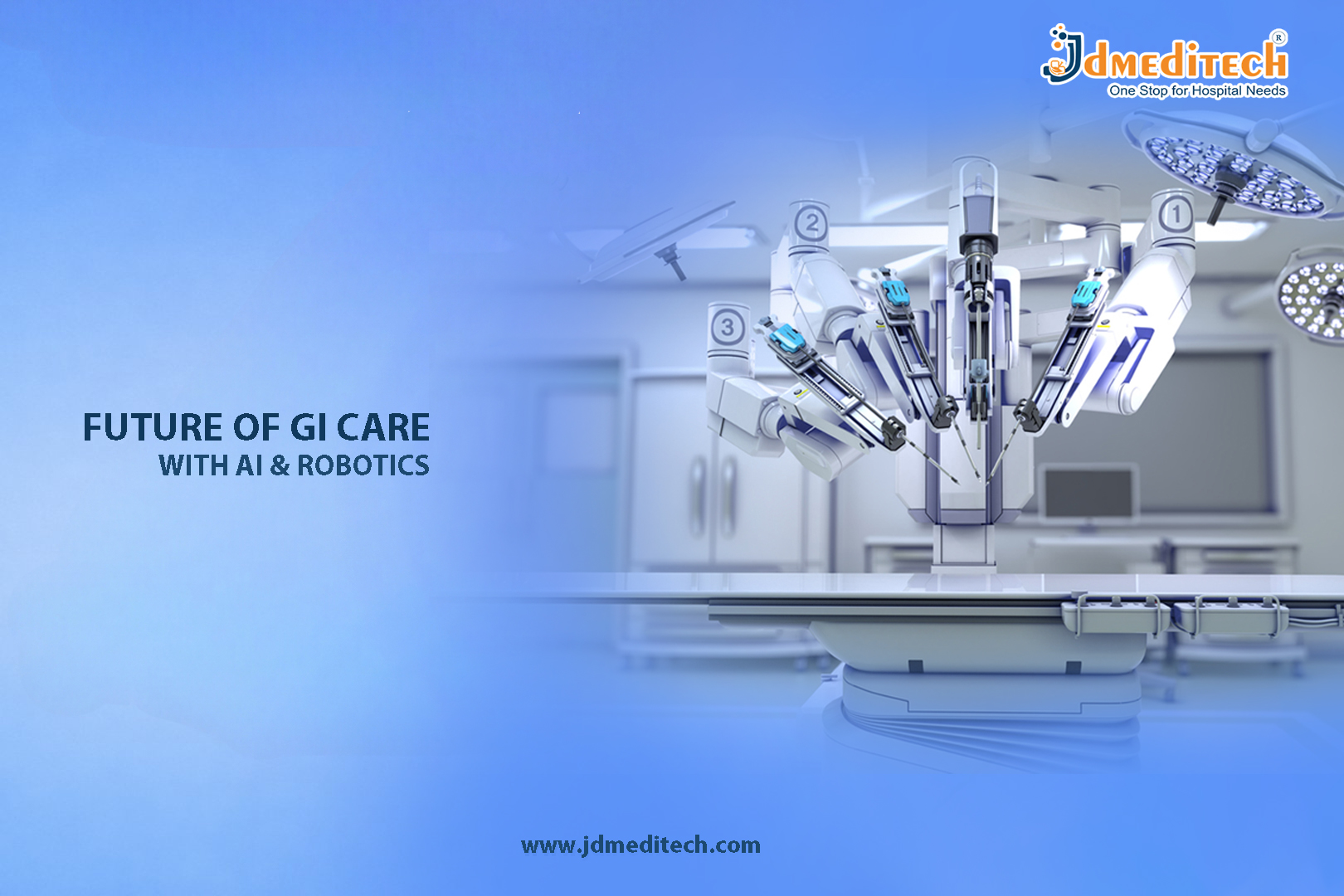
Gastroenterology has entered a new era of innovation. Rapid advances in artificial intelligence (AI), robotic-assisted procedures, and single-use endoscopy devices are transforming how digestive diseases are diagnosed and treated. These technologies are not only improving clinical accuracy but also enhancing patient safety, reducing infection risks, and increasing procedural efficiency.
As hospitals and endoscopy centers continue to modernize, the demand for advanced gastroenterology devices is growing worldwide. Consequently, manufacturers are investing heavily in intelligent imaging systems, robotic platforms, and disposable accessories that support safer and more effective endoscopic procedures.
This article explores the future of gastroenterology, highlighting how AI, robotics, and disposable endoscopy devices are shaping the next generation of digestive healthcare.
The Evolution of Gastroenterology
From Conventional Endoscopy to Smart Technology
Over the past few decades, gastroenterology has evolved significantly. Initially, endoscopic procedures focused primarily on diagnosis. However, continuous technological advancements have expanded the role of endoscopy to include complex therapeutic interventions.
Today, gastroenterologists perform minimally invasive procedures for:
- Gastrointestinal bleeding
- Colon polyps
- Biliary obstruction
- Pancreatic disorders
- Early gastrointestinal cancers
- Foreign body removal
- Endoscopic mucosal resection (EMR)
- Endoscopic submucosal dissection (ESD)
Moreover, digital imaging and advanced accessories continue to improve procedural precision.
Artificial Intelligence in Gastroenterology
Improving Detection and Clinical Decision-Making
Artificial intelligence is becoming one of the most important innovations in digestive healthcare. AI-powered software analyzes endoscopic images in real time and helps physicians identify abnormalities that may otherwise be difficult to detect.
For example, AI systems can assist in identifying:
- Colon polyps
- Early colorectal cancer
- Barrett’s esophagus
- Gastric cancer
- Inflammatory bowel disease
- Gastrointestinal bleeding
Furthermore, AI reduces the chance of missed lesions by highlighting suspicious areas during the procedure. As a result, physicians can make faster and more accurate clinical decisions.
Benefits of AI in Endoscopy
Why AI Is Transforming Gastroenterology
Artificial intelligence offers numerous advantages for healthcare providers.
These include:
- Improved adenoma detection rates
- Earlier cancer diagnosis
- Reduced diagnostic variability
- Faster image analysis
- Enhanced procedural accuracy
- Better documentation
- Improved workflow efficiency
- Greater physician confidence
Consequently, AI is expected to become a routine component of future endoscopy systems.
Robotic-Assisted Endoscopy
Enhancing Precision and Control
Robotic technology is also changing the future of gastroenterology. Unlike conventional manual endoscopy, robotic systems improve scope control, stability, and maneuverability during complex procedures.
Additionally, robotic-assisted platforms allow physicians to perform delicate interventions with greater precision while reducing operator fatigue.
Robotic endoscopy is particularly beneficial for:
- Complex polypectomy
- Endoscopic submucosal dissection
- Natural orifice surgery
- Gastrointestinal tumor resection
- Advanced therapeutic endoscopy
Therefore, robotics continues to expand the possibilities of minimally invasive treatment.
Advantages of Robotic Endoscopy
Clinical Benefits
Robotic-assisted procedures provide several important benefits.
These include:
- Improved precision
- Enhanced stability
- Better instrument control
- Reduced physician fatigue
- Shorter learning curves for advanced procedures
- Improved patient safety
- Increased procedural consistency
As robotic platforms continue to evolve, their adoption is expected to increase worldwide.
The Rising Demand for Disposable Endoscopy Devices
Why Single-Use Devices Are Growing
One of the most significant trends in modern gastroenterology is the increasing adoption of disposable endoscopy devices.
Unlike reusable accessories, single-use devices eliminate the need for reprocessing and sterilization. Consequently, they reduce the risk of cross-contamination and healthcare-associated infections.
Growing demand is driven by:
- Infection prevention
- Simplified workflow
- Consistent device performance
- Reduced maintenance costs
- Faster procedure turnover
- Improved patient safety
Furthermore, healthcare facilities benefit from standardized device quality with every procedure.
Common Disposable Endoscopy Devices
Frequently Used Products
Many endoscopic accessories are now available as single-use devices.
Examples include:
- ERCP Guidewires
- Sphincterotomes
- Injection Needles
- Stone Extraction Balloons
- Stone Retrieval Baskets
- Cytology Brushes
- Biopsy Forceps
- Hemostatic Clips
- Polypectomy Snares
- Biliary Stents
- Pancreatic Stents
- Cannulas
These products improve efficiency while supporting high standards of infection control.
Infection Prevention Through Disposable Devices
Improving Patient Safety
Healthcare-associated infections remain a major concern in endoscopy. Therefore, hospitals are increasingly adopting disposable accessories to reduce contamination risks.
Additionally, single-use devices eliminate concerns related to incomplete cleaning and repeated sterilization. As a result, patient safety improves while hospitals simplify infection control protocols.
This trend has accelerated significantly following increased global awareness of infection prevention practices.
Future Trends in Gastroenterology
What to Expect in the Coming Years
Several innovations are expected to shape the future of digestive healthcare.
These include:
- AI-assisted diagnosis
- Robotic therapeutic endoscopy
- Smart imaging platforms
- Disposable endoscopes
- Remote endoscopy support
- Cloud-based reporting
- Machine learning-assisted pathology
- Real-time lesion characterization
- Computer-aided quality monitoring
Moreover, these technologies will continue improving diagnostic accuracy and treatment outcomes.
Choosing High-Quality Endoscopy Devices
Factors to Consider
Healthcare providers should carefully evaluate endoscopy devices before purchasing.
Important considerations include:
- Clinical performance
- Device compatibility
- Sterility
- Ease of use
- Material quality
- Regulatory compliance
- Manufacturer certifications
- Technical support
- Product consistency
Therefore, selecting premium-quality devices contributes to safer and more efficient procedures.
Why Choose Premium Disposable Endoscopy Devices?
Clinical Advantages
Premium disposable endoscopy devices provide numerous benefits.
These include:
- Reliable performance
- Excellent flexibility
- Smooth device passage
- Consistent quality
- Reduced infection risk
- Better procedural efficiency
- Simplified inventory management
- Compliance with international quality standards
Consequently, hospitals can improve both clinical outcomes and operational efficiency.
Conclusion
Final Thoughts
The future of gastroenterology is being shaped by artificial intelligence, robotic-assisted procedures, and disposable endoscopy devices. Together, these innovations are transforming diagnostic accuracy, therapeutic precision, and infection prevention across modern healthcare facilities.
While AI enables earlier disease detection, robotic technology enhances procedural control, and disposable devices improve patient safety. Therefore, hospitals, endoscopy centers, and medical device manufacturers must continue embracing these advancements to meet the growing demand for high-quality digestive healthcare.
Ultimately, investing in innovative gastroenterology technologies will lead to better clinical outcomes, greater operational efficiency, and improved patient experiences worldwide.
Get Connected:
+91 79909 93062 | +91 63513 72032 | exports@jdmeditech.com