



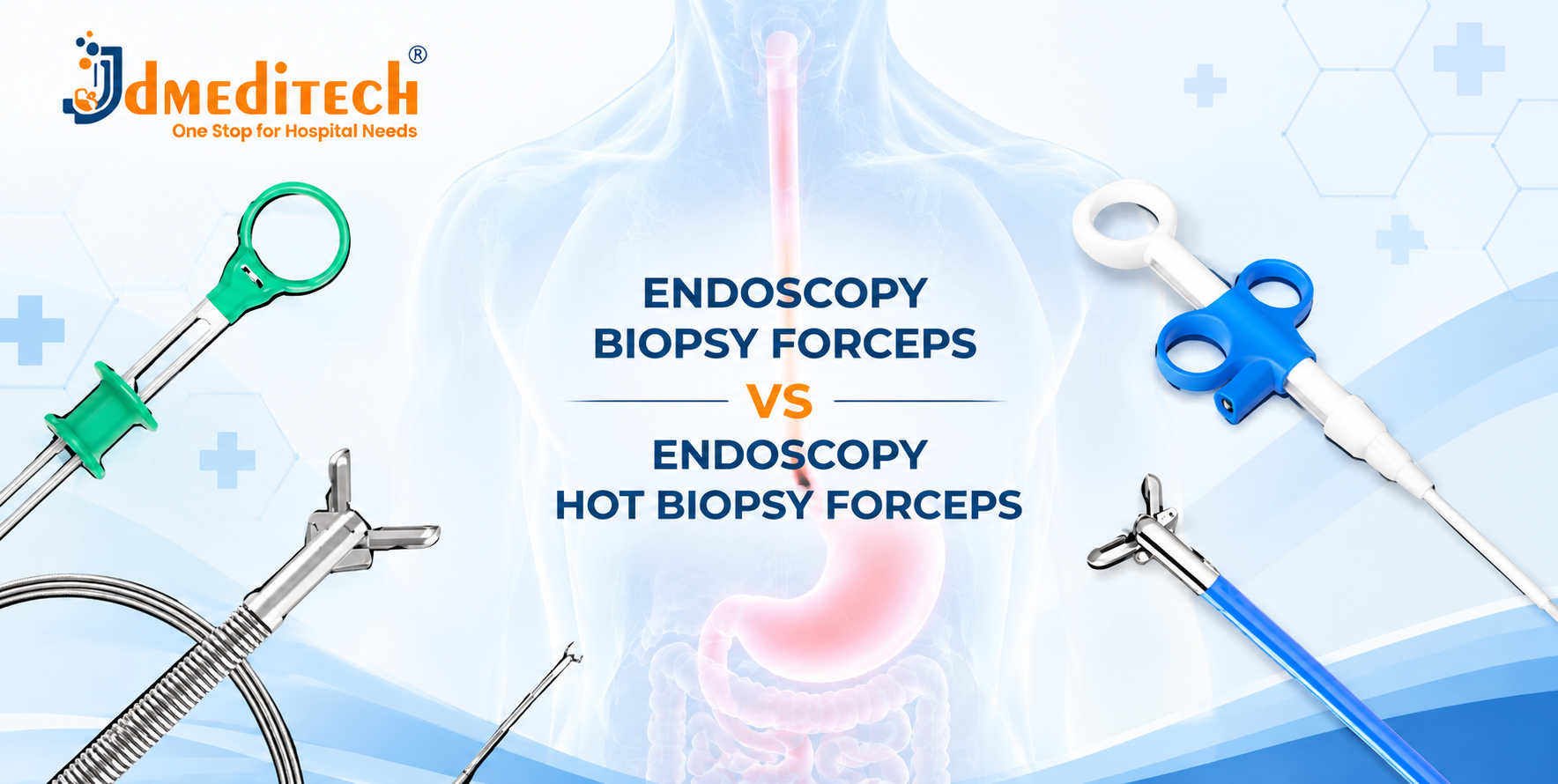
Endoscopy Biopsy Forceps vs Hot Biopsy Forceps: Key Differences, Uses and Applications
Endoscopy biopsy forceps vs hot biopsy forceps is an important comparison for healthcare professionals working in gastrointestinal endoscopy. Although both instruments feature tissue-grasping jaws, they differ in their working methods, clinical uses, energy requirements, and safety considerations.
Therefore, understanding these differences helps healthcare professionals choose suitable instruments for diagnostic tissue sampling and endoscopic procedures. In this guide, JDMeditech explains their features, applications, and safety considerations.
What Are Endoscopy Biopsy Forceps?
Endoscopy biopsy forceps help healthcare professionals collect small tissue samples from the gastrointestinal tract during endoscopic examinations.
First, the clinician introduces the instrument through a compatible endoscope channel. Next, the mechanical jaws grasp a small tissue sample. The healthcare team then sends the specimen for laboratory examination.
Importantly, conventional cold biopsy forceps operate without electrical energy. As a result, they allow tissue sampling without electrosurgical heat.
Key Features of Cold Biopsy Forceps
- Mechanical jaws for tissue sampling
- Flexible shaft for compatible endoscopes
- Suitable design for diagnostic biopsies
- Different jaw configurations depending on the model
- No electrical energy requirement
Common Clinical Applications
Healthcare professionals commonly use cold biopsy forceps during diagnostic gastrointestinal procedures. For example, they may collect tissue samples during gastroscopy or colonoscopy.
- Gastroscopy and colonoscopy biopsies
- Sampling suspicious gastrointestinal tissue
- Collecting specimens for laboratory examination
- Investigating selected gastrointestinal conditions
Furthermore, clinicians choose the appropriate instrument according to the tissue location, endoscope compatibility, and clinical requirements.
What Are Hot Biopsy Forceps?
Hot biopsy forceps combine mechanical tissue grasping with electrosurgical energy. Unlike cold biopsy forceps, these instruments can deliver electrical energy from a compatible generator.
Consequently, the energy produces heat and creates a thermal effect on the tissue. This effect may cause coagulation as well as tissue injury.
Historically, healthcare professionals used hot biopsy forceps for selected tissue removal and coagulation procedures. However, current gastrointestinal endoscopy guidelines advise against using them for colorectal polypectomy because of safety and effectiveness concerns.
Key Characteristics of Hot Biopsy Forceps
- Mechanical tissue-grasping jaws
- Electrosurgical energy capability
- Connection to compatible electrosurgical equipment
- Potential tissue coagulation effect
- Additional thermal injury risks
Therefore, healthcare professionals must consider the intended procedure, device instructions, and relevant clinical guidelines before selecting these instruments.
Endoscopy Biopsy Forceps vs Hot Biopsy Forceps: Comparison
Although both instruments feature grasping jaws, their working methods differ. The following table highlights the main differences between conventional cold biopsy forceps and hot biopsy forceps.
| Feature | Cold Biopsy Forceps | Hot Biopsy Forceps |
|---|---|---|
| Working Principle | Mechanical tissue sampling | Mechanical grasping with electrical energy |
| Electrical Energy | Not required | Required for thermal function |
| Primary Application | Diagnostic tissue biopsy | Historical use in thermal tissue treatment |
| Tissue Effect | Mechanical cutting | Mechanical and thermal effects |
| Equipment | Compatible endoscope | Compatible endoscope and electrosurgical system |
| Safety Considerations | Bleeding and inadequate sampling | Thermal injury, bleeding, and perforation |
How Do Cold Biopsy Forceps Work?
Cold biopsy forceps use mechanical jaws to collect small tissue samples during endoscopy. First, a trained clinician advances the instrument through a compatible endoscope channel.
Next, the clinician positions the jaws near the target tissue. Then, the forceps grasp and collect a small specimen without applying electrical energy.
Afterward, the healthcare team sends the specimen for diagnostic examination. Because the instrument does not apply electrosurgical heat, the specimen avoids heat damage from the biopsy process.
How Do Hot Biopsy Forceps Work?
Hot biopsy forceps deliver electrical energy to tissue held within their jaws. As a result, the energy generates heat and may cause tissue coagulation.
However, this thermal effect also creates additional risks. For example, heat may damage nearby tissue and affect specimen quality.
Therefore, major gastrointestinal endoscopy guidelines discourage hot biopsy forceps for colorectal polypectomy. Instead, current guidance generally recommends cold snare polypectomy for diminutive and small colorectal polyps.
Why Is Instrument Selection Important?
Instrument selection plays an important role in gastrointestinal endoscopy. First, healthcare professionals consider the intended procedure and tissue characteristics.
Additionally, they review endoscope compatibility, instrument specifications, and manufacturer instructions. These factors help clinicians select suitable equipment.
For diagnostic tissue sampling, clinicians commonly choose cold biopsy forceps. In contrast, hot biopsy forceps introduce electrical energy and additional thermal risks.
Therefore, healthcare professionals should follow current clinical guidelines when selecting instruments for colorectal polyp removal.
Important Safety Considerations
Before using endoscopic biopsy instruments, healthcare professionals should review the device specifications and clinical requirements. Moreover, they should confirm compatibility with the intended endoscope and procedure.
- Check endoscope working channel compatibility
- Review manufacturer instructions and intended use
- Confirm suitable instrument dimensions
- Check sterility and single-use or reusable status
- Verify electrosurgical compatibility when applicable
- Consider patient-specific risks and clinical guidelines
Furthermore, clinicians must consider potential complications, including bleeding and tissue injury. Electrosurgical instruments may also cause thermal injury.
JDMeditech Gastroenterology Instruments
JDMeditech supplies medical devices, gastroenterology instruments, and endoscopy accessories for hospitals, healthcare institutions, importers, and distributors.
Our product portfolio includes biopsy forceps and other instruments for gastrointestinal endoscopy. Additionally, we provide product information and professional support for international business inquiries.
Therefore, hospitals and medical distributors can contact our team to discuss product specifications, available configurations, and supply requirements.
Explore our JDMeditech medical device range for more information.
Frequently Asked Questions
1. What is the difference between cold biopsy forceps and hot biopsy forceps?
Cold biopsy forceps collect tissue mechanically without electrical energy. In contrast, hot biopsy forceps can deliver electrosurgical energy and produce thermal effects.
2. What are endoscopy biopsy forceps used for?
Healthcare professionals primarily use these instruments to collect gastrointestinal tissue samples. Afterward, laboratory specialists examine the specimens for diagnostic purposes.
3. Do hot biopsy forceps require an electrosurgical generator?
Yes. Hot biopsy forceps require a compatible electrosurgical system to perform their thermal function.
4. Are hot biopsy forceps recommended for small colorectal polyps?
No. Current major gastrointestinal endoscopy guidelines advise against hot biopsy forceps for colorectal polypectomy because of safety and effectiveness concerns.
5. What is generally preferred for removing small colorectal polyps?
Current guidelines generally recommend cold snare polypectomy for diminutive and small colorectal polyps. However, clinicians must consider lesion characteristics and patient-specific factors.
6. Where can I find JDMeditech endoscopy instruments?
Visit www.jdmeditech.com to explore our medical device range. Additionally, contact our team for product information and international inquiries.
Conclusion
Understanding endoscopy biopsy forceps vs hot biopsy forceps helps healthcare professionals compare mechanical tissue sampling with electrosurgical tissue treatment.
Cold biopsy forceps primarily support diagnostic tissue sampling. In contrast, hot biopsy forceps produce thermal effects and introduce additional risks.
Therefore, clinicians should follow current clinical guidelines and manufacturer instructions when choosing suitable instruments.
For gastroenterology instrument inquiries and product information, connect with JDMeditech.
JDMeditech – One Stop for Hospital Needs.
Clinical References
- ESGE Colorectal Polypectomy Guideline (2024)
- U.S. Multi-Society Task Force – Endoscopic Removal of Colorectal Lesions
Medical Disclaimer: This article provides educational information only. It does not replace professional clinical judgment, current clinical guidelines, or manufacturer instructions for use.




