



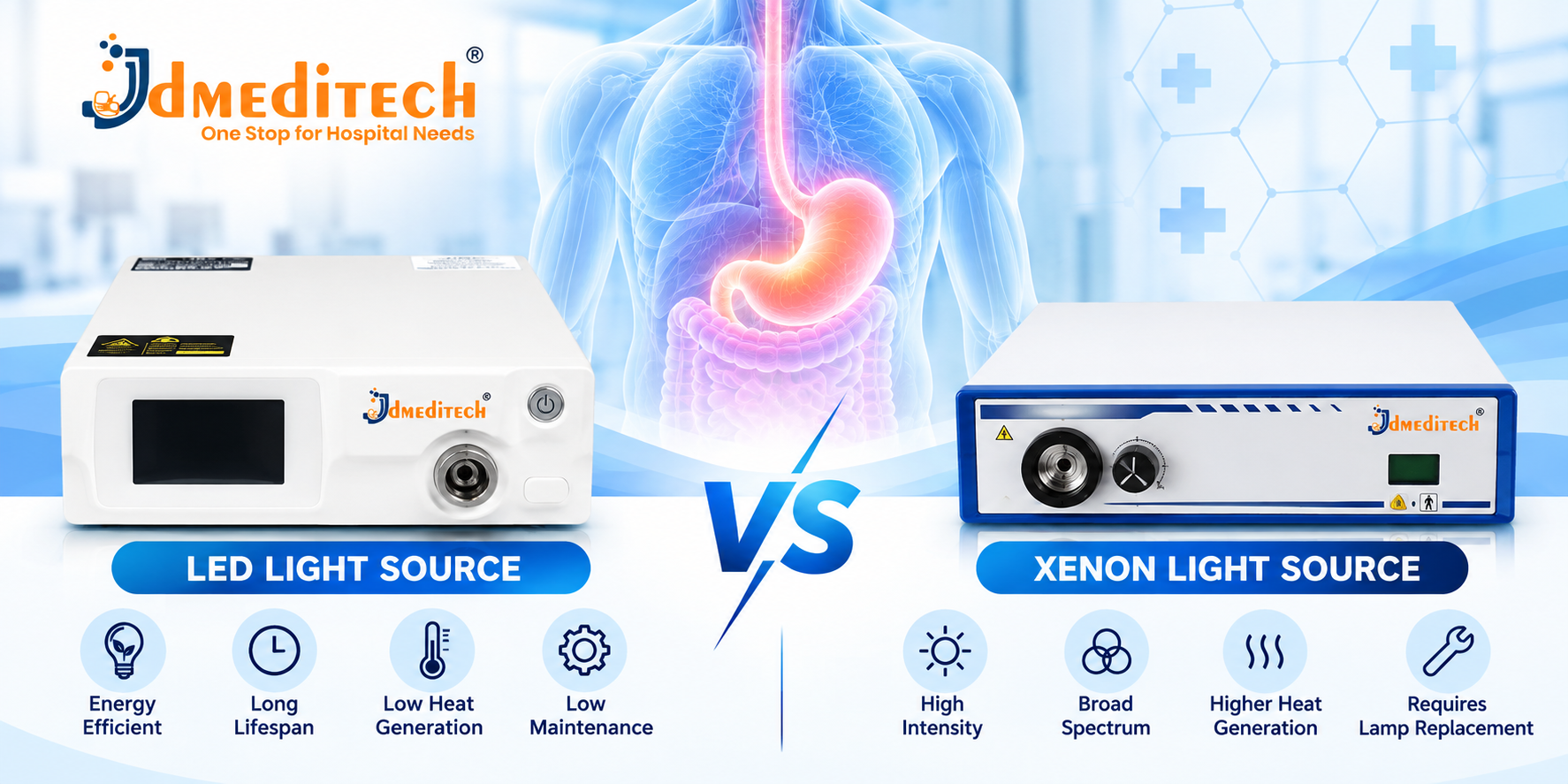
LED Light Source vs Xenon Light Source: Key Differences, Benefits and Applications
LED Light Source vs Xenon Light Source is an important comparison for healthcare professionals selecting illumination equipment for endoscopic procedures. Both technologies provide light for internal visualization. However, they differ in energy consumption, lifespan, heat generation, maintenance, and illumination characteristics.
Therefore, understanding these differences helps hospitals and healthcare professionals evaluate suitable endoscopy lighting systems. In this guide, JDMeditech explains their working principles, benefits, limitations, and clinical applications.
What Is an LED Light Source?
An LED Light Source uses light-emitting diodes to produce illumination. This technology converts electrical energy into light through semiconductor components.
Additionally, modern LED systems can provide bright, stable illumination while consuming relatively little energy. Their compact design also supports integration into compatible medical equipment.
As a result, many healthcare facilities consider LED illumination systems for routine endoscopic procedures and medical imaging applications.
Key Features of LED Light Sources
- Energy-efficient illumination technology
- Long operating lifespan
- Relatively low heat generation
- Stable illumination during operation
- Reduced lamp replacement requirements
- Compact designs in many systems
Furthermore, some advanced LED systems offer adjustable illumination settings and specialized imaging modes. However, these features depend on the specific equipment model.
What Is a Xenon Light Source?
A Xenon Light Source uses a gas-discharge lamp to generate high-intensity illumination. The lamp produces light through an electrical arc inside a xenon-filled chamber.
Unlike LED technology, xenon systems rely on specialized lamps that require periodic replacement. Nevertheless, xenon light sources have a long history of use in medical endoscopy.
Moreover, xenon lamps produce broad-spectrum white light that can support natural-looking tissue visualization when paired with compatible optical equipment.
Key Features of Xenon Light Sources
- High-intensity white illumination
- Broad-spectrum light output
- Established use in endoscopic systems
- Suitable for compatible medical imaging equipment
- Requires lamp replacement during its service life
- Higher heat generation than many LED systems
However, hospitals should consider energy consumption, lamp replacement costs, and cooling requirements when evaluating xenon equipment.
LED Light Source vs Xenon Light Source: Comparison
Although both technologies provide illumination, their operating characteristics differ. Therefore, the following comparison helps explain their general advantages and limitations.
| Feature | LED Light Source | Xenon Light Source |
|---|---|---|
| Technology | Semiconductor LED | Xenon gas-discharge lamp |
| Brightness | High; varies by model | High-intensity illumination |
| Energy Consumption | Generally lower | Generally higher |
| Operating Lifespan | Generally longer | Shorter lamp lifespan |
| Heat Generation | Typically lower | Typically higher |
| Maintenance | Fewer lamp replacements | Periodic lamp replacement |
| Color Rendering | Depends on LED spectrum and system design | Broad-spectrum, daylight-like illumination |
| Operating Cost | Often lower over time | May involve higher energy and lamp costs |
How Does an LED Light Source Work?
An LED Light Source uses semiconductor components to generate light. First, electrical current passes through the LED. Next, the semiconductor emits light.
The system then directs illumination through compatible optical components. Consequently, healthcare professionals can visualize internal structures using an appropriate endoscopic imaging system.
Furthermore, LED technology generally offers efficient operation and a long service life. These advantages can help reduce maintenance requirements.
How Does a Xenon Light Source Work?
A Xenon Light Source generates illumination through an electrical discharge inside a xenon-filled lamp. First, the system establishes an electrical arc.
Next, the arc produces high-intensity white light. The optical system then directs the illumination through compatible light guides and endoscopic equipment.
However, xenon lamps generate substantial heat. Therefore, these systems require suitable cooling and regular maintenance according to manufacturer instructions.
LED Light Source vs Xenon Light Source: Energy Efficiency
Energy efficiency plays an important role in modern healthcare equipment selection. In general, LED systems consume less electrical energy than comparable conventional xenon systems.
For example, published research has reported lower electricity consumption with an LED-based endoscope system compared with a conventional xenon-based system.
However, actual energy savings depend on equipment design, operating conditions, and clinical workflow.
As a result, healthcare facilities should compare manufacturer specifications rather than assume identical savings across all devices.
LED Light Source vs Xenon Light Source: Lifespan and Maintenance
LED systems generally offer longer operating lifespans than xenon lamps. Consequently, hospitals may reduce the frequency of light source replacements.
In contrast, xenon lamps have a limited service life. Healthcare facilities must therefore plan for periodic lamp replacement and related maintenance costs.
Additionally, both technologies require proper inspection, cleaning, and maintenance according to their instructions for use.
Clinical Applications of Endoscopy Light Sources
Healthcare professionals use compatible illumination systems in various endoscopic and minimally invasive procedures.
Common applications may include:
- Gastrointestinal endoscopy
- Diagnostic gastroscopy
- Colonoscopy systems
- Laparoscopic visualization
- ENT endoscopic procedures
- Urological endoscopy
- Other compatible medical imaging applications
However, each application requires suitable equipment compatibility. Therefore, clinicians should verify the light source, endoscope, camera system, and light guide specifications before use.
Which Is Better: LED or Xenon Light Source?
The best choice depends on clinical requirements, equipment compatibility, maintenance needs, and budget.
For example, LED technology may offer advantages when hospitals prioritize energy efficiency, long service life, and reduced lamp replacement.
On the other hand, xenon technology offers established broad-spectrum illumination and remains suitable for compatible endoscopy systems.
Nevertheless, modern LED systems can also provide high-quality illumination. Therefore, brightness and image quality should be evaluated using actual device specifications rather than technology type alone.
Important Factors Before Selecting an Endoscopy Light Source
Before purchasing a medical light source, healthcare professionals should review several important factors.
- Compatibility with existing endoscopy equipment
- Required illumination intensity
- Color rendering performance
- Energy consumption
- Operating lifespan
- Cooling and heat management
- Maintenance requirements
- Manufacturer instructions and safety specifications
Furthermore, hospitals should assess the complete imaging system because the camera, endoscope, and optical components also influence image quality.
JDMeditech Endoscopy Equipment and Light Sources
JDMeditech offers medical devices, endoscopy accessories, and healthcare equipment for hospitals, clinics, medical distributors, and international buyers.
Our medical product range supports different healthcare specialties, including gastroenterology, urology, and minimally invasive surgery.
Additionally, our team assists customers with product inquiries, available specifications, and international supply requirements.
Explore our JDMeditech medical equipment range or contact our team for further information.
Frequently Asked Questions
1. What is the main difference between LED and Xenon Light Sources?
LED systems use semiconductor technology, while xenon systems use gas-discharge lamps. Additionally, LED systems generally offer longer lifespans and lower energy consumption.
2. Which light source lasts longer?
LED light sources generally last longer than xenon lamps. However, the actual service life depends on the device model and operating conditions.
3. Are LED Light Sources suitable for endoscopy?
Yes. Manufacturers use LED technology in many modern endoscopy systems. However, healthcare professionals must confirm compatibility with their equipment.
4. Why do hospitals use Xenon Light Sources?
Xenon systems provide high-intensity, broad-spectrum white illumination. Therefore, they remain useful in compatible endoscopic imaging systems.
5. Do LED Light Sources generate heat?
Yes. LED systems generate heat during operation. However, they generally produce less heat than conventional xenon lamp systems.
6. Which light source requires less maintenance?
LED systems generally require fewer lamp replacements. Nevertheless, both technologies need routine inspection and maintenance.
7. Where can I inquire about JDMeditech endoscopy equipment?
Visit www.jdmeditech.com for medical equipment information and international business inquiries.
Conclusion
Understanding LED Light Source vs Xenon Light Source helps healthcare professionals compare two established medical illumination technologies.
LED systems generally offer energy efficiency, longer operating life, and lower maintenance requirements. In contrast, xenon systems provide high-intensity, broad-spectrum illumination.
Therefore, hospitals should evaluate equipment compatibility, clinical requirements, and operating costs before selecting a suitable light source.
For endoscopy equipment inquiries and medical device supply information, contact JDMeditech.
JDMeditech – One Stop for Hospital Needs.
Clinical and Technical References
- Research: Reduction of Greenhouse Gas Emissions Using an LED Endoscope Light Source
- Research: Tissue Effects of Gastrointestinal Endoscope Tip Temperature
Disclaimer: This article provides general educational information. Product performance, compatibility, and operating specifications vary by manufacturer and model. Always follow the relevant instructions for use.




