



Introduction
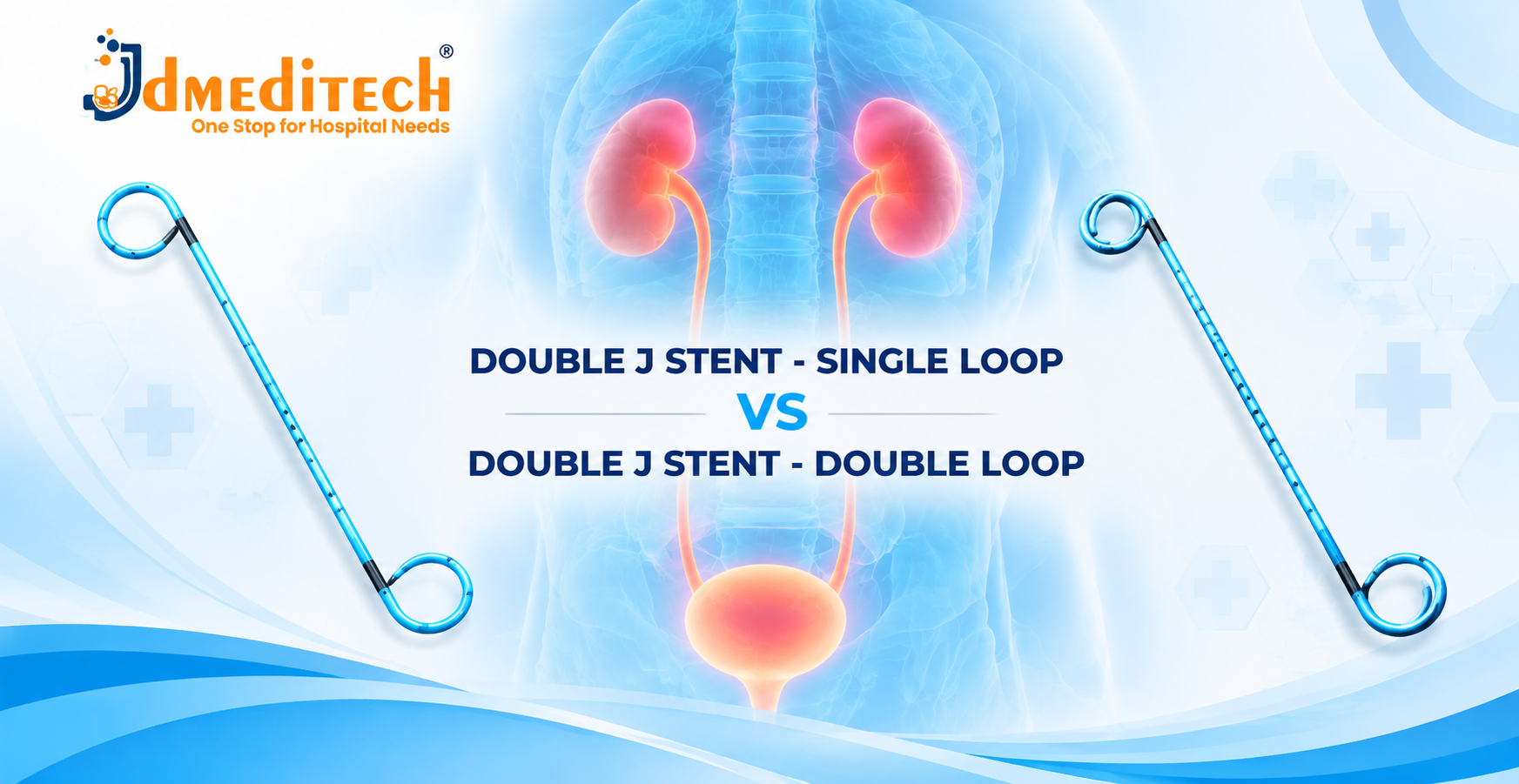
The Double J Stent Single Loop vs Double Loop comparison explains two ureteral stent designs used to support urine drainage.
Both devices help maintain urine flow between the kidney and bladder when clinically needed. However, their end shapes differ.
A single loop stent has one curled end. In contrast, a double loop stent has curls at both ends.
Therefore, doctors must select the correct stent based on the patient’s condition and treatment plan.
What Is a Ureteral Stent?
A ureteral stent is a thin, flexible tube placed inside the ureter. The ureter carries urine from the kidney to the bladder.
Doctors use ureteral stents to help maintain urine flow during selected medical treatments.
For example, a stent may support drainage after kidney stone surgery or during treatment of a narrowed ureter.
Moreover, curled ends can help maintain the position of certain stent designs.
What Is a Single Loop Ureteral Stent?
A Single Loop Ureteral Stent has one curled or pigtail-shaped end. Meanwhile, the opposite end has a different design.
Depending on the device, the straight end may support a specific drainage or access arrangement.
However, single loop designs vary. Therefore, doctors must check the product’s intended use before selecting it.
Key Features of a Single Loop Stent
- One curled end
- Flexible tubular design
- Different sizes and lengths
- Designed for selected drainage needs
- Different end configurations
- Product-specific placement method
Applications of a Single Loop Stent
Single loop stents may support selected urinary drainage procedures.
For example, some designs are used when the clinical plan requires a curled end at one location and a different arrangement at the other end.
However, the exact use depends on the approved device design and placement method.
What Is a Double Loop Ureteral Stent?
A Double Loop Ureteral Stent, commonly called a Double J or DJ stent, has curled ends at both sides.
One curl usually rests in the kidney’s collecting system. Meanwhile, the other curl rests in the bladder.
As a result, the two curls help keep the stent in position.
Key Features of a Double Loop Stent
- Two curled or pigtail-shaped ends
- Flexible ureteral tube
- Different diameters and lengths
- Internal drainage design
- Curled ends for position support
- Different material options
Applications of a Double Loop Stent
- Drainage after selected kidney stone procedures
- Temporary drainage after ureteroscopy
- Selected ureteral narrowing
- Management of certain urinary blockages
- Other approved urological procedures
Nevertheless, stent placement depends on the patient’s needs and the treating doctor’s decision.
Double J Stent Single Loop vs Double Loop: Comparison
| Feature | Single Loop Stent | Double Loop Stent |
|---|---|---|
| End design | One curled end | Two curled ends |
| Other end | Depends on device design | Curled or pigtail-shaped |
| Position support | Depends on configuration | Both curls help maintain position |
| Drainage | Product-specific | Commonly internal kidney-to-bladder drainage |
| Placement | Depends on intended use | Commonly placed within the ureter |
| Size options | Product-dependent | Product-dependent |
| Selection | Based on clinical needs | Based on clinical needs |
In short, the main difference is the number of curled ends. However, the exact purpose also depends on the device design.
Benefits of a Single Loop Ureteral Stent
1. Different End Design
A single loop stent provides one curled end. Therefore, it may suit procedures requiring this configuration.
2. Flexible Construction
Many single loop devices use flexible medical materials. As a result, they can support selected drainage procedures.
3. Different Product Options
Moreover, manufacturers may offer different sizes and lengths for specific applications.
Benefits of a Double Loop Ureteral Stent
1. Two Curled Ends
A Double J stent has a curl at each end. Consequently, these curls help maintain its position within the urinary tract.
2. Supports Internal Drainage
The stent provides a route for urine drainage between the kidney and bladder.
3. Used in Common Urology Procedures
For example, doctors may place Double J stents after selected ureteroscopy or kidney stone procedures.
4. Different Sizes and Materials
In addition, manufacturers offer various sizes and material options to meet different treatment needs.
How to Choose the Right Ureteral Stent
Choosing a suitable stent requires careful medical assessment.
First, the doctor identifies the reason for drainage. Next, the healthcare team reviews the required stent design.
Important Selection Factors
- Single loop or double loop design
- Stent diameter
- Stent length
- Material and flexibility
- Drainage requirements
- Expected placement duration
- Insertion and removal method
- Product compatibility
- Manufacturer’s instructions
Furthermore, the patient’s anatomy and treatment plan can affect the final selection.
Therefore, no single stent design is suitable for every procedure.
Possible Risks and Complications
Ureteral stents can cause side effects or complications.
For example, patients may experience urinary discomfort, frequent urination, blood in the urine, or bladder irritation.
In addition, some stents can move, become blocked, or develop mineral deposits over time.
Therefore, patients should follow their doctor’s instructions and attend planned follow-up appointments.
JDMeditech Ureteral Stent Products
JDMeditech offers urology medical devices and accessories for hospitals, healthcare centers, and international distributors.
Our product range includes ureteral stents and selected urology accessories.
Furthermore, our team supports product inquiries, technical details, and international business requirements.
For available ureteral stent configurations, contact JDMeditech.
Website:
www.jdmeditech.com
Frequently Asked Questions
1. What is the difference between a single loop and double loop stent?
A single loop stent has one curled end. In contrast, a double loop stent has curls at both ends.
2. What is a Double J stent used for?
A Double J stent supports urine drainage between the kidney and bladder during selected urological treatments.
3. Why does a Double J stent have two curls?
The two curled ends help maintain the stent’s position. As a result, they reduce the risk of unwanted movement, although movement can still occur.
4. Are single loop and double loop stents the same?
No. Their end designs differ. Moreover, their intended uses may vary by product.
5. Are ureteral stents available in different sizes?
Yes. Manufacturers offer different diameters and lengths. However, available options depend on the product.
6. Can ureteral stents be removed?
Many ureteral stents are designed for later removal or exchange. Therefore, patients should follow their doctor’s treatment schedule.
7. Where can I inquire about JDMeditech ureteral stents?
Hospitals and medical distributors can contact JDMeditech through
www.jdmeditech.com for product details and quotations.
Conclusion
The Double J Stent Single Loop vs Double Loop comparison highlights important differences in ureteral stent design.
A single loop stent has one curled end. Meanwhile, a double loop stent has curls at both ends.
Both designs may support selected urinary drainage needs. However, their uses and placement methods depend on the product.
Therefore, doctors should choose the right stent based on clinical requirements and approved product specifications.
Contact JDMeditech for ureteral stents, urology devices, and international medical product inquiries.
Medical Disclaimer: This article provides general educational information. Ureteral stent selection, placement, and removal must follow qualified medical judgment and approved manufacturer instructions.




