



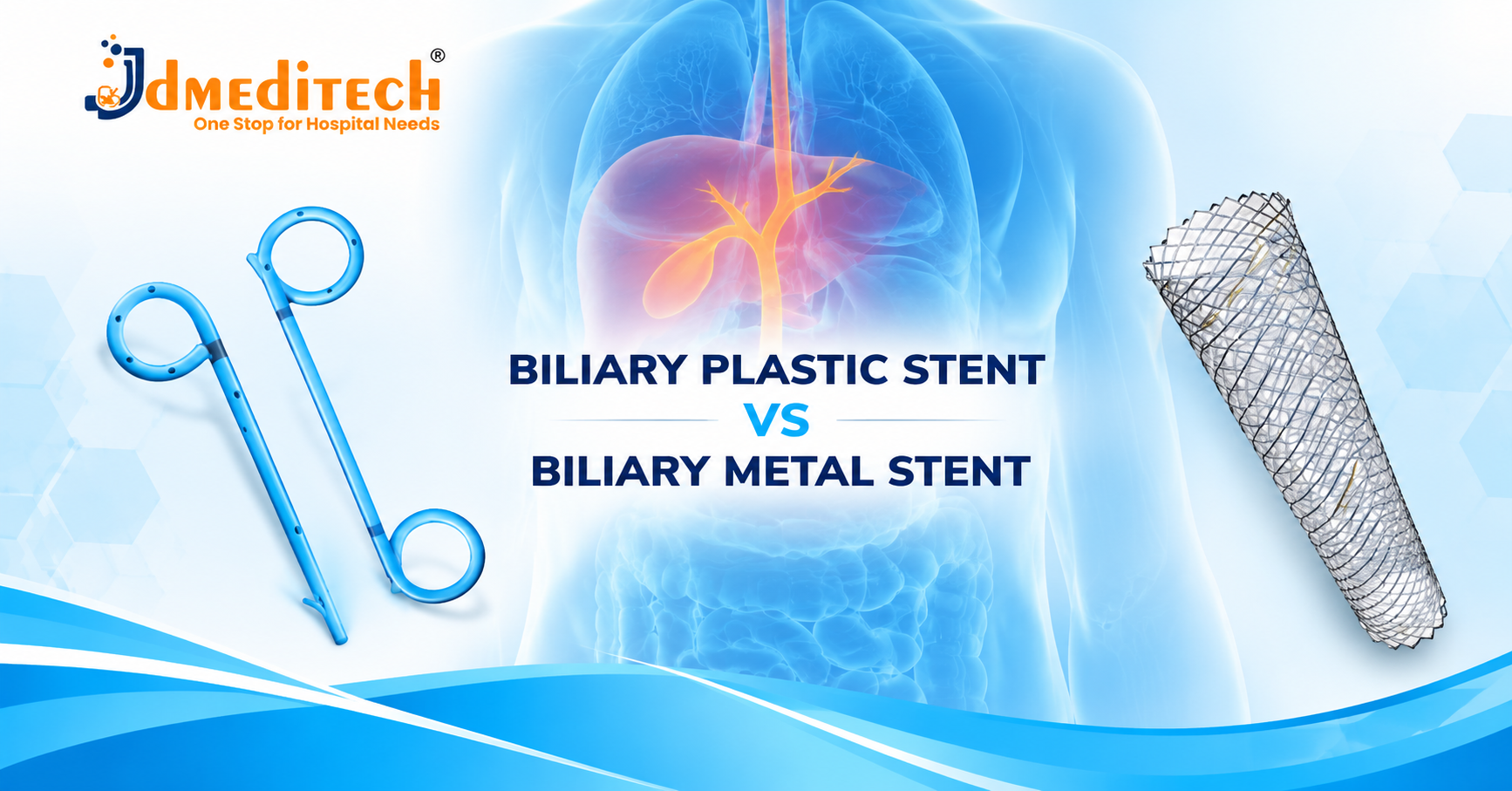
Biliary Plastic Stent vs Biliary Metal Stent: Differences & Uses
Introduction
The Biliary Plastic Stent vs Biliary Metal Stent comparison explains two common devices used for bile duct drainage. Both stents help maintain bile flow when a duct becomes narrow or blocked.
However, these devices differ in material, structure, and drainage performance. Plastic stents often support temporary treatment. In contrast, metal stents may provide longer drainage in selected cases.
Therefore, doctors choose a suitable stent based on the patient’s condition, treatment goals, and medical needs.
What Is a Biliary Stent?
A biliary stent is a small medical tube that helps keep a bile duct open. Doctors commonly place these devices during ERCP, an endoscopic procedure used to examine and treat bile duct problems.
First, the doctor accesses the bile duct using suitable instruments. Next, a stent is placed across the narrowed section. As a result, bile can flow through the treated area more easily.
What Is a Biliary Plastic Stent?
A Biliary Plastic Stent is a flexible medical tube designed to support bile drainage. Manufacturers commonly make these devices from medical-grade plastic.
Moreover, plastic stents are available in different sizes, lengths, and shapes. Therefore, doctors can select a suitable design for the planned procedure.
Key Features of Plastic Biliary Stents
- Flexible plastic construction
- Different sizes and lengths
- Straight and pigtail designs
- Suitable for selected temporary drainage needs
- Generally removable or exchangeable
- Compatible with suitable ERCP accessories
Applications of Plastic Biliary Stents
Plastic biliary stents support several bile duct treatments. For example, doctors may use them in selected benign bile duct narrowing and temporary drainage procedures.
- Selected benign bile duct strictures
- Certain bile duct leaks
- Temporary biliary drainage
- Selected cases involving bile duct stones
- Some malignant bile duct blockages
However, plastic stents may become blocked over time. Therefore, doctors may recommend planned removal or replacement.
What Is a Biliary Metal Stent?
A Biliary Metal Stent is a mesh-like medical device used to maintain bile flow. Many metal stents contain a flexible material called nitinol.
After placement, the stent expands to support the narrowed bile duct. Furthermore, metal stents generally provide a wider drainage opening than plastic stents.
As a result, they often remain open longer in selected malignant bile duct blockages.
Key Features of Metal Biliary Stents
- Self-expanding metal mesh design
- Larger expanded diameter
- Flexible structure
- Covered and uncovered options
- Longer average patency in many malignant blockages
- Compatible delivery systems
Applications of Metal Biliary Stents
Metal biliary stents support selected bile duct drainage procedures. In particular, doctors often use them for malignant bile duct obstruction.
- Selected malignant bile duct blockages
- Longer-term bile drainage in suitable patients
- Selected benign strictures using removable covered stents
- Other approved bile duct drainage procedures
Nevertheless, covered and uncovered metal stents have different uses. Therefore, doctors must confirm the correct design.
Biliary Plastic Stent vs Biliary Metal Stent: Key Differences
| Feature | Plastic Stent | Metal Stent |
|---|---|---|
| Material | Medical-grade plastic | Metal mesh |
| Structure | Flexible tube | Expandable mesh |
| Diameter | Generally smaller | Generally larger |
| Drainage duration | Often shorter | Often longer in malignant blockage |
| Removal | Generally easier | Depends on the design |
| Initial cost | Generally lower | Generally higher |
| Common use | Temporary drainage | Selected longer-term drainage |
In short, plastic stents often suit temporary drainage. Meanwhile, metal stents may offer longer drainage in selected cases.
Benefits of a Biliary Plastic Stent
1. Supports Temporary Drainage
Plastic stents help maintain bile flow during selected short-term treatments. In addition, doctors can choose from different designs.
2. Allows Easier Replacement
During suitable endoscopic procedures, doctors can generally remove or exchange plastic stents. As a result, these devices can support treatment plans requiring stent changes.
3. Offers Different Designs
Manufacturers offer straight and pigtail stents. Therefore, healthcare professionals can select a suitable option.
4. Provides a Lower Initial Cost
Compared with metal stents, plastic stents generally have a lower initial device cost. However, repeat procedures may increase total treatment costs.
Benefits of a Biliary Metal Stent
1. Provides a Larger Drainage Opening
After placement, self-expanding metal stents provide a wider opening for bile flow. Consequently, they can support drainage in selected bile duct blockages.
2. Offers Longer Patency
In many malignant bile duct blockages, metal stents remain open longer than plastic stents. As a result, some patients may require fewer replacement procedures.
3. Supports Different Treatment Needs
Furthermore, metal stents are available in covered and uncovered designs. Each design has different benefits and limitations.
Covered vs Uncovered Biliary Metal Stents
Covered Metal Stents
Covered metal stents have a membrane over the metal mesh. As a result, the covering can reduce tissue growth through the mesh.
In addition, some fully covered stents are designed for later removal. However, these stents may move from their original position.
Uncovered Metal Stents
Uncovered metal stents have an open mesh design. These devices may suit selected malignant bile duct blockages.
However, tissue can grow through the mesh. Therefore, removing an uncovered metal stent can be difficult.
How to Choose the Right Biliary Stent
Choosing the right stent requires careful medical review. First, the doctor identifies the cause and location of the blockage.
Next, the doctor considers the expected treatment duration. In addition, the healthcare team checks the stent specifications.
Important Selection Factors
- Type of bile duct blockage
- Location of the narrowed area
- Expected drainage period
- Stent diameter and length
- Covered or uncovered design
- Need for future removal
- Delivery system compatibility
- Patient’s medical condition
Therefore, the best stent depends on the patient’s needs and the planned procedure.
How Are Biliary Stents Placed?
Doctors commonly place biliary stents during ERCP. First, the doctor advances an endoscope into the upper digestive tract.
Next, suitable instruments provide access to the bile duct. After that, the doctor places the selected stent across the narrowed section.
Finally, the medical team checks drainage and plans follow-up care.
Possible Risks and Complications
Both plastic and metal biliary stents have possible risks. For example, a stent may become blocked or move from its original position.
- Stent blockage
- Stent movement
- Bile duct infection
- Inflammation of the pancreas after ERCP
- Bleeding
- Other procedure-related problems
Moreover, a blocked stent may cause pain, fever, or jaundice. Therefore, patients with concerning symptoms should seek medical care promptly.
JDMeditech Biliary Stent Products
JDMeditech offers gastroenterology medical devices and accessories for hospitals, endoscopy centers, and medical distributors.
Our product range includes biliary stents and selected ERCP accessories. Furthermore, our team supports product inquiries, technical details, and international supply requirements.
For available biliary stent options, contact JDMeditech.
Website: www.jdmeditech.com
Frequently Asked Questions
1. What is the difference between plastic and metal biliary stents?
Plastic stents are flexible tubes. In contrast, metal stents use an expandable mesh design and generally provide a wider opening.
2. Which biliary stent lasts longer?
Metal stents generally remain open longer in many malignant bile duct blockages. However, results vary by patient and device.
3. Can doctors remove plastic biliary stents?
Yes. Doctors can generally remove or exchange plastic stents during suitable endoscopic procedures.
4. Can metal biliary stents be removed?
Some fully covered metal stents are designed for removal. However, uncovered stents can be difficult to remove.
5. Are metal stents always better than plastic stents?
No. Both types have different uses. Therefore, doctors select a stent based on the treatment plan.
6. Can biliary stents become blocked?
Yes. Both types can become blocked by sludge or tissue-related changes. As a result, some patients may need further treatment.
7. Where can I inquire about JDMeditech biliary stents?
Hospitals and medical distributors can visit JDMeditech for product details and quotations.
Conclusion
The Biliary Plastic Stent vs Biliary Metal Stent comparison highlights important differences in material, design, and drainage performance.
First, plastic biliary stents often support temporary drainage. In addition, doctors can generally remove or replace them during suitable endoscopic procedures.
In contrast, self-expanding metal stents provide a larger drainage opening. Moreover, they often remain open longer in selected malignant bile duct blockages.
However, neither type is suitable for every patient. Therefore, doctors must consider the cause of the blockage, treatment duration, and stent design.
Finally, choosing a suitable biliary stent requires careful clinical review and confirmation of product specifications.
Contact JDMeditech for biliary stents, ERCP accessories, and international medical device inquiries.
Medical Disclaimer: This article provides general educational information. Stent selection and placement must follow professional medical judgment and approved manufacturer instructions.




