



Introduction
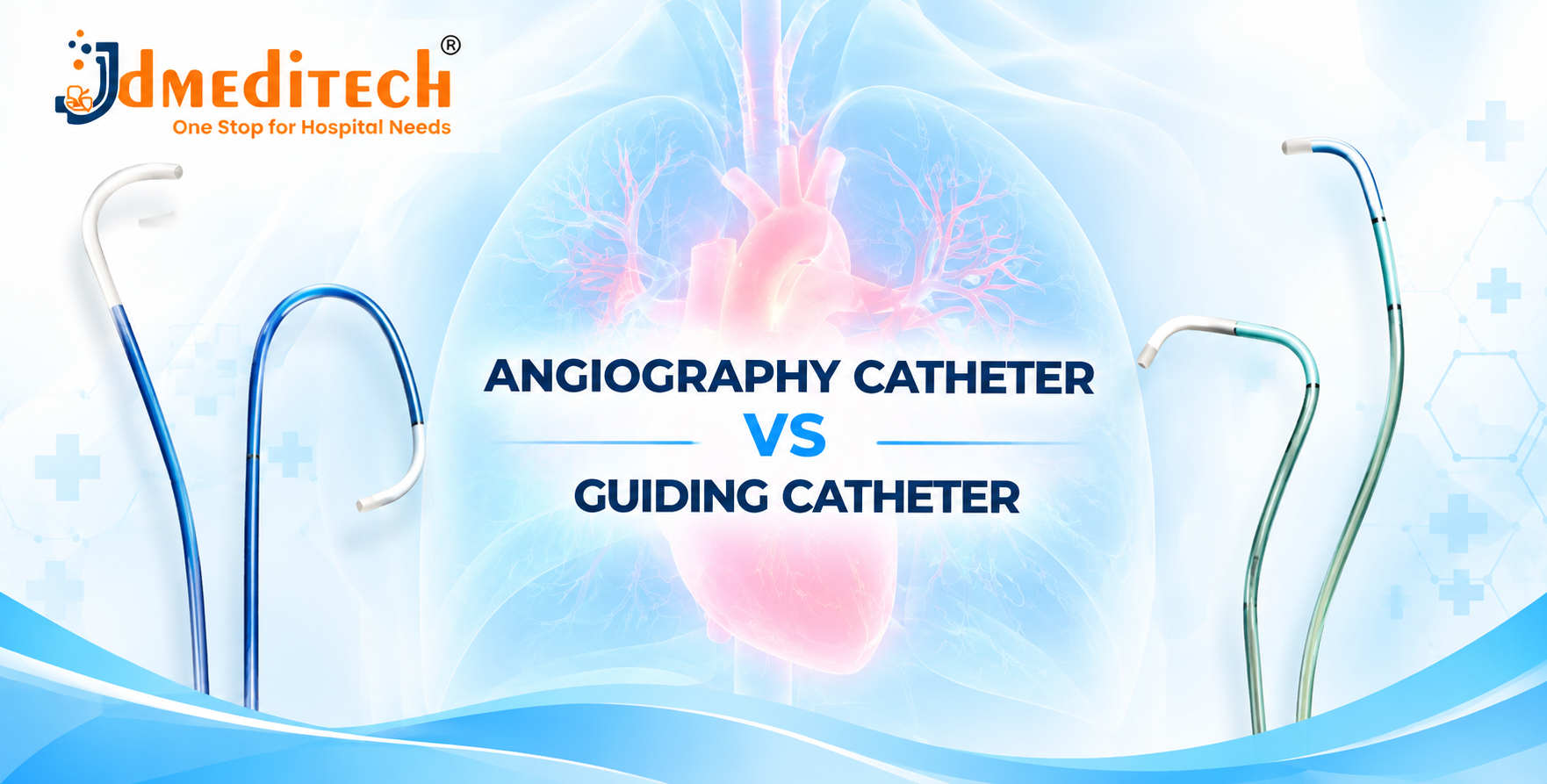
The Angiography Catheter vs Guiding Catheter comparison explains two important medical devices used during heart catheter procedures.
Both catheters help doctors access blood vessels. However, their main purposes differ.
An angiography catheter mainly supports diagnostic imaging. In contrast, a guiding catheter helps deliver suitable medical devices during selected treatments.
Therefore, healthcare professionals choose the right catheter based on the planned procedure.
What Is an Angiography Catheter?
An Angiography Catheter, also called a diagnostic catheter, is a flexible medical tube used during blood vessel imaging.
Doctors use these catheters to deliver contrast dye into selected blood vessels. As a result, X-ray imaging can show the vessel structure and blood flow.
Moreover, different catheter tip shapes help doctors access specific blood vessels.
Key Features of an Angiography Catheter
- Flexible catheter shaft
- Different tip shapes
- Designed for selected contrast injections
- Available in different sizes and lengths
- Used with compatible guidewires
- Supports diagnostic imaging procedures
Applications of an Angiography Catheter
Angiography catheters support several diagnostic procedures.
- Coronary angiography
- Diagnostic cardiac catheterization
- Selected peripheral angiography
- Blood vessel imaging
- Contrast delivery during suitable procedures
However, the exact use depends on the catheter design and approved product instructions.
What Is a Guiding Catheter?
A Guiding Catheter is a medical tube used to provide access and support during selected catheter-based treatments.
For example, doctors may use guiding catheters during coronary angioplasty and other interventional procedures.
Unlike many diagnostic catheters, guiding catheters are designed to support the passage of compatible devices through their inner channel.
Furthermore, they can provide support while doctors advance guidewires, balloon catheters, or stent delivery systems.
Key Features of a Guiding Catheter
- Designed to support interventional devices
- Inner channel for compatible device passage
- Different tip shapes
- Available in different sizes and lengths
- Provides support during selected procedures
- Compatible with suitable guidewires and devices
Applications of a Guiding Catheter
- Coronary angioplasty
- Percutaneous coronary intervention (PCI)
- Selected coronary stent procedures
- Balloon catheter delivery
- Guidewire and device support
- Other approved interventional procedures
Nevertheless, doctors must confirm the catheter’s compatibility with the planned procedure.
Angiography Catheter vs Guiding Catheter: Key Differences
| Feature | Angiography Catheter | Guiding Catheter |
|---|---|---|
| Main purpose | Diagnostic imaging | Interventional device delivery and support |
| Common use | Coronary angiography | Coronary angioplasty and PCI |
| Contrast injection | Common function | Also possible when appropriate |
| Device passage | Limited by design | Designed for compatible devices |
| Support | Primarily diagnostic access | Greater support for device delivery |
| Tip shapes | Different diagnostic shapes | Different guiding shapes |
| Size selection | Procedure-dependent | Device and procedure-dependent |
In short, angiography catheters mainly support imaging. Meanwhile, guiding catheters support selected interventional treatments.
How Does an Angiography Catheter Work?
An angiography catheter helps deliver contrast dye during diagnostic imaging.
First, the doctor establishes suitable blood vessel access. Next, the catheter is advanced under imaging guidance.
After positioning the catheter, the doctor injects contrast dye according to the procedure requirements.
As a result, X-ray imaging helps show the blood vessel structure.
How Does a Guiding Catheter Work?
A guiding catheter provides access and support during selected catheter-based treatments.
First, the doctor positions the catheter near the target blood vessel.
Next, compatible guidewires and other medical devices may pass through the catheter.
For example, the guiding catheter can support balloon catheter or stent delivery during coronary angioplasty.
Therefore, its size, shape, and inner channel must match the planned devices.
Benefits of an Angiography Catheter
1. Supports Diagnostic Imaging
Angiography catheters help doctors deliver contrast dye during selected blood vessel imaging procedures.
2. Different Tip Shapes
Moreover, manufacturers offer different tip designs for specific vessel access requirements.
3. Procedure-Based Selection
Doctors can choose suitable catheter sizes and shapes based on the planned diagnostic procedure.
Benefits of a Guiding Catheter
1. Supports Device Delivery
Guiding catheters provide a pathway for compatible interventional devices.
2. Provides Procedural Support
In addition, suitable guiding catheters support device movement during selected procedures.
3. Different Size Options
Manufacturers offer guiding catheters in different configurations. Therefore, clinicians can select a suitable option for the planned treatment.
How to Choose the Right Catheter
Choosing the correct catheter requires careful clinical planning.
First, doctors identify whether the procedure is diagnostic or interventional.
Next, they review the catheter size, shape, and compatibility.
Important Selection Factors
- Intended clinical procedure
- Catheter tip design
- Outer diameter
- Inner diameter
- Catheter length
- Guidewire compatibility
- Device delivery requirements
- Pressure rating where applicable
- Manufacturer’s instructions
Furthermore, the patient’s anatomy and treatment plan may affect the final choice.
Therefore, healthcare professionals must confirm the device specifications before use.
Safety and Quality Considerations
Cardiac catheterization requires trained medical professionals and suitable equipment.
First, the healthcare team should inspect the catheter packaging and labeling.
Next, clinicians should confirm that the catheter matches the planned procedure.
Moreover, users must follow approved instructions for handling, use, and disposal.
Possible complications include bleeding, blood vessel injury, infection, and contrast-related reactions.
Therefore, proper clinical planning and patient monitoring remain essential.
JDMeditech Angiography and Guiding Catheters
JDMeditech offers cardiology medical devices and accessories for hospitals, cath labs, and international medical distributors.
Our product range includes selected catheter-based devices and related accessories.
Furthermore, our team supports product inquiries, technical specification requests, and international business requirements.
For available Angiography Catheter and Guiding Catheter configurations, contact JDMeditech.
Website: www.jdmeditech.com
Frequently Asked Questions
1. What is the difference between an angiography catheter and a guiding catheter?
An angiography catheter mainly supports diagnostic imaging. In contrast, a guiding catheter supports the delivery of compatible devices during selected treatments.
2. What is an angiography catheter used for?
Doctors use angiography catheters to deliver contrast dye during selected blood vessel imaging procedures.
3. What is a guiding catheter used for?
Guiding catheters help support guidewires, balloon catheters, and other compatible devices during selected interventions.
4. Can a guiding catheter deliver contrast dye?
Yes. Suitable guiding catheters can also deliver contrast dye when used according to their approved instructions.
5. Are angiography catheters and guiding catheters interchangeable?
Not automatically. Their design and intended use differ. Therefore, clinicians must verify device compatibility.
6. Are these catheters available in different sizes?
Yes. Manufacturers offer different sizes and lengths. However, the available options depend on the specific product.
7. Where can I inquire about JDMeditech cardiology catheters?
Hospitals and medical distributors can contact JDMeditech for product details and quotations.
Conclusion
The Angiography Catheter vs Guiding Catheter comparison highlights their different roles in cardiac catheterization.
An angiography catheter mainly supports diagnostic imaging. Meanwhile, a guiding catheter supports the delivery of compatible devices during selected interventions.
Both devices are important in modern cardiology. However, the correct selection depends on the clinical procedure and product specifications.
Therefore, doctors should select suitable catheters based on clinical needs and approved manufacturer instructions.
Contact JDMeditech for cardiology catheters, cath lab accessories, and international medical device inquiries.
Medical Disclaimer: This article provides general educational information. Catheter selection and use must follow professional medical judgment and approved manufacturer instructions.




