



Introduction
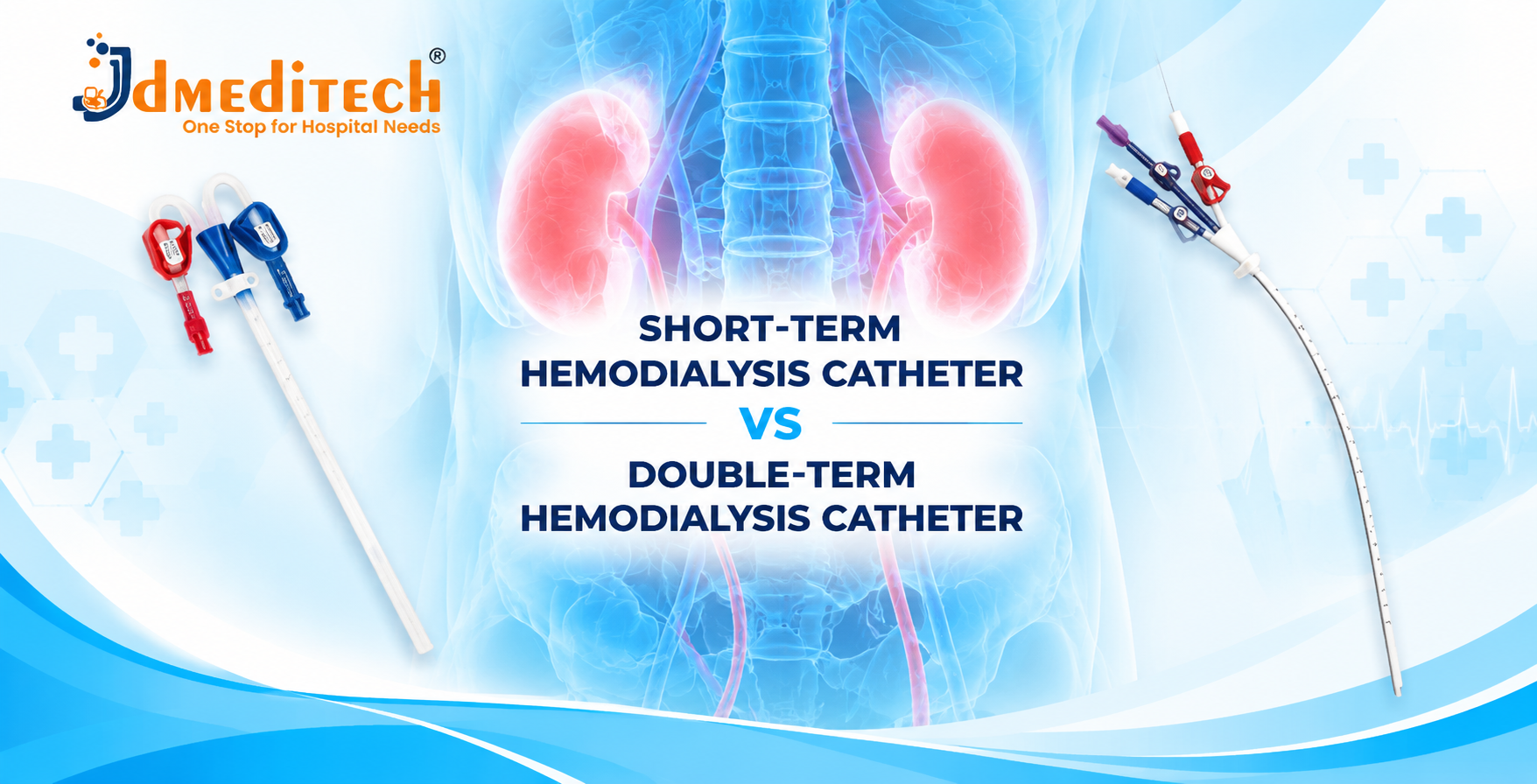
The Short-Term vs Long-Term Hemodialysis Catheter comparison helps healthcare professionals understand two types of vascular access devices used for dialysis.
Both catheters allow blood to travel between the patient and a hemodialysis machine. However, their design, placement, and intended duration of use can differ.
Short-term dialysis catheters commonly provide temporary access. In contrast, long-term dialysis catheters are often designed for extended use when appropriate.
Therefore, doctors select a suitable catheter based on the patient’s treatment needs and vascular access plan.
What Is a Hemodialysis Catheter?
A Hemodialysis Catheter is a flexible medical tube used to provide access to the bloodstream during dialysis.
It commonly contains two separate channels, called lumens. One channel carries blood toward the dialysis machine. Meanwhile, the other returns treated blood to the patient.
As a result, the catheter supports blood flow through the dialysis circuit.
However, catheter selection and placement require trained healthcare professionals.
What Is a Short-Term Hemodialysis Catheter?
A Short-Term Hemodialysis Catheter is generally a non-tunneled vascular access catheter used for temporary dialysis treatment.
Doctors may use this type when a patient needs prompt dialysis access. For example, it may support urgent hemodialysis when permanent access is unavailable.
Moreover, these catheters are usually placed directly into a suitable central vein.
However, they are not normally intended for extended use. Therefore, clinicians must follow the approved device instructions and access plan.
Key Features of a Short-Term Dialysis Catheter
- Commonly non-tunneled design
- Designed for temporary vascular access
- Often available in double-lumen configurations
- Different sizes and lengths
- Suitable for selected urgent dialysis needs
- Placed by trained medical professionals
Applications of a Short-Term Dialysis Catheter
Short-term catheters support selected dialysis situations.
- Urgent hemodialysis access
- Selected acute kidney injury treatments
- Temporary access while another option is arranged
- Selected hospital-based dialysis procedures
- Other approved temporary blood access needs
Nevertheless, the exact application depends on the catheter’s approved intended use.
What Is a Long-Term Hemodialysis Catheter?
A Long-Term Hemodialysis Catheter is commonly a tunneled, cuffed catheter designed for extended dialysis access.
Unlike a typical temporary catheter, a tunneled catheter travels through a short path beneath the skin before entering a suitable vein.
In addition, many designs include a cuff that helps secure the catheter after tissue grows around it.
As a result, these devices can support dialysis access over a longer period when clinically appropriate.
Key Features of a Long-Term Dialysis Catheter
- Commonly tunneled and cuffed design
- Designed for extended dialysis access
- Different catheter lengths and sizes
- Double-lumen options
- Compatible connectors for dialysis equipment
- Requires appropriate catheter care
Applications of a Long-Term Dialysis Catheter
- Extended hemodialysis access
- Dialysis while an AV fistula or graft matures
- Selected patients without suitable permanent access
- Temporary bridging during vascular access planning
- Other approved long-term dialysis access needs
However, tunneled catheters still carry infection and clotting risks. Therefore, careful monitoring and maintenance remain important.
Short-Term vs Long-Term Hemodialysis Catheter: Key Differences
| Feature | Short-Term Catheter | Long-Term Catheter |
|---|---|---|
| Typical design | Non-tunneled | Tunneled and cuffed |
| Intended duration | Temporary use | Extended use |
| Placement | Direct entry into a suitable central vein | Subcutaneous tunnel before vein entry |
| Cuff | Usually absent | Commonly present |
| Common application | Urgent or temporary dialysis | Longer dialysis access needs |
| Infection risk | Present | Present despite tunneling |
| Removal | Based on treatment plan | Based on treatment and access plan |
| Selection | Clinical requirements | Clinical requirements |
In short, the main difference is the intended duration and placement design. However, both catheter types require proper clinical care.
How Does a Hemodialysis Catheter Work?
A hemodialysis catheter provides a pathway for blood to enter and leave the dialysis circuit.
First, trained staff connect the catheter to compatible blood tubing.
Next, blood flows through the dialysis machine and dialyzer. During treatment, the dialyzer removes selected waste products and excess fluid.
Meanwhile, the dialysis circuit returns treated blood to the patient.
Finally, healthcare staff disconnect and secure the catheter according to the approved care procedure.
Benefits of a Short-Term Hemodialysis Catheter
1. Supports Urgent Dialysis Access
Short-term catheters can provide vascular access when dialysis is needed promptly.
2. Supports Temporary Treatment Plans
Moreover, these devices can provide access while clinicians arrange another suitable option.
3. Different Product Configurations
Manufacturers offer different sizes and lengths. Therefore, clinicians can select a suitable device for the planned procedure.
Benefits of a Long-Term Hemodialysis Catheter
1. Supports Extended Dialysis Access
Long-term catheters can provide access when dialysis is needed over an extended period.
2. Tunneled Design
The subcutaneous tunnel and cuff help support catheter positioning. However, they do not eliminate infection risk.
3. Supports Access Planning
For example, a tunneled catheter may provide dialysis access while an AV fistula or graft becomes ready for use.
How to Choose the Right Hemodialysis Catheter
Choosing the correct catheter requires careful medical planning.
First, the healthcare team reviews the patient’s treatment requirements. Next, clinicians consider the expected access duration.
Important Selection Factors
- Temporary or extended dialysis need
- Catheter design
- Catheter diameter and length
- Number of lumens
- Suitable vein access
- Blood flow requirements
- Catheter material
- Connector compatibility
- Patient’s medical condition
- Manufacturer’s instructions for use
Furthermore, the patient’s vascular access history may affect the final decision.
Therefore, catheter selection must follow the treating team’s clinical assessment.
Safety and Catheter Care
Hemodialysis catheters require careful handling and maintenance.
For example, healthcare teams must use appropriate infection prevention measures during catheter access and care.
In addition, staff should inspect the catheter and dressing according to the approved care protocol.
Possible complications include infection, blood clots, catheter blockage, and blood vessel injury.
Therefore, patients and healthcare professionals should follow the recommended monitoring and care plan.
JDMeditech Hemodialysis Catheter Products
JDMeditech offers dialysis medical devices and accessories for hospitals, dialysis centers, and international medical distributors.
Our product range includes selected dialysis catheters and related accessories.
Furthermore, our team supports product inquiries, technical specification requests, and international business requirements.
For available Short-Term and Long-Term Hemodialysis Catheter configurations, contact JDMeditech.
Website: www.jdmeditech.com
Frequently Asked Questions
1. What is the difference between short-term and long-term dialysis catheters?
Short-term catheters are commonly non-tunneled devices used for temporary access. In contrast, long-term catheters are often tunneled and cuffed for extended dialysis access.
2. What is a short-term hemodialysis catheter used for?
Doctors may use short-term catheters when urgent or temporary dialysis access is needed.
3. What is a long-term hemodialysis catheter used for?
Long-term catheters support dialysis when extended vascular access is required.
4. Can a dialysis catheter be used permanently?
Some patients use tunneled catheters for extended periods. However, an AV fistula or graft may be preferred when clinically suitable.
5. Do dialysis catheters have two lumens?
Many hemodialysis catheters have two lumens. However, the exact configuration depends on the product design.
6. Are tunneled catheters free from infection risk?
No. Although tunneling and cuff design can support catheter management, infection remains a concern.
7. Where can I inquire about JDMeditech dialysis catheters?
Hospitals and medical distributors can visit JDMeditech for product information and quotations.
Conclusion
The Short-Term vs Long-Term Hemodialysis Catheter comparison highlights important differences in catheter design and intended duration of use.
Short-term catheters commonly support urgent or temporary dialysis. Meanwhile, long-term tunneled catheters may support extended treatment needs.
Both devices provide vascular access for hemodialysis. However, they require proper selection, placement, and care.
Therefore, healthcare professionals should choose suitable catheters based on clinical needs and approved product specifications.
Contact JDMeditech for hemodialysis catheters, dialysis consumables, and international medical device inquiries.
Medical Disclaimer: This article provides general educational information. Dialysis catheter selection, placement, and care must follow qualified clinical judgment and approved manufacturer instructions.




