



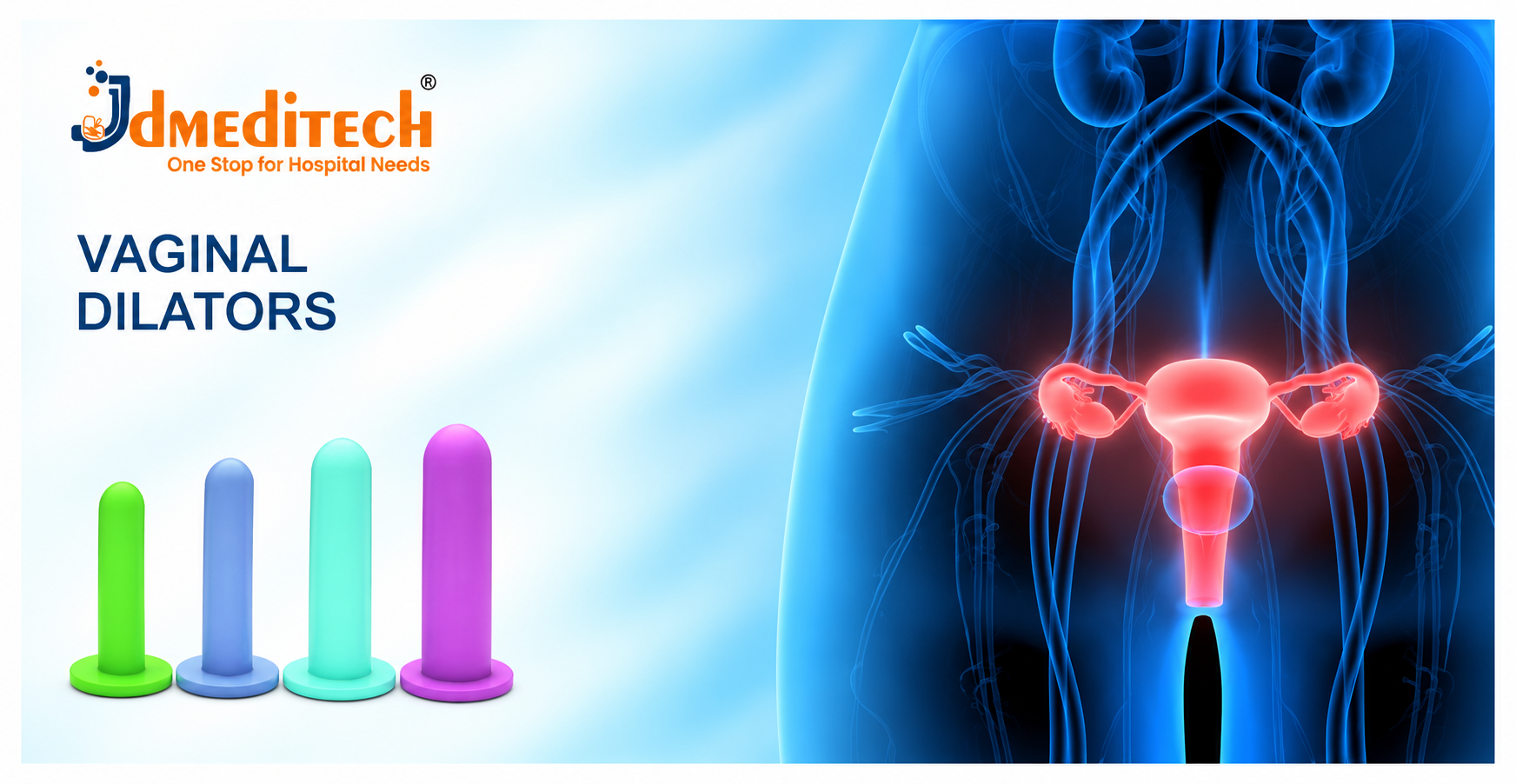
Vaginal Dilators: Complete Guide to Uses, Sizes, Benefits and Gynecology Applications
Vaginal Dilators are medical or therapeutic devices that support gradual vaginal dilation under appropriate clinical guidance. Healthcare professionals may recommend these devices for selected conditions involving vaginal narrowing, discomfort, or difficulty tolerating penetration.
For example, a pelvic health specialist may recommend a graduated vaginal dilator set as part of a treatment program. Meanwhile, gynecologists may recommend dilation after certain procedures or treatments when clinically appropriate.
Therefore, vaginal dilators can form part of a structured rehabilitation plan. However, device selection and progression should follow individual clinical needs.
JDMeditech supplies medical devices and gynecology products for healthcare facilities and medical distributors. Furthermore, customers can inquire about available vaginal dilator configurations and technical specifications.
What Are Vaginal Dilators?
Vaginal dilators are smooth, graduated devices designed for controlled vaginal insertion as part of an appropriate treatment program.
Typically, a dilator set contains devices with different diameters. Consequently, clinicians can recommend a suitable starting size and gradual progression.
However, not every patient requires the same approach. Therefore, healthcare professionals should assess symptoms and treatment goals before recommending dilation.
What Is a Vaginal Dilator Set?
A vaginal dilator set is a collection of dilators with different dimensions.
For example, smaller dilators may support the initial stages of a prescribed program. Meanwhile, larger sizes may become appropriate as tolerance improves.
Nevertheless, patients should never increase size simply to follow a schedule. Instead, progression should remain comfortable and clinically appropriate.
Purpose of Vaginal Dilators
Vaginal dilators support selected gynecological and pelvic health treatment programs.
In particular, clinicians may use them to address vaginal narrowing or difficulty tolerating insertion.
Additionally, a rehabilitation plan may combine dilation with pelvic floor therapy, relaxation techniques, and other treatments.
Why Are Vaginal Dilators Used?
Healthcare professionals may recommend vaginal dilators when a patient experiences selected symptoms or conditions.
- Vaginal narrowing or stenosis
- Selected pelvic floor muscle difficulties
- Difficulty tolerating vaginal insertion
- Selected pain conditions after clinical assessment
- Rehabilitation following certain gynecological treatments
- Selected postoperative care programs
- Other clinician-directed pelvic health applications
However, the underlying cause of symptoms must guide treatment.
Common Clinical Applications of Vaginal Dilators
Vaginal dilators have several possible clinical applications. Nevertheless, the treating specialist must determine whether dilation is appropriate.
1. Vaginal Stenosis Management
Vaginal stenosis involves narrowing or shortening of the vaginal canal.
For example, scarring or certain medical treatments may contribute to this condition.
In selected cases, clinicians recommend dilation to help maintain vaginal patency. However, treatment plans vary according to the cause and severity.
2. Pelvic Floor Rehabilitation
Some patients experience difficulty relaxing their pelvic floor muscles.
Consequently, a pelvic health specialist may recommend gradual dilation as part of a broader rehabilitation program.
Furthermore, treatment may include breathing exercises, relaxation strategies, and pelvic floor physical therapy.
3. Vaginismus-Related Treatment
Vaginismus describes difficulty with vaginal penetration that may involve involuntary pelvic floor muscle tightening and fear or pain.
For example, patients may experience discomfort during examinations or attempted insertion.
Therefore, clinicians may recommend a gradual, patient-controlled dilator program alongside appropriate psychological or pelvic health support.
4. Post-Radiation Vaginal Care
Pelvic radiation treatment can sometimes cause vaginal tissue changes, narrowing, or reduced elasticity.
As a result, a cancer care team may recommend vaginal dilation for selected patients.
However, the appropriate start time, frequency, and duration depend on the treatment plan and tissue healing.
5. Postoperative Vaginal Rehabilitation
Certain gynecological or reconstructive procedures may require postoperative dilation.
For example, the surgical team may recommend a specific dilator program to maintain the intended anatomy.
Nevertheless, patients must follow their surgeon’s instructions and avoid dilation until the clinician confirms adequate healing.
6. Difficulty Tolerating Gynecological Examinations
Some patients experience significant discomfort during vaginal examinations.
After appropriate assessment, a healthcare professional may recommend gradual dilation as part of a wider treatment plan.
Additionally, clinicians should consider pain management, trauma-informed care, and patient preferences.
7. Selected Dyspareunia Treatment Programs
Dyspareunia refers to pain associated with sexual intercourse.
Because several conditions can cause this symptom, clinicians must identify the likely cause before recommending treatment.
Furthermore, vaginal dilators may help selected patients when muscle tension, narrowing, or insertion intolerance contributes to discomfort.
Types of Vaginal Dilators
Vaginal dilators are available in different designs and materials.
For example, some sets contain rigid devices, while others use more flexible materials.
Therefore, the appropriate product depends on patient comfort, clinical recommendations, and manufacturer specifications.
Graduated Vaginal Dilators
Graduated vaginal dilators come in multiple sizes.
Consequently, a clinician can recommend gradual progression when appropriate.
However, patients should prioritize comfort rather than rapid size increases.
Silicone Vaginal Dilators
Some vaginal dilators use medical-grade silicone.
Depending on their design, these products may provide a flexible surface.
Nevertheless, customers should confirm the material and cleaning instructions for the selected product.
Rigid Vaginal Dilators
Rigid vaginal dilators use materials that maintain their shape during use.
For example, certain clinical programs may specify a particular rigid design.
However, suitability depends on the patient’s condition and treatment goals.
Plastic Vaginal Dilators
Some vaginal dilators use medical-grade plastic materials.
Additionally, manufacturers may offer smooth surfaces and different size options.
Therefore, buyers should verify the exact material and product specifications.
Key Features of Vaginal Dilators
Vaginal dilator features vary according to the product model.
- Graduated size options
- Smooth external surface
- Rounded insertion end, depending on design
- Suitable handling base
- Different diameter options
- Different length options
- Selected flexible or rigid materials
- Manufacturer-specified cleaning requirements
Furthermore, customers should confirm actual features before ordering.
Vaginal Dilator Sizes
Vaginal dilator sets commonly contain devices with progressively larger diameters.
However, there is no universal size standard across all manufacturers.
Therefore, buyers should check the actual diameter and length of each dilator.
How to Select the Correct Vaginal Dilator Size
A healthcare professional should recommend a suitable starting size based on clinical assessment.
For example, a smaller size may be appropriate when a patient experiences significant insertion discomfort.
However, pain should not serve as a target for progression. Instead, patients should follow a comfortable, individualized plan.
Technical Specifications of Vaginal Dilators
Technical specifications vary by manufacturer and product model. Therefore, customers should request the verified product datasheet.
| Parameter | Specification |
|---|---|
| Product Name | Vaginal Dilators |
| Product Category | Gynecology / Pelvic Health Device |
| Primary Application | Clinician-directed vaginal dilation |
| Configuration | Individual Dilator or Graduated Set |
| Number of Sizes | According to selected set |
| Diameter | Confirm manufacturer datasheet |
| Length | Confirm manufacturer datasheet |
| Material | According to selected model |
| Color | Model-dependent |
| Surface Finish | Confirm product specifications |
| Reusable or Single Use | According to product labeling |
| Sterility | According to manufacturer labeling |
| Cleaning Method | Follow manufacturer instructions |
| Packaging | According to selected configuration |
| Supplier | JDMeditech, subject to availability |
Components of a Vaginal Dilator Set
A vaginal dilator set may include several graduated devices.
For example, the product image illustrates four dilators in different colors and apparent sizes.
However, the final product configuration may differ. Therefore, customers should confirm the number of dilators and their dimensions.
How Do Vaginal Dilators Work?
Vaginal dilators support gradual, controlled exposure to vaginal insertion as part of an appropriate treatment program.
For some patients, this approach may help improve tolerance and reduce fear associated with insertion.
Meanwhile, selected clinical programs use dilation to help maintain vaginal patency.
However, effectiveness depends on the underlying condition, patient preferences, and treatment plan.
General Principles of Vaginal Dilator Therapy
Vaginal dilator therapy should follow an individualized clinical plan.
First, a healthcare professional assesses the patient’s symptoms and treatment goals.
Next, the clinician recommends an appropriate device and explains safe use.
Furthermore, the patient should progress only when comfortable and clinically appropriate.
Importance of Patient Comfort
Patient comfort is an essential consideration during dilation therapy.
For example, forcing a larger device may increase discomfort or cause tissue injury.
Therefore, patients should stop if they experience significant pain, bleeding, or unusual symptoms and contact their clinician.
Role of Lubrication
A suitable lubricant may help reduce friction during vaginal dilator use.
However, lubricant compatibility depends on the dilator material and patient needs.
Therefore, patients should follow manufacturer instructions and clinician recommendations.
Role of Pelvic Floor Relaxation
Pelvic floor relaxation may support selected vaginal dilation programs.
For example, a pelvic health professional may teach breathing and relaxation techniques.
Additionally, treatment may address anxiety, muscle tension, and other contributing factors.
Benefits of Vaginal Dilators
Vaginal dilators may support selected treatment goals when clinicians recommend them appropriately.
- Support gradual vaginal dilation
- Help selected patients tolerate vaginal insertion
- Support certain pelvic health rehabilitation programs
- Provide graduated size options
- Support selected postoperative treatment plans
- Help maintain vaginal patency in selected conditions
- Allow individualized progression under clinical guidance
However, benefits vary between patients. Therefore, clinicians should monitor treatment progress.
Advantages of Graduated Vaginal Dilator Sets
Graduated sets offer multiple size options within one product configuration.
Consequently, clinicians can select a suitable device according to the patient’s current tolerance.
Furthermore, different sizes may support a structured rehabilitation plan.
Nevertheless, patients should never feel pressured to reach the largest size.
Vaginal Dilators and Pelvic Floor Physical Therapy
Pelvic floor physical therapy may address muscle tension, coordination, and pain-related concerns.
In selected cases, therapists incorporate vaginal dilators into the treatment plan.
Additionally, they may recommend relaxation exercises and other rehabilitation strategies.
However, the treatment approach should remain individualized.
Vaginal Dilators After Gynecological Treatment
Some patients require vaginal rehabilitation after selected medical or surgical treatments.
For example, certain cancer treatment plans include recommendations for vaginal dilation.
However, timing and frequency vary. Therefore, patients must follow their treating team’s instructions.
Safety Precautions for Vaginal Dilators
Appropriate safety precautions help reduce avoidable complications.
- Use dilators only when clinically appropriate
- Follow manufacturer instructions
- Choose a suitable size
- Avoid forcing insertion
- Stop if significant pain occurs
- Seek medical advice for unexpected bleeding
- Follow recommended cleaning procedures
- Do not share personal-use devices
- Confirm whether the device is reusable
- Follow postoperative restrictions when applicable
Furthermore, patients should discuss persistent symptoms with their healthcare professional.
When Should Vaginal Dilators Not Be Used?
Vaginal dilation may be inappropriate in certain situations.
For example, patients with unexplained vaginal bleeding, suspected infection, or unhealed surgical tissue require medical assessment before use.
Additionally, severe pain or new symptoms may indicate a need to change the treatment plan.
Therefore, patients should consult their clinician before beginning or continuing dilation in these circumstances.
Potential Risks of Vaginal Dilator Use
Improper vaginal dilator use may cause discomfort or tissue injury.
- Pain or increased discomfort
- Minor tissue irritation
- Bleeding
- Worsening muscle guarding
- Emotional distress
- Other complications depending on the patient’s condition
Consequently, safe use requires appropriate guidance and attention to symptoms.
Cleaning and Maintenance of Vaginal Dilators
Cleaning requirements depend on the device material and manufacturer instructions.
For example, some reusable devices require washing after each use.
However, patients should not assume that every product tolerates the same cleaning method.
Therefore, they should follow the approved instructions for their specific device.
Storage of Vaginal Dilators
Appropriate storage helps protect product integrity.
For example, users should keep clean devices in a suitable storage area.
Additionally, they should avoid conditions that may damage the material.
However, storage recommendations vary by manufacturer.
Reusable and Single-Use Vaginal Dilators
Some vaginal dilators are reusable, while others may have different labeling.
Therefore, customers must verify the intended use of the selected product.
Furthermore, reusable devices require appropriate cleaning and inspection.
How to Select Vaginal Dilators for Clinical Use
Healthcare facilities should consider several factors before purchasing vaginal dilators.
- Clinical application
- Available diameters
- Available lengths
- Material composition
- Surface finish
- Handle or base design
- Patient comfort considerations
- Cleaning requirements
- Product labeling
- Manufacturer documentation
Furthermore, the selected device should suit the intended treatment program.
Vaginal Dilators for Hospitals
Hospitals may use vaginal dilators in selected gynecology and rehabilitation services.
For example, specialists may recommend dilation after certain treatments.
However, facilities should establish appropriate patient education and follow-up procedures.
Vaginal Dilators for Gynecology Clinics
Gynecology clinics may recommend vaginal dilators for selected patients.
Additionally, clinicians can monitor symptoms and adjust treatment plans.
Therefore, device selection should follow the patient’s diagnosis and clinical needs.
Vaginal Dilators for Pelvic Health Rehabilitation
Pelvic health rehabilitation programs may include vaginal dilators.
For example, therapists may use gradual exposure strategies when appropriate.
Furthermore, treatment may address muscle relaxation and patient confidence.
However, dilators are only one possible part of a comprehensive care plan.
Vaginal Dilators for Medical Distributors
Medical distributors should confirm product specifications and labeling before purchasing.
For example, buyers may need different set configurations or material options.
Additionally, distributors should verify applicable regulatory and documentation requirements.
Why Choose JDMeditech for Vaginal Dilators?
JDMeditech supplies medical devices and gynecology products for hospitals, healthcare facilities, and medical distributors.
Furthermore, customers can contact our team for information about available vaginal dilator products.
- Vaginal Dilator inquiries
- Graduated Dilator Set inquiries
- Gynecology Product inquiries
- Available Size requests
- Material Specification requests
- Product Configuration inquiries
- Quotation requests
- International Export inquiries
However, product availability and specifications require confirmation. Therefore, customers should request a detailed quotation.
Frequently Asked Questions About Vaginal Dilators
1. What Are Vaginal Dilators?
Vaginal dilators are devices used for controlled vaginal dilation in selected treatment programs. However, patients should follow professional clinical guidance.
2. What Is a Vaginal Dilator Set?
A vaginal dilator set contains devices with different sizes. Consequently, clinicians can recommend gradual progression when appropriate.
3. Why Do Doctors Recommend Vaginal Dilators?
Doctors may recommend vaginal dilators for selected conditions involving narrowing or insertion discomfort. However, treatment depends on the diagnosis.
4. Are Vaginal Dilators Used for Vaginismus?
Yes, clinicians may recommend vaginal dilators as part of treatment for vaginismus-related difficulties. Furthermore, therapy may include pelvic floor rehabilitation.
5. Can Vaginal Dilators Help With Vaginal Stenosis?
In selected cases, vaginal dilators may help maintain vaginal patency. However, clinicians must assess the cause and severity.
6. Are Vaginal Dilators Available in Different Sizes?
Yes. Many sets contain graduated sizes. Therefore, buyers should confirm the actual diameter and length of each device.
7. How Do I Choose a Vaginal Dilator Size?
A healthcare professional can recommend a suitable starting size. Additionally, progression should remain comfortable and individualized.
8. Should Vaginal Dilator Use Be Painful?
No. Significant pain is a reason to stop and seek clinical advice. Therefore, patients should never force insertion.
9. Can Vaginal Dilators Be Used After Surgery?
Some postoperative programs include vaginal dilation. However, patients must wait until their surgeon confirms that use is appropriate.
10. Are Vaginal Dilators Used After Radiation Therapy?
Some cancer care teams recommend vaginal dilators after pelvic radiation. Nevertheless, the timing and treatment plan vary.
11. What Materials Are Used for Vaginal Dilators?
Different products may use silicone, plastic, or other suitable materials. Therefore, customers should verify the selected model’s specifications.
12. Are Silicone Vaginal Dilators Available?
Yes, silicone vaginal dilators are available from some manufacturers. However, product availability depends on the supplier.
13. What Is the Purpose of Graduated Dilators?
Graduated dilators provide different size options. Consequently, clinicians can recommend appropriate progression.
14. Can Vaginal Dilators Help With Pelvic Floor Muscle Tension?
They may form part of treatment for selected pelvic floor conditions. However, professional assessment remains important.
15. How Often Should Vaginal Dilators Be Used?
Frequency depends on the condition and treatment plan. Therefore, patients should follow their clinician’s recommendations.
16. How Long Does Vaginal Dilator Therapy Take?
Treatment duration varies between patients. Furthermore, progress depends on the underlying condition and individual response.
17. Can Vaginal Dilators Cause Bleeding?
Improper use or sensitive tissue may cause bleeding. Therefore, patients should stop and seek medical advice if unexpected bleeding occurs.
18. How Should Vaginal Dilators Be Cleaned?
Cleaning depends on the device material and manufacturer instructions. Additionally, reusable products require appropriate hygiene practices.
19. Are Vaginal Dilators Reusable?
Some vaginal dilators are reusable. However, customers must verify the specific product labeling.
20. Can Vaginal Dilators Be Shared?
Personal-use vaginal dilators should not be shared. Furthermore, users should follow the manufacturer’s hygiene instructions.
21. Are Vaginal Dilators Used in Gynecology Clinics?
Yes. Gynecology clinics may recommend vaginal dilators for selected patients. However, clinicians must determine suitability.
22. Can Vaginal Dilators Be Used During Pregnancy?
Pregnant patients should not begin vaginal dilation without guidance from their obstetric clinician. Therefore, individual assessment is essential.
23. What Is the Difference Between Vaginal Dilators and Vaginal Speculums?
Vaginal dilators support gradual dilation therapy. In contrast, a vaginal speculum helps clinicians visualize the vaginal canal and cervix during examinations.
24. What Should Buyers Check Before Purchasing Vaginal Dilators?
Buyers should verify sizes, materials, product labeling, cleaning instructions, and configuration. Furthermore, they should request technical documentation.
25. Are Vaginal Dilators Available as a Complete Set?
Many manufacturers offer graduated sets. However, the number of devices and their sizes vary.
26. Can Pelvic Floor Therapists Recommend Vaginal Dilators?
Qualified pelvic health professionals may recommend vaginal dilators within their scope of practice. Additionally, they can provide individualized guidance.
27. Are Vaginal Dilators Suitable for Everyone?
No. Vaginal dilators are not appropriate for every condition. Therefore, patients should obtain an assessment before use.
28. What Information Is Required for a Quotation?
Customers should provide the required size range, material, quantity, and delivery destination. Additionally, they should mention any specific configuration.
29. Where Can I Inquire About Vaginal Dilators?
Hospitals, gynecology clinics, and medical distributors can contact JDMeditech for product information and quotation inquiries.
30. Why Is Professional Guidance Important?
Professional guidance helps identify suitable treatment goals and precautions. Furthermore, clinicians can adjust the plan according to patient response.
Conclusion
In conclusion, Vaginal Dilators support selected gynecological and pelvic health rehabilitation programs.
Furthermore, graduated dilator sets offer different size options for individualized treatment plans.
Meanwhile, appropriate clinical guidance helps patients use these devices safely and comfortably.
Therefore, healthcare facilities should prioritize product specifications, patient needs, and manufacturer instructions.
JDMeditech – One Stop for Hospital Needs
Website:
www.jdmeditech.com
Medical References
- American College of Obstetricians and Gynecologists
- National Health Service
- National Cancer Institute
- U.S. FDA – Medical Devices
Medical Disclaimer
This article provides general educational and product information only. It does not replace professional medical advice, individualized treatment, or manufacturer instructions for use. Qualified healthcare professionals should determine whether vaginal dilation is appropriate and provide guidance based on each patient’s medical condition.




