



Laparoscopic Washer – Complete Guide to Uses, Features, Types and Surgical Applications
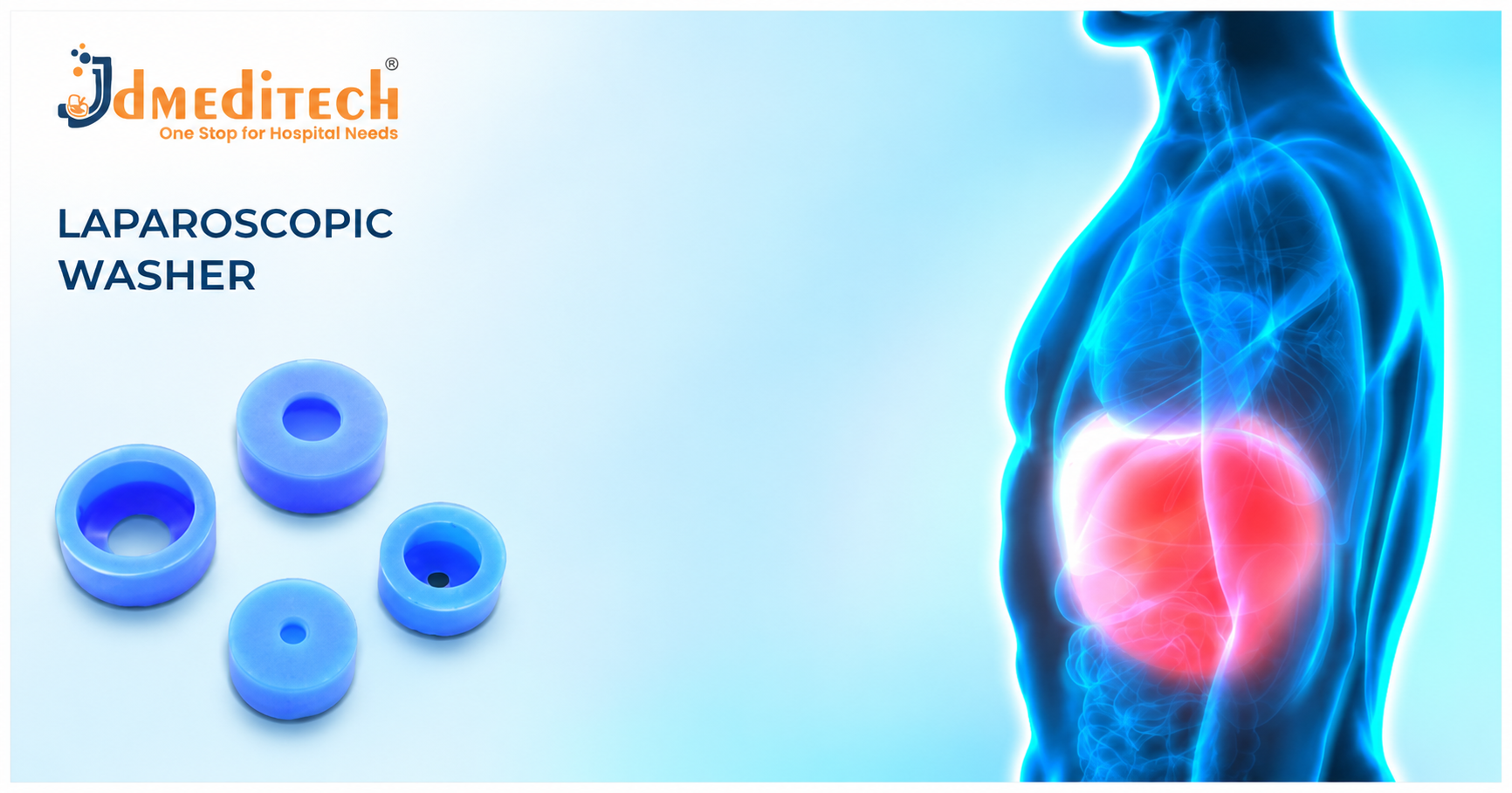
The Laparoscopic Washer is a ring-shaped accessory associated with selected laparoscopic surgical instruments or equipment. Depending on its design, a washer may support spacing, cushioning, sealing or mechanical positioning within a compatible device assembly.
Furthermore, these accessories may come in different dimensions, shapes and materials. However, their intended functions depend on the specific instrument system and manufacturer specifications.
JDMeditech supplies surgical instruments, medical equipment and hospital accessories. Additionally, our team assists hospitals, surgical centers and medical distributors with product information, available configurations and quotation requests.
What Is a Laparoscopic Washer?
A laparoscopic washer is a component or accessory used with certain laparoscopic instrument systems. Its exact function depends on the equipment design.
For example, some washers act as spacing components within an instrument assembly. Meanwhile, other designs may provide cushioning or support.
However, a ring-shaped appearance alone does not establish the intended medical application. Therefore, customers must verify the product’s actual use before ordering.
Purpose of Laparoscopic Washers
The main purpose of a washer depends on its intended device assembly.
For example, a compatible washer may help maintain spacing between selected components.
Additionally, some designs may support contact surfaces or mechanical positioning.
However, only the manufacturer can confirm the approved purpose of a specific product.
Importance of Small Laparoscopic Instrument Components
Laparoscopic instrument systems contain several components that work together.
Furthermore, smaller parts may influence instrument assembly, fit and handling.
For example, a washer with incorrect dimensions may interfere with a compatible device.
Therefore, hospitals should use only the components specified for the instrument system.
Main Design Elements of a Laparoscopic Washer
Depending on the model, a ring-shaped washer may include:
- Outer Ring Surface
- Central Opening
- Inner Contact Surface
- Upper and Lower Faces
- Model-Specific Material Structure
However, the exact geometry and material vary by product.
1. Outer Ring Surface
The outer surface defines the external dimensions of the washer.
Furthermore, its diameter may affect compatibility with the intended instrument assembly.
Therefore, buyers should verify the official dimensional specifications.
2. Central Opening
The central opening may accommodate a compatible shaft, connector or other component.
Additionally, the opening size can influence mechanical fit.
However, customers must confirm the intended assembly before selecting a washer.
3. Inner Contact Surface
The internal surface may contact another part of the instrument system.
Furthermore, its shape and dimensions depend on the selected model.
Therefore, hospitals should verify compatibility with the original equipment manufacturer.
4. Upper and Lower Faces
The washer’s upper and lower faces form its main contact surfaces.
Additionally, surface thickness and geometry may affect the intended mechanical function.
However, exact tolerances require confirmation from the manufacturer.
Key Features of Laparoscopic Washers
Depending on the selected model, available washer components may offer the following characteristics:
- Ring-Shaped Component Design
- Different Available Diameters
- Different Thickness Options
- Model-Specific Material Construction
- Compatibility With Selected Instrument Systems
- Different Available Colours
- Different Central Opening Dimensions
- Reusable or Single-Use Configurations, Where Applicable
However, the manufacturer must confirm the actual product features.
Types of Laparoscopic Washers
Different instrument systems may use different washer designs.
For example, manufacturers may specify rigid, flexible or specially shaped components.
Additionally, some products may feature different internal openings or thicknesses.
However, these categories do not establish interchangeability between instrument systems.
Flexible Washer Components
Some instrument assemblies use flexible washer components.
Furthermore, flexible materials may support selected cushioning or sealing functions when the manufacturer designs them for that purpose.
However, material properties must match the intended operating conditions.
Rigid Washer Components
Other instrument systems may require rigid washer designs.
For example, a rigid component may serve a specified spacing or positioning function.
However, the exact application depends on the instrument manufacturer.
Different Washer Sizes
Washers may vary in outer diameter, inner diameter and thickness.
Furthermore, the required dimensions depend on the compatible equipment.
Therefore, customers should request the official size chart rather than selecting a component by appearance alone.
Possible Applications in Laparoscopic Equipment
Selected laparoscopic equipment assemblies may use washers or ring-shaped components.
Potential applications include:
- Specified Instrument Assembly Components
- Selected Mechanical Spacing Applications
- Approved Instrument Support Functions
- Manufacturer-Specified Cushioning Applications
- Manufacturer-Specified Sealing Applications
- Compatible Instrument Maintenance Systems
However, these are general examples of washer functions. The pictured product’s exact intended use requires manufacturer confirmation.
Application in Instrument Assembly
Some laparoscopic instruments contain multiple connected parts.
Furthermore, specific components may require compatible washers.
However, improper replacement parts can affect instrument performance.
Therefore, staff should follow the original equipment manufacturer’s assembly instructions.
Application in Instrument Maintenance
Reusable laparoscopic instruments may require inspection and maintenance.
Additionally, approved replacement components may form part of a manufacturer-authorized service process.
However, healthcare facilities should not modify instruments with unapproved parts.
Application in Equipment Support Systems
Some medical equipment systems use mechanical washers or spacers.
Furthermore, these components may help maintain the intended arrangement of compatible parts.
However, the specific product must be approved for that equipment system.
How Does a Laparoscopic Washer Work?
The working principle depends on the intended function of the washer.
For example, a spacing washer may maintain a specified distance between components.
Meanwhile, a cushioning washer may provide a compliant contact surface.
However, a sealing washer requires appropriate geometry and material compatibility.
Therefore, customers must follow the manufacturer’s specifications.
Technical Specifications of a Laparoscopic Washer
Exact specifications depend on the selected product. Therefore, buyers should verify the official manufacturer datasheet.
| Parameter | Product Information |
|---|---|
| Product Name | Laparoscopic Washer |
| Product Category | Laparoscopy Instrument Accessory |
| Design | Ring-Shaped Component |
| Primary Function | Confirm Intended Device Application |
| Material | Confirm Manufacturer Specifications |
| Outer Diameter | Confirm Official Size Chart |
| Inner Diameter | Confirm Official Size Chart |
| Thickness | Model-Specific |
| Colour | Model-Specific |
| Instrument Compatibility | Verify Manufacturer Instructions |
| Reusable Status | Confirm Product Labeling |
| Sterile Status | Confirm Product Labeling |
| Cleaning Requirements | Follow Manufacturer Instructions |
| Sterilization Compatibility | Confirm Manufacturer Validation |
| Packaging | Confirm Supplied Configuration |
| Regulatory Documentation | Verify for Destination Market |
Importance of Correct Washer Dimensions
Correct dimensions are essential for compatibility with the intended instrument.
For example, an unsuitable inner diameter may prevent proper assembly.
Additionally, incorrect thickness may affect component positioning.
Therefore, procurement teams should verify the official part number and dimensions.
Importance of Material Compatibility
Washer materials must be compatible with their intended operating environment.
Furthermore, some components may encounter cleaning chemicals, temperature changes or mechanical loads.
However, different materials respond differently to these conditions.
Therefore, hospitals must follow the manufacturer’s material and reprocessing requirements.
Importance of Instrument Compatibility
Not every washer fits every laparoscopic instrument.
For example, similar-looking components may have different dimensions or material properties.
Additionally, different manufacturers may use different assembly designs.
Therefore, customers should confirm compatibility before purchasing replacement parts.
Laparoscopic Washer Versus Surgical Spacer
A washer and a spacer may perform related mechanical functions in certain equipment systems.
However, their shapes and intended applications may differ.
Furthermore, a component identified as a washer should not automatically replace a designated spacer.
Laparoscopic Washer Versus Sealing Ring
Some sealing rings are designed to help maintain a specified seal within a compatible assembly.
In contrast, a general washer may primarily support spacing or contact between components.
However, certain specialized washers may also serve a sealing function.
Therefore, the manufacturer’s intended use determines the correct classification.
Potential Benefits of Compatible Washer Components
Appropriately selected washer components may offer several practical features.
- Compatibility With Specified Instrument Assemblies
- Different Available Size Options
- Model-Specific Mechanical Support
- Specified Spacing or Cushioning Functions
- Potential Replacement Part Availability
- Different Material Configurations
Furthermore, using an approved component can help maintain the intended instrument configuration.
However, these characteristics do not guarantee improved surgical outcomes.
Important Safety Precautions
Only qualified personnel should install or replace components in medical instruments.
Furthermore, staff must verify the part number and compatibility.
Additionally, healthcare facilities should inspect components before use.
Therefore, hospitals must follow the manufacturer’s instructions and established safety protocols.
Potential Risks of Incorrect Washer Selection
Incorrect component selection may create instrument performance or safety concerns.
Potential risks include:
- Improper Instrument Fit
- Mechanical Instability
- Component Damage
- Instrument Malfunction
- Unexpected Component Movement
- Incompatible Material Performance
- Reprocessing Damage
- Other Device-Related Complications
However, actual risks depend on the instrument design and intended application.
Inspection Before Use
Healthcare personnel should inspect compatible washer components before use.
- Confirm Product Identification
- Verify Correct Part Number
- Check Outer Diameter
- Check Inner Diameter
- Inspect Surface Integrity
- Examine for Cracks or Deformation
- Verify Instrument Compatibility
- Confirm Sterile Status, Where Applicable
- Follow Manufacturer Instructions
Additionally, staff should remove damaged or unsuitable components from service.
Cleaning and Reprocessing
Reusable components require appropriate cleaning and reprocessing.
Furthermore, material construction may affect chemical and temperature compatibility.
However, not every washer is reusable or suitable for sterilization.
Therefore, healthcare facilities must follow the validated manufacturer instructions.
Sterilization Requirements
Sterilization compatibility depends on the component material and intended use.
For example, certain materials may tolerate specified sterilization methods.
However, other materials may degrade under high temperatures or chemical exposure.
Therefore, staff should never assume that a washer is autoclavable without manufacturer confirmation.
Storage and Handling Guidelines
Proper storage helps protect small instrument components.
For example, hospitals may use designated containers for approved replacement parts.
Additionally, staff should avoid unnecessary compression, deformation or chemical exposure.
Therefore, facilities should follow the manufacturer’s storage recommendations.
How to Choose the Right Laparoscopic Washer
Hospitals and procurement teams should review several factors before purchasing.
- Intended Instrument Application
- Manufacturer Part Number
- Outer Diameter
- Inner Diameter
- Component Thickness
- Material Specification
- Mechanical Function
- Instrument Compatibility
- Reusable or Single-Use Status
- Sterilization Compatibility
- Packaging Configuration
- Regulatory Documentation
Furthermore, the biomedical engineering or instrument maintenance team should confirm the final selection.
Applications in Hospitals
Hospitals use a wide range of laparoscopic instruments and accessories.
Additionally, selected equipment systems may require compatible washer components.
However, the required inventory depends on the specific instrument models used by the hospital.
Applications in Surgical Centers
Surgical centers may maintain approved replacement parts for selected instrument systems.
Furthermore, correct component identification can support equipment maintenance.
However, replacement activities must follow manufacturer requirements.
Applications for Medical Distributors
Medical distributors should confirm the exact washer specifications before preparing quotations.
For example, customers may request particular dimensions, materials or instrument compatibility.
Additionally, destination-market regulations may affect documentation requirements.
Therefore, distributors should request the appropriate technical and regulatory information.
Why Choose JDMeditech?
JDMeditech supplies surgical instruments, medical equipment and hospital accessories for healthcare facilities and medical distributors.
Furthermore, our team can assist customers with available product information, technical specifications and quotation requests.
Customers can contact JDMeditech regarding:
- Laparoscopic Washer Product Inquiries
- Laparoscopy Instrument Accessories
- Available Washer Dimensions
- Material Information
- Instrument Compatibility Requirements
- Product Configuration Requests
- Hospital Procurement Inquiries
- International Export Requests
However, exact availability, specifications and regulatory documentation require confirmation.
Frequently Asked Questions About Laparoscopic Washers
1. What Is a Laparoscopic Washer?
It is a ring-shaped accessory associated with selected laparoscopic instrument systems.
2. What Is the Main Purpose of a Laparoscopic Washer?
Its function depends on the instrument design. For example, some washers support spacing, cushioning or other specified mechanical functions.
3. Are Different Washer Sizes Available?
Different dimensions may be available. Therefore, customers should request the official size chart.
4. What Materials Are Used?
Materials vary by manufacturer. Therefore, buyers should verify the official product specifications.
5. Are Laparoscopic Washers Reusable?
Reusable configurations may exist. However, customers must verify the product labeling.
6. Can These Washers Be Sterilized?
Sterilization compatibility depends on the selected material and manufacturer instructions.
7. Are Washers Compatible With Every Laparoscopic Instrument?
No. Compatibility depends on the intended instrument system and exact component dimensions.
8. Can a Washer Be Used as a Sealing Ring?
Only when the manufacturer specifically approves the component for that purpose.
9. Why Is the Inner Diameter Important?
The inner diameter influences compatibility with the intended shaft or connector.
10. Why Is Washer Thickness Important?
Thickness may affect spacing and component positioning within an instrument assembly.
11. Can Damaged Washers Be Reused?
No. Personnel should follow manufacturer instructions and remove damaged components from use.
12. Are Different Colours Available?
Some product ranges may offer different colours. However, colour availability depends on the manufacturer.
13. Can Hospitals Order Replacement Washers?
Replacement availability depends on the instrument manufacturer and approved component specifications.
14. What Should Buyers Confirm Before Ordering?
Buyers should verify dimensions, material, intended use, compatibility and regulatory documentation.
15. Where Can Customers Request Product Information?
Hospitals, surgical centers and medical distributors can contact JDMeditech for available product information and quotations.
Conclusion
In conclusion, the Laparoscopic Washer is a ring-shaped accessory used with selected laparoscopic instrument systems.
Furthermore, different washer designs may serve different mechanical functions.
Additionally, dimensions, material properties and instrument compatibility influence product selection.
However, safe use requires the correct manufacturer-approved component.
Therefore, healthcare facilities should verify all technical specifications before purchasing.
JDMeditech – One Stop for Hospital Needs
Website:
www.jdmeditech.com
Related Laparoscopy Products
- Laparoscopic Trocar
- Laparoscopic Instrument Set
- Laparoscopic Grasping Forceps
- Laparoscopic Dissecting Forceps
- Laparoscopic Scissors
- Laparoscopic Needle Holder
- Laparoscopic Instrument Accessories
Medical Disclaimer
This article provides general educational and product information only. It does not replace manufacturer instructions, surgical training or medical device maintenance requirements. Healthcare professionals must verify the component’s intended use, compatibility, technical specifications and applicable safety instructions before use.




