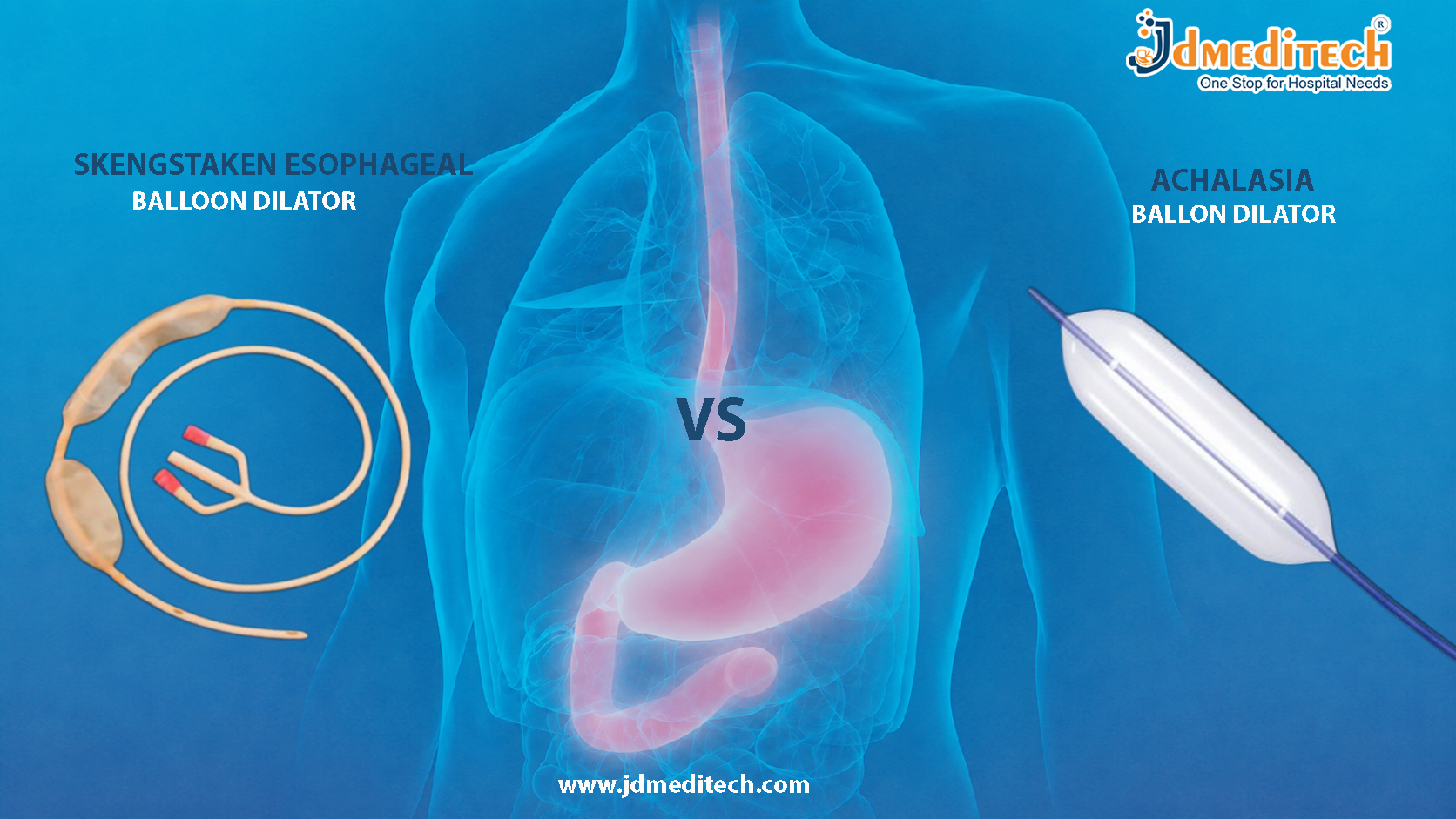
Esophageal disorders often require specialized devices to restore normal function or control life-threatening complications. Among these devices, the Achalasia Balloon Dilator and the Sengstaken Esophageal Balloon Dilator play critical roles in gastroenterology and emergency care.
Although both devices utilize balloon technology, they serve entirely different clinical purposes. While the Achalasia Balloon Dilator treats esophageal narrowing by dilating the lower esophageal sphincter, the Sengstaken Esophageal Balloon Dilator controls acute esophageal variceal bleeding through tamponade.
Therefore, healthcare professionals must understand the differences between these devices to select the most appropriate solution for specific clinical conditions.
What is an Achalasia Balloon Dilator?
An Achalasia Balloon Dilator is a specialized endoscopic device designed to treat achalasia, a motility disorder in which the lower esophageal sphincter fails to relax properly.
During pneumatic dilation, physicians position the balloon across the lower esophageal sphincter and inflate it under controlled pressure. Consequently, the procedure disrupts the muscle fibers and improves the passage of food into the stomach.
As a result, patients experience significant relief from symptoms such as dysphagia, regurgitation, and chest discomfort.
What is a Sengstaken Esophageal Balloon Dilator?
A Sengstaken Esophageal Balloon Dilator, commonly known as a Sengstaken-Blakemore Tube, is an emergency device used to control bleeding from esophageal varices.
Physicians insert the tube through the nose or mouth and inflate the gastric and esophageal balloons. The inflated balloons compress bleeding varices and create direct pressure, thereby controlling hemorrhage until definitive treatment becomes available.
Consequently, the device serves as a temporary life-saving intervention during severe upper gastrointestinal bleeding.
Achalasia Balloon Dilator vs Sengstaken Esophageal Balloon Dilator: Key Differences
Primary Clinical Purpose
Achalasia Balloon Dilator: Treats achalasia by dilating the lower esophageal sphincter.
Sengstaken Esophageal Balloon Dilator: Controls acute esophageal variceal bleeding through balloon tamponade.
Mechanism of Action
The Achalasia Balloon Dilator stretches and disrupts the muscle fibers of the lower esophageal sphincter. Therefore, it improves esophageal emptying.
In contrast, the Sengstaken device compresses bleeding vessels mechanically. As a result, it temporarily stops hemorrhage.
Clinical Setting
Physicians typically use Achalasia Balloon Dilators in endoscopy suites during planned therapeutic procedures.
Conversely, healthcare professionals use Sengstaken tubes in emergency departments, intensive care units, and critical care settings.
Duration of Use
Physicians generally use Achalasia Balloon Dilators only during the procedure itself.
However, clinicians may leave Sengstaken tubes in place temporarily until they achieve definitive hemostatic treatment.
Target Disease
Achalasia Balloon Dilators specifically treat:
- Achalasia
- Lower esophageal sphincter dysfunction
- Functional esophageal obstruction
Sengstaken Esophageal Balloon Dilators primarily manage:
- Bleeding esophageal varices
- Portal hypertension-related hemorrhage
- Massive upper gastrointestinal bleeding
Advantages of Achalasia Balloon Dilator
- Provides minimally invasive treatment
- Improves swallowing function
- Reduces dysphagia symptoms
- Offers long-term symptom relief
- Avoids major surgery in many patients
- Delivers effective therapeutic outcomes
Advantages of Sengstaken Esophageal Balloon Dilator
- Provides rapid bleeding control
- Serves as a life-saving emergency device
- Stabilizes critically ill patients
- Reduces blood loss temporarily
- Acts as a bridge to definitive treatment
When Should Physicians Use an Achalasia Balloon Dilator?
Physicians commonly use an Achalasia Balloon Dilator for:
- Primary achalasia treatment
- Recurrent achalasia symptoms
- Non-surgical management of achalasia
- Patients unsuitable for surgery
Furthermore, gastroenterologists often choose pneumatic dilation as an effective alternative to surgical myotomy.
When Should Physicians Use a Sengstaken Esophageal Balloon Dilator?
Healthcare professionals use Sengstaken devices in emergency situations such as:
- Acute esophageal variceal hemorrhage
- Massive upper gastrointestinal bleeding
- Failure of pharmacological therapy
- Temporary stabilization before endoscopic intervention
Therefore, clinicians reserve the device for severe and uncontrolled bleeding episodes.
Which Device is Better?
Neither device is superior because both serve entirely different clinical purposes.
If a patient suffers from achalasia, physicians should use an Achalasia Balloon Dilator to restore esophageal function.
However, if a patient presents with life-threatening variceal bleeding, clinicians should use a Sengstaken Esophageal Balloon Dilator to achieve temporary hemostasis.
Ultimately, the patient’s clinical condition determines the appropriate device selection.
Why Choose JDMeditech Gastroenterology Devices?
JDMeditech manufactures high-quality gastroenterology devices designed to support safe, effective, and reliable clinical outcomes.
Key Features
- Medical-grade materials
- Precision manufacturing
- Excellent balloon performance
- Reliable clinical functionality
- Sterile and ready-to-use design
- Compliance with international quality standards
- Multiple size options available
Conclusion
Both Achalasia Balloon Dilators and Sengstaken Esophageal Balloon Dilators play essential roles in modern gastroenterology practice. While Achalasia Balloon Dilators improve esophageal motility disorders, Sengstaken devices provide emergency hemorrhage control.
Therefore, healthcare professionals must understand the indications, mechanisms, and applications of each device to ensure optimal patient care.
By selecting high-quality gastroenterology devices from JDMeditech, clinicians can enhance treatment outcomes and improve patient safety.
Get Connected:
+91 79909 93062 | +91 63513 72032 | exports@jdmeditech.com