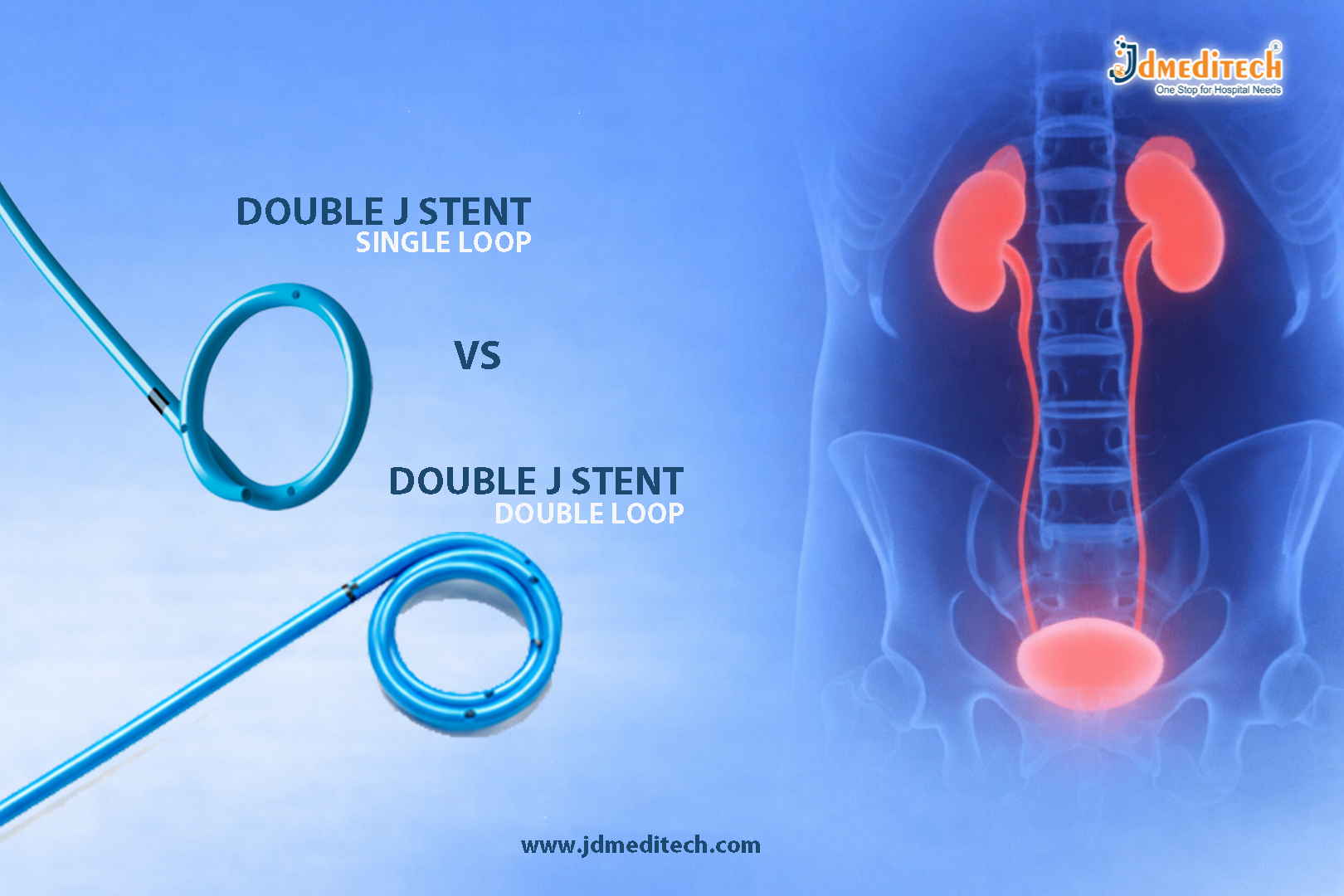
Double J (DJ) stents are among the most commonly used urological devices for maintaining urine flow from the kidney to the bladder. They help relieve ureteral obstruction caused by kidney stones, strictures, tumors, or post-surgical swelling. Although all Double J stents serve the same purpose, their designs differ. Two widely used options are the Single Loop Double J Stent and the Multi Loop Double J Stent.
Choosing the appropriate design can improve drainage efficiency, minimize complications, and enhance patient comfort. This guide explains the differences, benefits, and clinical applications of both stent designs to help healthcare professionals make informed decisions.
What Is a Double J Stent?
Purpose of a Double J Stent
A Double J Stent is a flexible tube inserted into the ureter to ensure continuous urine drainage from the kidney to the bladder. The curled “J” shape at both ends prevents migration by securing the stent inside the renal pelvis and bladder.
Double J Stents are commonly used for:
- Kidney stone management
- Ureteral strictures
- Ureteral obstruction
- Post-ureteroscopy drainage
- Reconstructive urological surgery
- Tumor-related ureteral compression
What Is a Single Loop Double J Stent?
Design and Features
A Single Loop Double J Stent features one standard curl at both the kidney and bladder ends with a straight shaft connecting them. Its simple design provides reliable drainage while allowing easy insertion and removal.
Key features include:
- Standard double-J configuration
- Smooth insertion
- Stable positioning
- Cost-effective design
- Suitable for routine urological procedures
What Is a Multi Loop Double J Stent?
Design and Features
A Multi Loop Double J Stent incorporates additional loops, usually at the renal end, to improve anchoring and adapt better to complex renal anatomy. These additional coils can enhance drainage and reduce the risk of migration in difficult clinical situations.
Key features include:
- Multiple renal loops
- Greater flexibility
- Improved anatomical conformity
- Better anchoring
- Enhanced long-term stability
Single Loop vs Multi Loop Double J Stent
Key Differences
| Feature | Single Loop | Multi Loop |
| Design | Single curl at each end | Multiple loops |
| Stability | Good | Excellent |
| Flexibility | Moderate | High |
| Drainage | Standard | Enhanced in complex anatomy |
| Migration Resistance | Good | Better |
| Best Use | Routine procedures | Complex obstruction |
| Long-Term Placement | Suitable | Highly suitable |
Advantages of Single Loop Double J Stents
Why Choose a Single Loop Design?
Single Loop stents continue to be the preferred choice for many standard urological procedures because they provide dependable drainage with a simple structure.
Benefits include:
- Easy insertion
- Reliable urinary drainage
- Lower manufacturing cost
- Easy removal
- Widely available
- Ideal for uncomplicated cases
Advantages of Multi Loop Double J Stents
Why Choose a Multi Loop Design?
Multi Loop stents provide improved retention and drainage in patients with complicated urinary tract conditions.
Benefits include:
- Better renal anchoring
- Reduced migration risk
- Improved drainage during external compression
- Better adaptation to enlarged renal pelvis
- Ideal for prolonged stenting
Clinical Applications of Single Loop Double J Stents
Recommended Cases
Single Loop Double J Stents are commonly used for:
- Ureteroscopy
- Kidney stone treatment
- Temporary urinary diversion
- Mild ureteral strictures
- Routine postoperative drainage
Clinical Applications of Multi Loop Double J Stents
Recommended Cases
Multi Loop Double J Stents are preferred in more challenging cases, including:
- Severe hydronephrosis
- Complex ureteral obstruction
- Malignant ureteral compression
- Anatomical abnormalities
- Long-term drainage
- Recurrent stent migration
Which Design Provides Better Drainage?
Performance Comparison
Both designs provide effective urinary drainage. However, Multi Loop stents often perform better in patients with dilated collecting systems or external ureteral compression because the additional loops help maintain consistent urine flow.
Drainage performance also depends on:
- Correct stent length
- Proper diameter (French size)
- Side-hole configuration
- Stent material
- Accurate placement
Patient Comfort and Safety
Factors Affecting Comfort
Patient comfort depends on more than loop design alone. Proper stent selection, placement technique, and material all contribute to reducing symptoms.
Common stent-related symptoms include:
- Urinary urgency
- Increased frequency
- Mild flank pain
- Bladder irritation
- Temporary hematuria
Selecting the appropriate stent size can significantly improve patient comfort.
Choosing the Right Double J Stent
Factors to Consider
Healthcare professionals should evaluate several clinical factors before selecting a stent.
These include:
- Cause of obstruction
- Expected duration of stenting
- Kidney anatomy
- Degree of hydronephrosis
- Risk of migration
- Surgical procedure
- Patient history
The most suitable design balances drainage efficiency, stability, and patient comfort.
Importance of Stent Material
Material Influences Performance
The performance of a Double J Stent depends not only on its loop design but also on the material used.
Common materials include:
- Polyurethane
- Silicone
- Hydrophilic-coated polymers
- Percuflex
Premium materials improve flexibility, reduce encrustation, and enhance long-term performance.
Why High-Quality Double J Stents Matter
Clinical Benefits
High-quality Double J Stents provide:
- Excellent drainage
- Smooth insertion
- Secure positioning
- Radiopaque visibility
- Reduced migration
- Biocompatibility
- Greater durability
- Improved patient outcomes
Frequently Asked Questions
Is a Multi Loop Double J Stent better?
Not necessarily. Multi Loop stents are ideal for complex cases, while Single Loop stents perform exceptionally well in routine procedures.
Which stent is more comfortable?
Comfort depends on the stent size, material, placement, and patient anatomy rather than the loop design alone.
Can both stents be used after kidney stone surgery?
Yes. Both Single Loop and Multi Loop Double J Stents are routinely used following ureteroscopy and kidney stone removal.
Which design reduces migration?
Multi Loop Double J Stents generally provide better anchoring and reduce migration in patients with challenging anatomy.
Conclusion
Final Thoughts
Both Single Loop and Multi Loop Double J Stents are highly effective solutions for ureteral drainage. Single Loop stents are ideal for routine cases because they offer reliable performance with a simple design. In contrast, Multi Loop stents provide superior stability and drainage in patients with complex anatomical or obstructive conditions.
Ultimately, the right choice depends on the patient’s anatomy, the severity of the obstruction, the anticipated duration of treatment, and the urologist’s clinical judgment. Selecting the appropriate stent design can improve drainage efficiency, reduce complications, and enhance overall patient care.
Get Connected:
+91 79909 93062 | +91 63513 72032 | exports@jdmeditech.com