



Introduction
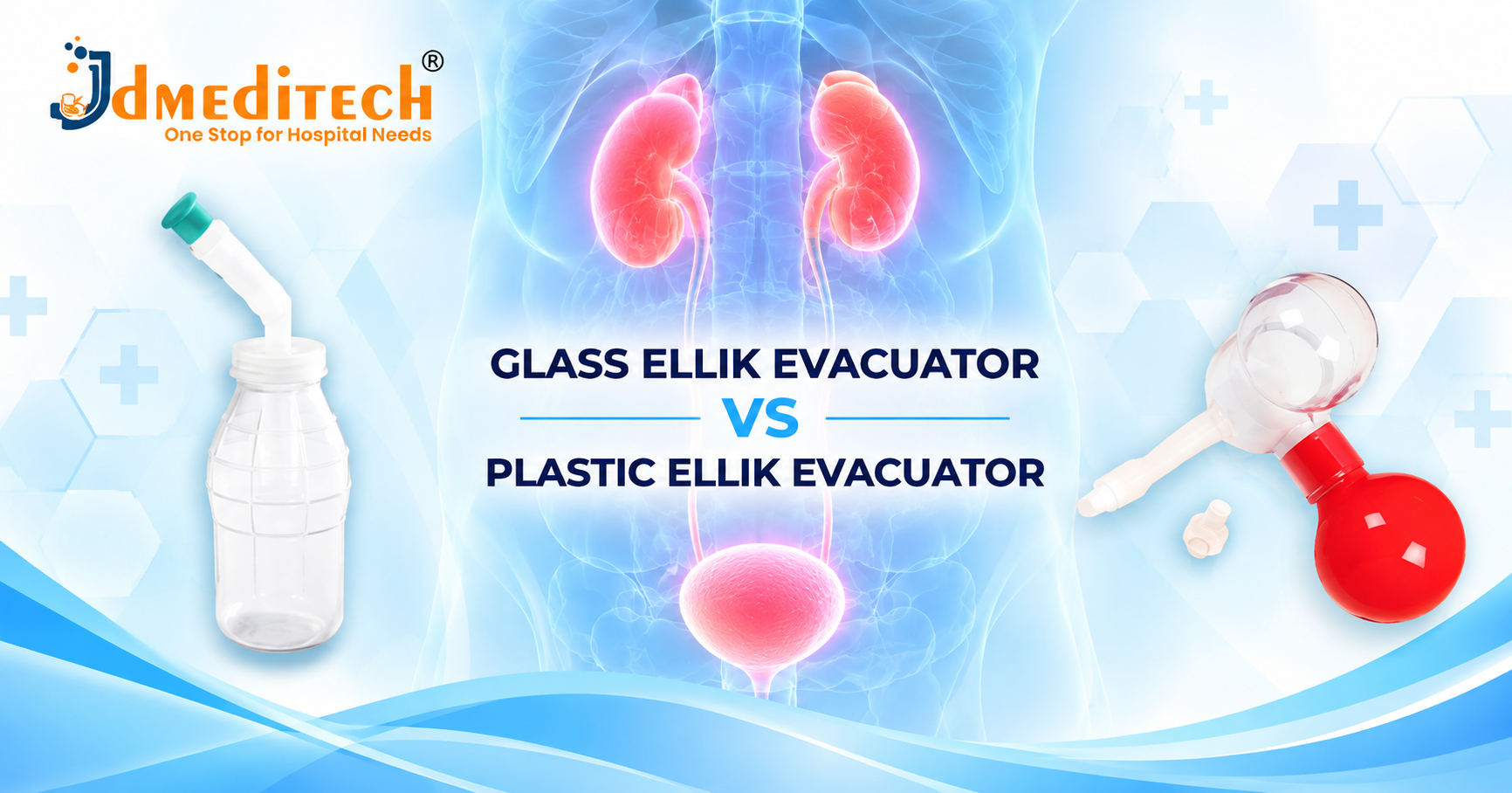
The Glass Ellik Evacuator vs Plastic Ellik Evacuator comparison explains two common designs of a medical device used during selected urology procedures.
Both devices help remove tissue fragments and other suitable material from the bladder through a compatible instrument system. However, their materials and handling requirements differ.
Glass evacuators feature a glass collection chamber or body. In contrast, plastic evacuators use polymer components.
Therefore, healthcare professionals should select a suitable design based on the procedure and approved product instructions.
What Is an Ellik Evacuator?
An Ellik Evacuator is a manually operated urology instrument used to help remove tissue fragments from the bladder.
Doctors commonly use this device during selected transurethral procedures. For example, an Ellik evacuator may support the removal of tissue chips after transurethral resection of the prostate, or TURP.
In addition, suitable systems may help remove small debris during selected endoscopic procedures.
However, the exact applications depend on the product design and approved instructions.
What Is a Glass Ellik Evacuator?
A Glass Ellik Evacuator includes a glass collection chamber or body designed for selected urological evacuation procedures.
The transparent chamber allows medical professionals to observe collected fluid and tissue fragments.
Moreover, the device uses a manually operated bulb or compatible pumping mechanism to support fluid movement.
However, glass components require careful handling because they can break if dropped or damaged.
Key Features of a Glass Ellik Evacuator
- Glass collection chamber or body
- Transparent design for visual inspection
- Manual evacuation mechanism
- Compatible connector arrangement
- Used during selected transurethral procedures
- Product-specific cleaning requirements
Applications of a Glass Ellik Evacuator
Glass Ellik evacuators may support selected urology procedures.
- Removal of tissue fragments after TURP
- Selected transurethral bladder procedures
- Evacuation of suitable surgical debris
- Selected endoscopic urology procedures
Nevertheless, clinicians must verify the device’s approved applications and compatibility before use.
What Is a Plastic Ellik Evacuator?
A Plastic Ellik Evacuator uses polymer components to support the removal of suitable tissue fragments and debris during selected urology procedures.
Plastic designs may be lighter than comparable glass designs. Furthermore, they do not have the same glass breakage concern.
However, material strength, transparency, and reprocessing requirements depend on the specific product.
Therefore, users must check whether the device is labeled for single use or approved reuse.
Key Features of a Plastic Ellik Evacuator
- Polymer body or collection chamber
- Manual evacuation design
- Different connector configurations
- May offer reduced weight
- Designed for selected urology procedures
- Product-specific handling requirements
Applications of a Plastic Ellik Evacuator
- Selected TURP procedures
- Removal of suitable tissue fragments
- Selected transurethral procedures
- Evacuation of compatible surgical debris
However, the exact clinical use depends on the manufacturer’s instructions.
Glass Ellik Evacuator vs Plastic Ellik Evacuator: Key Differences
| Feature | Glass Ellik Evacuator | Plastic Ellik Evacuator |
|---|---|---|
| Material | Glass chamber or body | Polymer components |
| Transparency | Generally transparent | Depends on plastic material |
| Weight | Depends on construction | May be lighter |
| Breakage | Glass can break | No glass breakage risk |
| Operation | Manual evacuation | Manual evacuation |
| Cleaning | Follow approved instructions | Follow approved instructions |
| Reuse | Product-dependent | Product-dependent |
| Applications | Selected urology procedures | Selected urology procedures |
In short, the main difference is the construction material. Meanwhile, both designs support similar evacuation functions when approved for the intended procedure.
How Does an Ellik Evacuator Work?
An Ellik evacuator uses manually controlled fluid movement to help remove suitable tissue fragments.
First, the surgeon connects the evacuator to a compatible urology instrument system.
Next, the operator uses the manual bulb or pumping mechanism according to the device instructions.
During the process, fluid movement helps transport suitable tissue fragments into the collection chamber.
Finally, the healthcare team checks the collected material and continues the procedure as clinically required.
However, the exact technique depends on the instrument system and surgical plan.
Benefits of a Glass Ellik Evacuator
1. Transparent Collection Chamber
A glass chamber allows direct visual inspection of collected material.
2. Supports Manual Evacuation
Moreover, the device supports manually controlled evacuation during selected procedures.
3. Different Product Configurations
Manufacturers may offer different connector designs. Therefore, clinicians should verify compatibility before use.
Benefits of a Plastic Ellik Evacuator
1. No Glass Breakage Concern
Plastic components avoid the risk of glass shattering during handling.
2. Potentially Lower Weight
In addition, some plastic designs may be lighter than comparable glass devices.
3. Different Handling Options
Manufacturers may offer different plastic designs. However, users must follow the product’s approved handling and reprocessing instructions.
How to Choose the Right Ellik Evacuator
Choosing a suitable evacuator requires careful product review.
First, healthcare professionals should identify the planned procedure. Next, they should review the evacuator’s material and design.
Important Selection Factors
- Glass or plastic construction
- Collection chamber design
- Connector compatibility
- Bulb and pumping mechanism
- Device dimensions
- Approved clinical applications
- Single-use or reusable labeling
- Cleaning and sterilization instructions
- Manufacturer’s instructions for use
Furthermore, the surgical team’s preferences may affect the final choice.
Therefore, buyers should verify the technical specifications before ordering.
Safety and Maintenance Considerations
Ellik evacuators require proper handling during urological procedures.
First, staff should inspect the device for visible damage before use.
Next, clinicians should confirm that all connections are secure and compatible.
Moreover, reusable devices must undergo validated cleaning and sterilization according to their instructions.
Single-use devices must not be reprocessed unless specifically permitted by applicable regulations and validated procedures.
Therefore, following approved device instructions is essential.
JDMeditech Ellik Evacuator Products
JDMeditech offers urology medical devices and accessories for hospitals, surgical centers, and international medical distributors.
Our product range includes selected instruments for transurethral and endoscopic urology procedures.
Furthermore, our team supports product inquiries, technical specification requests, and international business requirements.
For available Glass Ellik Evacuator and Plastic Ellik Evacuator configurations, contact JDMeditech.
Website: www.jdmeditech.com
Frequently Asked Questions
1. What is the difference between glass and plastic Ellik evacuators?
Glass evacuators contain glass components. In contrast, plastic evacuators use polymer materials.
2. What is an Ellik evacuator used for?
Doctors use suitable Ellik evacuators to help remove tissue fragments during selected urology procedures.
3. Is an Ellik evacuator used during TURP?
Yes. An Ellik evacuator may support the removal of tissue chips during TURP procedures.
4. Are glass Ellik evacuators reusable?
Some designs may be reusable. However, users must verify the product’s approved instructions.
5. Are plastic Ellik evacuators single-use?
Some plastic designs are single-use, while others may have different labeling. Therefore, users should check the manufacturer instructions.
6. Which Ellik evacuator is better?
Neither material is automatically better for every procedure. Instead, clinicians should consider compatibility, handling, and approved intended use.
7. Where can I inquire about JDMeditech Ellik evacuators?
Hospitals and medical distributors can contact JDMeditech for product information and quotations.
Conclusion
The Glass Ellik Evacuator vs Plastic Ellik Evacuator comparison highlights important differences in construction and handling.
Glass designs provide a transparent collection chamber. Meanwhile, plastic designs may offer reduced weight and avoid glass breakage.
Both devices can support selected urology procedures. However, their suitability depends on the product design and clinical requirements.
Therefore, healthcare professionals should verify device compatibility, specifications, and approved instructions before use.
Contact JDMeditech for Ellik evacuators, TURP instruments, and international medical device inquiries.
Medical Disclaimer: This article provides general educational information. Device selection and use must follow qualified clinical judgment and approved manufacturer instructions.




