In modern urology, precision and control play a critical role in achieving successful outcomes. The Hydrophilic Guide wire stands out as an essential tool that enables smooth and efficient navigation through complex anatomical pathways. Due to its advanced coating and flexibility, this guide wire reduces friction and enhances access during minimally invasive procedures.
In this blog, we explore the features, benefits, applications, and importance of the Hydrophilic Guide wire in urological interventions.
What is a Hydrophilic Guide wire?
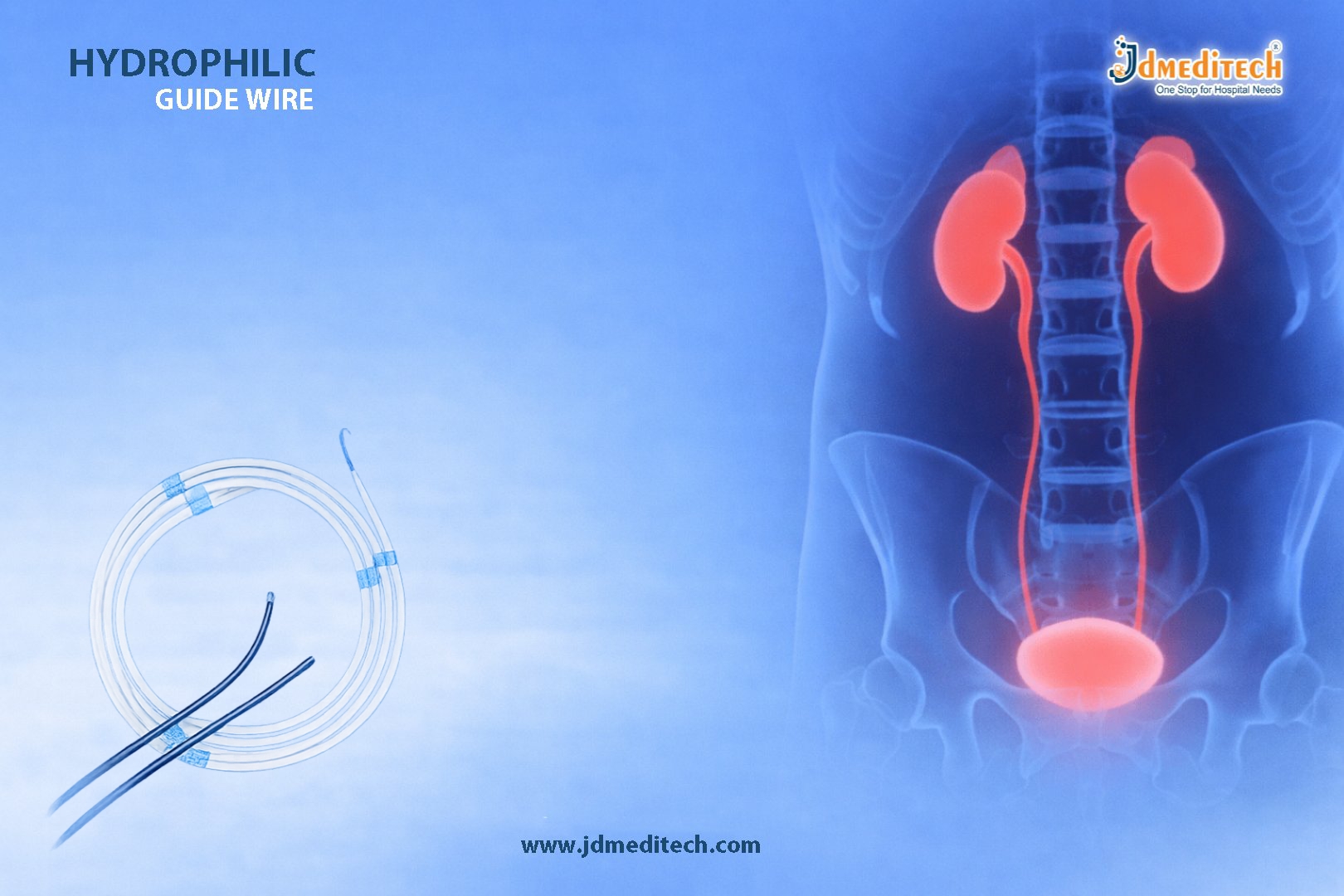
A Hydrophilic Guide wire is a specialized medical device designed to assist physicians in navigating through the urinary tract during diagnostic and therapeutic procedures. It features a hydrophilic (water-attracting) coating that becomes extremely slippery when activated by fluids.
As a result, the Hydrophilic Guide wire easily glides through narrow, tortuous, or obstructed pathways, making it ideal for challenging cases.
Key Features of Hydrophilic Guide wire
1. Hydrophilic Coating for Smooth Glide
The defining feature of a Hydrophilic Guide wire is its lubricious coating. When exposed to saline or bodily fluids, it significantly reduces friction, allowing effortless insertion and movement.
2.Excellent Flexibility and Control
The Hydrophilic Guide wire offers excellent flexibility while maintaining sufficient stiffness for control. This balance ensures precise navigation without compromising safety.
3. Atraumatic Tip Design
Most Hydrophilic Guide wire models come with a soft, atraumatic tip. Therefore, they minimize the risk of tissue injury during insertion.
4. Radiopacity for Visibility
The Hydrophilic Guide wire is visible under fluoroscopy, allowing clinicians to monitor its position in real-time for enhanced accuracy.
5. Kink Resistance
High-quality materials provide durability and kink resistance, ensuring consistent performance throughout the procedure.
Applications of Hydrophilic Guide wire in Urology
The Hydrophilic Guide wire plays a vital role in various urological procedures. Its smooth navigation capabilities make it indispensable in complex cases.
1. Ureteroscopy
During ureteroscopy, the Hydrophilic Guide wire helps access the ureter and kidney with ease, especially in tight or obstructed passages.
2. PCNL (Percutaneous Nephrolithotomy)
The Hydrophilic Guide wire assists in establishing access to the renal collecting system, ensuring safe and efficient tract creation.
3. Stone Management Procedures
In stone removal procedures, the Hydrophilic Guide wire facilitates device placement and improves procedural success rates.
4. Stent Placement
The Hydrophilic Guide wire is widely used for guiding ureteral stents into the correct position.
5. Difficult Anatomy Navigation
In cases involving strictures or anatomical variations, the Hydrophilic Guide wire provides reliable access where standard guide wires may fail.
Benefits of Using Hydrophilic Guide wire
Enhanced Maneuverability
The Hydrophilic Guide wire allows smooth passage through complex pathways, reducing procedural difficulty.
Reduced Trauma
Its lubricious surface and soft tip minimize tissue damage, ensuring patient safety.
Improved Procedural Efficiency
By enabling faster and easier navigation, the Hydrophilic Guide wire reduces procedure time.
Higher Success Rates
Clinicians achieve better outcomes in challenging cases with the help of a Hydrophilic Guide wire.
Versatility
The Hydrophilic Guide wire adapts to multiple urological applications, making it a valuable addition to any surgical setup.
How to Choose the Right Hydrophilic Guide wire
Selecting the appropriate Hydrophilic Guide wire depends on several factors:
- Length and Diameter : Choose based on procedural requirements
- Tip Type : Straight or angled depending on anatomy
- Stiffness Level : Balance between flexibility and support
- Coating Quality : Ensure consistent hydrophilic performance
Why Hydrophilic Guide wire is Essential in Modern Urology
The growing demand for minimally invasive procedures has increased the importance of advanced tools like the Hydrophilic Guide wire. Its ability to provide smooth, controlled, and safe navigation makes it indispensable for urologists.
Moreover, as procedural complexity increases, reliance on high-performance devices like the Hydrophilic Guide wire continues to grow.
Conclusion
The Hydrophilic Guide wire has transformed urological procedures by offering unmatched smoothness, flexibility, and control. Whether dealing with complex anatomy or routine interventions, this device ensures safe and efficient access.
For healthcare providers aiming to enhance precision and patient outcomes, investing in a high-quality Hydrophilic Guide wire is a smart and necessary choice.
Get Connected:
+91 79909 93062 | +91 63513 72032 | exports@jdmeditech.com