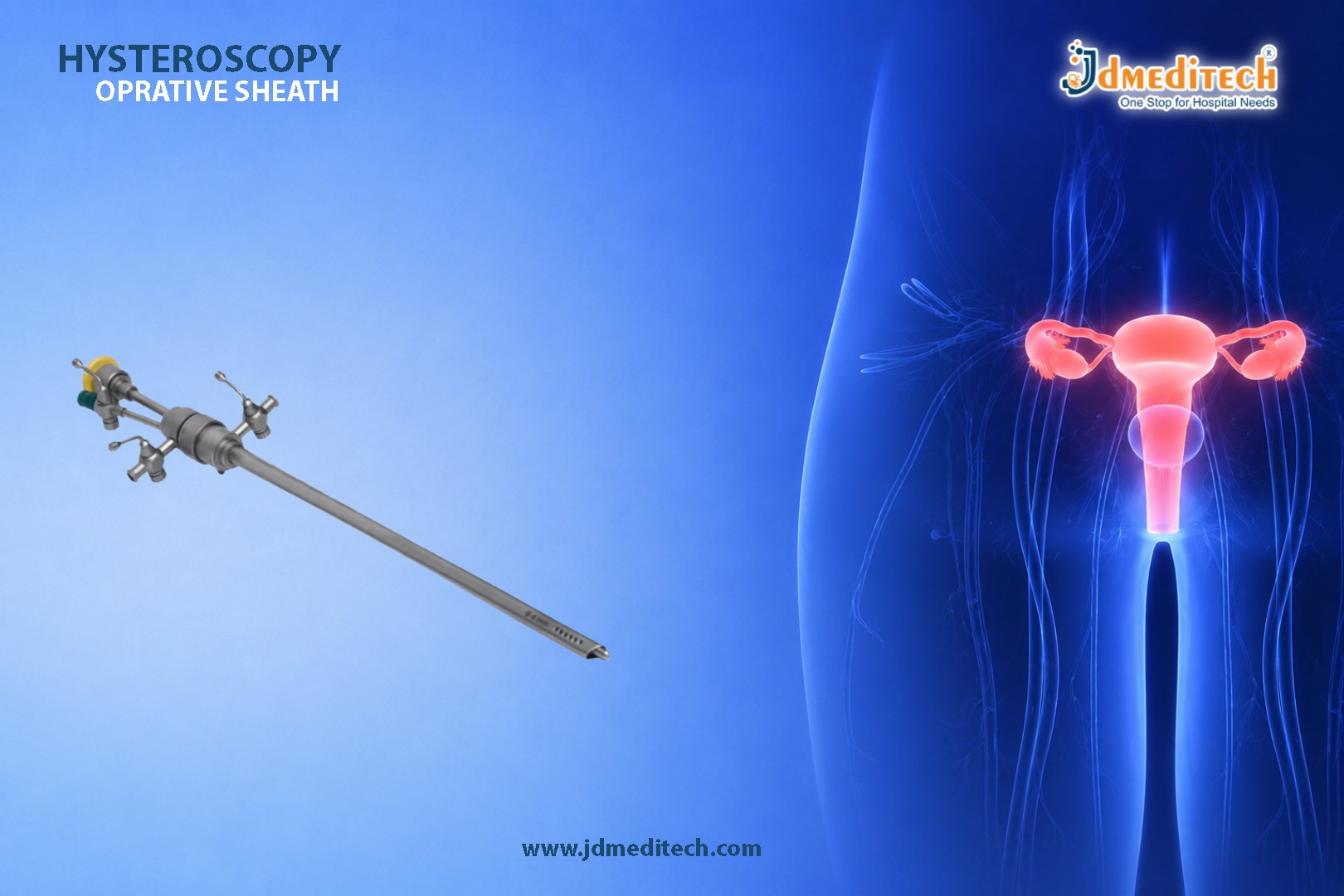
Minimally invasive gynecological procedures continue to transform women’s healthcare by improving surgical precision, reducing patient discomfort, and shortening recovery time. Among the essential instruments used in operative hysteroscopy, the Hysteroscopy Operative Sheath plays a vital role in supporting safe and controlled instrument access into the uterine cavity.
Designed to work seamlessly with hysteroscopes and surgical instruments, the operative sheath helps gynecologists perform diagnostic and operative procedures with greater efficiency and visibility. Whether used for polyp removal, fibroid treatment, biopsy collection, or adhesiolysis, a high-quality hysteroscopy operative sheath contributes significantly to procedural success.
What is a Hysteroscopy Operative Sheath?
A Hysteroscopy Operative Sheath is a specialized medical device used during hysteroscopic procedures to facilitate the insertion and operation of surgical instruments within the uterus. It acts as a protective and functional channel surrounding the hysteroscope, allowing controlled access for operative tools while maintaining continuous fluid management and visualization.
Components of an Operative Sheath
- Instrument channels
- Inflow and outflow ports
- Locking mechanisms
- Smooth atraumatic edges
- Compatibility with operative hysteroscopes
By enabling stable instrument introduction and efficient fluid circulation, the operative sheath improves procedural safety and accuracy.
Importance of Hysteroscopy Operative Sheaths in Gynecological Procedures
In operative hysteroscopy, maintaining clear visualization and smooth instrument handling is essential. The operative sheath supports these goals by creating a controlled surgical environment.
Safe Instrument Introduction
The sheath provides a guided pathway for surgical instruments, reducing trauma to cervical and uterine tissues during insertion.
Improved Visualization
Integrated inflow and outflow channels help maintain continuous uterine distension and clear visibility throughout the procedure.
Enhanced Procedural Control
Surgeons can manipulate operative instruments more accurately through stable working channels.
Reduced Tissue Trauma
Smooth, rounded edges minimize patient discomfort and lower the risk of tissue injury.
Efficient Fluid Management
Balanced fluid flow helps remove blood and debris, ensuring uninterrupted visualization.
Key Features of a High-Quality Hysteroscopy Operative Sheath
Modern operative sheaths are engineered for performance, compatibility, and procedural safety.
Ergonomic Design
The sheath features a lightweight and surgeon-friendly design that supports comfortable handling during lengthy procedures.
Precision Instrument Channels
Dedicated working channels allow smooth insertion of forceps, scissors, graspers, electrodes, and other operative tools.
High-Quality Medical-Grade Material
Manufactured from durable medical-grade stainless steel or advanced biocompatible materials, the sheath ensures long-term reliability and sterilization compatibility.
Continuous Flow System
The continuous flow mechanism supports effective irrigation and suction for optimal intrauterine visualization.
Secure Locking Mechanism
Reliable locking systems stabilize the hysteroscope and attached instruments during surgery.
Multiple Size Options
Available in various diameters and configurations to meet different procedural requirements and patient anatomies.
Applications of Hysteroscopy Operative Sheath
The Hysteroscopy Operative Sheath is widely used in diagnostic and operative gynecological procedures.
Polypectomy
Supports safe removal of endometrial and cervical polyps with excellent visualization.
Myomectomy
Allows controlled access for the resection of submucosal fibroids.
Endometrial Biopsy
Facilitates accurate tissue sampling for diagnostic evaluation.
Adhesiolysis
Assists in the treatment of intrauterine adhesions and scar tissue.
Septum Resection
Enables precise correction of uterine septa in fertility-related procedures.
Foreign Body Removal
Helps retrieve retained intrauterine devices or other foreign objects safely.
Benefits of Using Hysteroscopy Operative Sheath
Healthcare professionals rely on advanced operative sheaths because they improve both surgical efficiency and patient outcomes.
Better Surgical Precision
Stable instrument access allows more accurate operative movements.
Reduced Procedure Time
Efficient instrument exchange and continuous visualization streamline surgical workflow.
Improved Patient Comfort
Minimally traumatic insertion contributes to a more comfortable patient experience.
Lower Risk of Complications
Controlled access and fluid management help reduce procedural risks.
Enhanced Workflow Efficiency
Compatible designs support smooth integration with standard hysteroscopy systems.
Factors to Consider When Choosing a Hysteroscopy Operative Sheath
Selecting the right operative sheath is important for ensuring procedural effectiveness and safety.
Compatibility
Choose a sheath compatible with the hysteroscope and operative instruments used in your facility.
Diameter and Length
Appropriate sizing improves patient comfort and procedural access.
Fluid Management Capability
Efficient inflow and outflow systems help maintain visibility during surgery.
Material Quality
High-quality medical-grade materials provide durability and sterilization reliability.
Ease of Sterilization
Reusable sheaths should support standard sterilization protocols for infection control.
Why Minimally Invasive Gynecology Depends on Advanced Operative Sheaths
Modern gynecological surgery increasingly emphasizes minimally invasive approaches because they offer faster recovery, less pain, and reduced hospital stays. The Hysteroscopy Operative Sheath plays a critical supporting role in achieving these benefits.
Supporting Safer Procedures
By allowing smooth instrument introduction, stable access, and continuous visualization, the sheath helps surgeons perform delicate intrauterine procedures with greater confidence and efficiency.
Improving Clinical Outcomes
Advanced sheath systems contribute to reduced complications, shorter procedure durations, and improved patient satisfaction.
Maintenance and Sterilization Guidelines
Proper cleaning and sterilization are essential for maintaining instrument performance and patient safety.
Recommended Practices
- Clean immediately after use
- Follow manufacturer sterilization instructions
- Inspect channels and valves for blockage
- Check locking mechanisms regularly
- Store in a clean and dry environment
Routine maintenance helps extend instrument lifespan and ensures consistent surgical performance.
Conclusion
The Hysteroscopy Operative Sheath is an essential component of modern operative hysteroscopy. Its role in safe instrument introduction, fluid management, and enhanced visualization makes it indispensable for minimally invasive gynecological procedures.
Trusted Solution for Modern Gynecology
From polypectomy and myomectomy to biopsy and adhesiolysis, this advanced sheath system supports precision, safety, and procedural efficiency. Healthcare providers seeking reliable surgical performance should invest in high-quality hysteroscopy operative sheaths designed to meet the evolving demands of modern gynecology.
Get Connected:
+91 79909 93062 | +91 63513 72032 | exports@jdmeditech.com