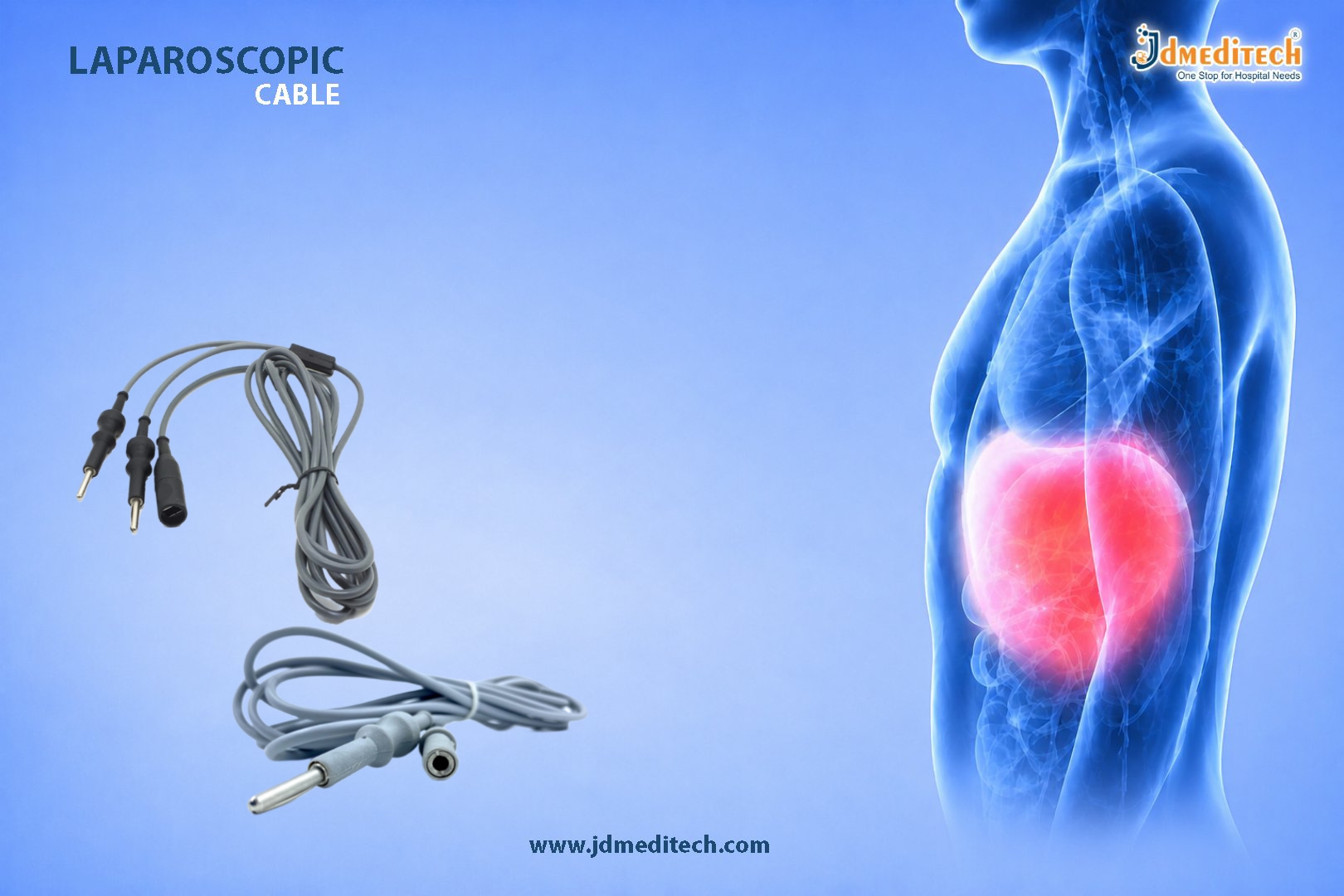
Laparoscopic surgery requires precision, reliability, and uninterrupted performance. Every component inside the operating room plays a crucial role in ensuring safe and successful procedures. Among these essential accessories, the Laparoscopic Cable is highly important because it provides a secure connection between surgical instruments and energy sources.
Modern minimally invasive procedures depend on stable electrical transmission for accurate cutting, coagulation, illumination, and device operation. A high-quality laparoscopic cable ensures efficient energy transfer while maintaining patient safety and surgeon confidence during complex surgeries.
At JDMeditech, we provide durable and high-performance laparoscopic cables designed for compatibility, safety, and long-term surgical efficiency.
What is a Laparoscopic Cable?
A Laparoscopic Cable is a specialized medical cable used to connect laparoscopic instruments with electrosurgical units, camera systems, light sources, or other surgical devices. It ensures uninterrupted transmission of power or signals during minimally invasive procedures.
These cables are commonly used in:
- Laparoscopic surgery
- Gynecological procedures
- Urological surgery
- Gastrointestinal surgery
- Bariatric surgery
- General surgery
- Thoracic procedures
Because laparoscopic procedures rely heavily on advanced equipment, the cable system must deliver reliable performance throughout the surgery.
Importance of Laparoscopic Cable in Surgery
The quality of the laparoscopic cable directly affects surgical efficiency and patient safety. A poor-quality cable may lead to unstable connections, interrupted energy delivery, or equipment malfunction.
Key Benefits of Laparoscopic Cable
Secure Energy Transmission
The cable ensures stable and continuous energy flow between surgical instruments and generators.
Enhanced Surgical Safety
Reliable insulation and strong connectors help minimize electrical leakage and accidental interruptions.
Improved Surgical Precision
Stable connectivity supports accurate coagulation, cutting, and tissue dissection.
Durable Construction
High-quality laparoscopic cables are designed to withstand repeated sterilization and continuous surgical usage.
Compatibility with Multiple Devices
Many cables are compatible with various electrosurgical units and laparoscopic instruments.
Main Components of a Laparoscopic Cable
A laparoscopic cable contains several important parts that contribute to smooth surgical performance.
Connector Ends
The connectors attach securely to surgical instruments and energy devices.
Insulated Outer Layer
The insulation protects against electrical leakage and ensures patient safety.
Conductive Core
The internal conductive wires carry electrical current or signals efficiently.
Flexible Cable Body
The flexible design allows easy handling during surgery without restricting movement.
Types of Laparoscopic Cables
Different laparoscopic procedures require different cable configurations.
Monopolar Laparoscopic Cable
Monopolar cables are commonly used for cutting and coagulation procedures. These cables connect monopolar instruments to the electrosurgical generator.
Applications
- Tissue cutting
- Coagulation
- General laparoscopic surgery
Bipolar Laparoscopic Cable
Bipolar cables provide controlled energy delivery between the instrument tips for precise coagulation.
Applications
- Vessel sealing
- Fine tissue coagulation
- Advanced laparoscopic procedures
Fiber Optic Light Cable
These cables transmit high-intensity light from the light source to the laparoscope for clear surgical visualization.
Benefits
- Bright illumination
- Enhanced visibility
- Heat-resistant performance
Camera System Cable
Camera cables connect laparoscopic cameras to video processors and monitors.
Features
- Stable video transmission
- High-definition imaging support
- Durable connectors
Features of High-Quality Laparoscopic Cable
Choosing the right laparoscopic cable is essential for safe and efficient operation.
High Durability
Premium cables are designed for repeated sterilization cycles and long-term usage.
Strong Insulation
Medical-grade insulation improves safety and reduces the risk of current leakage.
Excellent Flexibility
Flexible cables allow easy movement and reduce tangling during surgery.
Reliable Connectors
Secure connector systems help maintain uninterrupted performance.
Universal Compatibility
Many advanced cables support multiple surgical systems and instruments.
Applications of Laparoscopic Cable
Laparoscopic cables are used in various minimally invasive procedures across multiple specialties.
General Surgery
Used during appendectomy, cholecystectomy, and hernia repair procedures.
Gynecology
Supports laparoscopic hysterectomy, ovarian cyst removal, and fertility procedures.
Urology
Used in minimally invasive urological surgeries for stable energy transmission.
Bariatric Surgery
Essential during gastric bypass and sleeve gastrectomy procedures.
Thoracic Surgery
Provides reliable connectivity during minimally invasive chest surgeries.
Advantages of Using Premium Laparoscopic Cable
Hospitals and surgeons benefit greatly from high-performance laparoscopic cables.
Reduced Equipment Failure
Stable connections help minimize interruptions during surgery.
Better Surgical Workflow
Efficient connectivity improves operating room productivity.
Enhanced Surgeon Confidence
Reliable equipment allows surgeons to focus on procedural accuracy.
Improved Patient Safety
Proper insulation and quality construction support safer surgical outcomes.
Cost-Effective Performance
Durable cables reduce replacement frequency and maintenance costs.
Maintenance and Handling Tips
Proper handling increases the lifespan of laparoscopic cables.
Regular Inspection
Check connectors and insulation before every procedure.
Proper Sterilization
Follow manufacturer sterilization guidelines carefully.
Avoid Excessive Bending
Extreme bending may damage internal conductive components.
Store Carefully
Store cables in clean and dry environments to avoid wear.
Why Choose JDMeditech Laparoscopic Cable?
JDMeditech offers advanced laparoscopic cable solutions designed for modern operating rooms.
Our Product Advantages
- High-quality medical-grade materials
- Excellent electrical conductivity
- Durable and flexible construction
- Secure connector systems
- Compatibility with leading surgical devices
- Reliable performance during long procedures
- Easy sterilization support
Our laparoscopic accessories are manufactured to meet international quality standards and deliver dependable surgical performance.
Future of Laparoscopic Cable Technology
Modern laparoscopic systems continue to evolve with improved cable technology.
Future developments may include:
- Enhanced heat resistance
- Smart connectivity systems
- Lightweight cable construction
- Improved signal stability
- Advanced insulation materials
These innovations will further improve surgical safety and operating room efficiency.
Conclusion
The Laparoscopic Cable is an essential component in minimally invasive surgery. It ensures secure energy transmission, stable device connectivity, and efficient surgical performance. High-quality cables improve safety, reduce interruptions, and support precise surgical procedures across multiple specialties.
Healthcare professionals depend on reliable laparoscopic accessories to maintain smooth surgical workflow and patient safety. Choosing premium-quality laparoscopic cables from trusted manufacturers like JDMeditech helps hospitals achieve dependable and long-lasting operating room performance.
Get Connected:
+91 79909 93062 | +91 63513 72032 | exports@jdmeditech.comnbsp;