In modern minimally invasive surgery, precision and stability are non-negotiable. Surgeons rely on access ports that not only allow smooth instrument entry but also maintain pneumoperitoneum and control throughout the procedure. One essential accessory that significantly improves port efficiency is the metal trocar reducer.
Designed for strength, durability, and accurate instrument guidance, a metal trocar reducer plays a vital role in laparoscopic and endoscopic surgeries where different instrument sizes are used through a single port system.
This article explores what a metal trocar reducer is, how it works, its benefits, applications, and why it is preferred over plastic alternatives in high-demand surgical environments.
What Is a Metal Trocar Reducer?
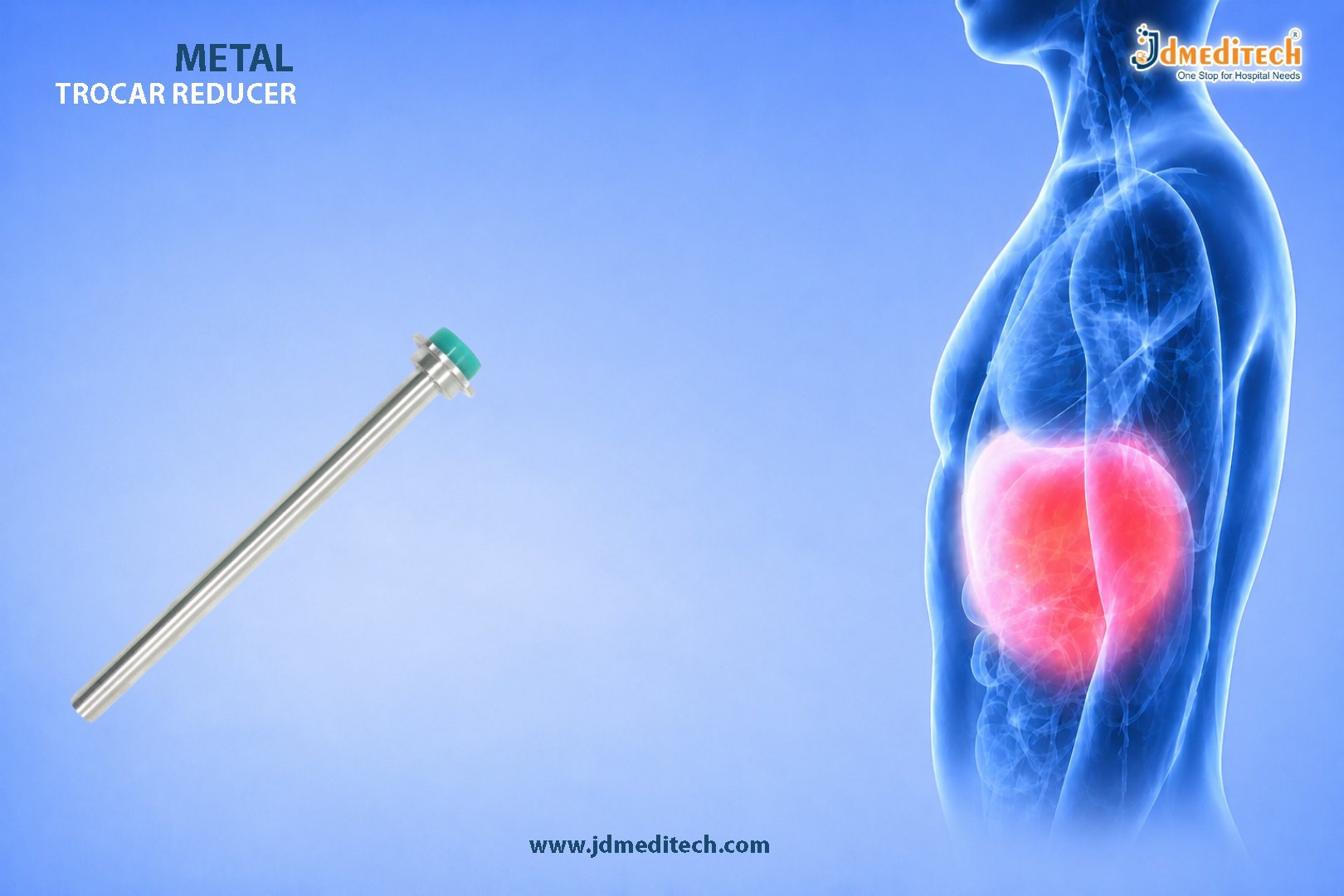
A metal trocar reducer is a rigid surgical accessory used with trocar systems to adapt a larger port size to accommodate smaller diameter instruments.
In simpler terms, it acts as a precision-fitting adapter that ensures:
- Secure instrument insertion
- Reduced port diameter mismatch
- Stable control during surgery
- Minimal gas leakage in laparoscopic procedures
Unlike disposable plastic reducers, metal versions are engineered for long-term use, superior rigidity, and consistent performance.
Why Trocar Reduction Is Important in Surgery
During laparoscopic procedures, surgeons often switch between instruments of varying diameters (e.g., 5 mm, 10 mm, 12 mm). Without proper reduction, the gap between instrument and port can cause:
- Loss of pneumoperitoneum (gas leakage)
- Unstable instrument movement
- Reduced precision in delicate tasks
- Increased surgeon fatigue
- Risk of contamination or tissue trauma at the entry site
A metal trocar reducer eliminates these issues by creating a tight, controlled interface between the instrument and port.
Key Features of Metal Trocar Reducers
1. High-Grade Stainless Steel Construction
Most metal trocar reducers are manufactured from surgical-grade stainless steel, ensuring:
- Corrosion resistance
- Long service life
- Compatibility with repeated sterilization cycles
- Mechanical strength under pressure
2. Rigid Structural Integrity
Unlike flexible plastic reducers, metal versions maintain a firm structure, preventing deformation during repeated instrument exchanges.
3. Precision Engineering
Metal trocar reducers are designed with tight tolerances to ensure:
- Smooth instrument insertion
- Reduced friction
- Accurate alignment with trocar channels
4. Autoclavable and Reusable
They are fully compatible with standard sterilization methods such as:
- Autoclaving
- Chemical sterilization (as per manufacturer guidelines)
This makes them cost-effective over time.
5. Secure Port Sealing
A key advantage is their ability to maintain a tight seal, reducing gas leakage during insufflation-based surgeries.
How a Metal Trocar Reducer Works
The working principle is straightforward yet highly effective:
- The reducer is inserted into a larger trocar port.
- It narrows the internal diameter of the port.
- Smaller surgical instruments can then pass through with controlled friction.
- The rigid metal structure ensures stability and prevents wobbling.
This creates a controlled access channel, improving surgical precision and workflow efficiency.
Advantages of Metal Trocar Reducers
1. Superior Stability
Metal construction eliminates flexing, providing surgeons with better tactile feedback and instrument control.
2. Enhanced Precision
Stable alignment allows for more accurate movements during delicate procedures such as suturing or dissection.
3. Reduced Gas Leakage
A tight seal helps maintain consistent pneumoperitoneum, which is critical for visualization and workspace maintenance.
4. Long-Term Cost Efficiency
Although the initial cost is higher than disposable plastic options, reusable metal reducers significantly reduce long-term expenditure.
5. Improved Surgical Workflow
Quick instrument switching and stable port access help reduce procedure time.
Metal vs Plastic Trocar Reducers
| Feature | Metal Trocar Reducer | Plastic Trocar Reducer |
| Durability | High (long-term reusable) | Limited (often disposable) |
| Stability | Rigid, no deformation | Flexible, may bend |
| Precision | High accuracy | Moderate |
| Sterilization | Autoclavable | Limited or single-use |
| Cost Efficiency | High long-term value | Higher recurring cost |
| Gas Sealing | Excellent | Moderate |
While plastic reducers are widely used for convenience, metal trocar reducers are preferred in high-precision and high-volume surgical settings.
Applications in Surgery
Metal trocar reducers are commonly used in:
1. Laparoscopic Surgery
- Gallbladder removal (cholecystectomy)
- Appendectomy
- Hernia repair
2. Gynecological Procedures
- Ovarian cyst removal
- Hysterectomy support procedures
3. Urological Surgeries
- Kidney and bladder endoscopic procedures
4. General and Bariatric Surgery
- Gastric bypass procedures
- Diagnostic laparoscopy
Their ability to maintain stable instrument control makes them especially valuable in complex multi-instrument surgeries.
Design Considerations and Ergonomics
Modern metal trocar reducers are designed with both surgeon comfort and operational efficiency in mind.
Key ergonomic improvements include:
- Smooth beveled edges to reduce tissue irritation
- Lightweight yet strong construction
- Easy insertion and removal mechanism
- Compatibility with standard trocar systems
These features help minimize fatigue during long surgical procedures.
Maintenance and Sterilization Guidelines
To ensure optimal performance and longevity:
- Clean immediately after use to prevent bio-burden buildup
- Use approved enzymatic detergents
- Autoclave according to manufacturer’s recommended cycle
- Inspect regularly for wear, scratches, or deformation
- Store in a dry, sterile environment
Proper maintenance ensures consistent performance and patient safety.
Why Hospitals Prefer Metal Trocar Reducers
Hospitals and surgical centers often choose metal trocar reducers because they offer:
- Reliability in repeated use environments
- Lower lifecycle costs
- Improved surgical accuracy
- Compatibility with advanced laparoscopic systems
- Reduced dependency on disposable accessories
In high-volume surgical units, even small improvements in efficiency can significantly impact outcomes and costs.
Conclusion
The metal trocar reducer is a critical yet often underappreciated component in modern minimally invasive surgery. By providing a rigid, stable, and precise port reduction system, it enhances instrument control, reduces gas leakage, and improves overall surgical efficiency.
For surgical teams aiming for consistency, durability, and precision, metal trocar reducers remain a reliable and cost-effective solution in the long run.
Get Connected:
+91 79909 93062 | +91 63513 72032 | exports@jdmeditech.com