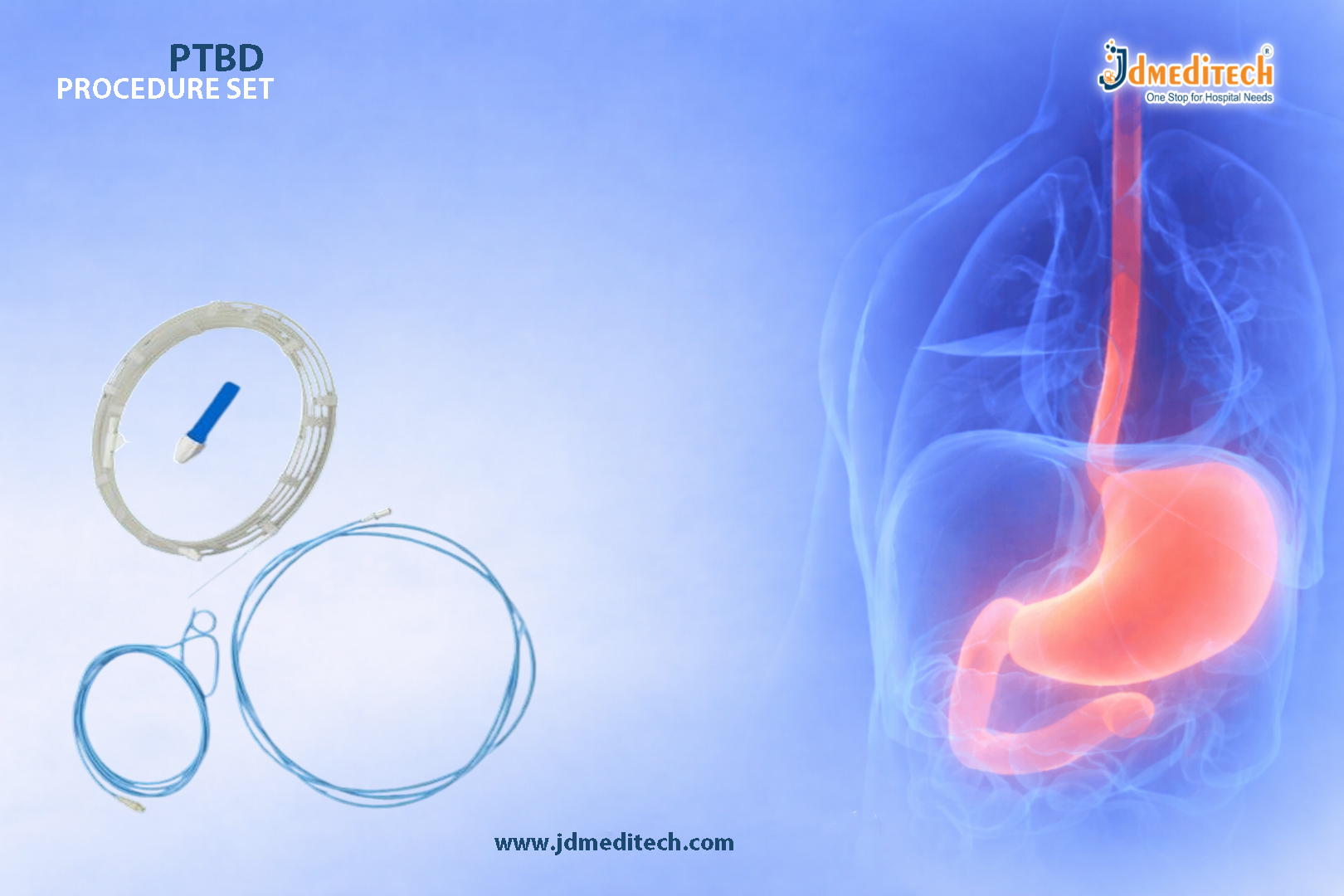
Percutaneous Transhepatic Biliary Drainage (PTBD) is a minimally invasive procedure used to relieve biliary obstruction and restore normal bile flow when endoscopic approaches are not feasible or have failed. The success of this intervention depends not only on clinical expertise but also on the availability of a comprehensive and reliable PTBD Procedure Set.
A PTBD Procedure Set contains all the essential instruments and accessories required for safe biliary access, drainage catheter placement, and effective management of biliary obstruction. By offering a complete sterile solution, these sets improve procedural efficiency, reduce preparation time, and support better patient outcomes.
In this article, we explore the components, applications, benefits, and importance of PTBD Procedure Sets in modern interventional radiology and hepatobiliary care.
What Is a PTBD Procedure Set?
A PTBD Procedure Set is a pre-assembled sterile collection of medical devices and procedural accessories specifically designed for Percutaneous Transhepatic Biliary Drainage procedures.
The set facilitates:
- Percutaneous biliary access
- Biliary drainage catheter placement
- Bile duct decompression
- Cholangiography procedures
- Management of obstructive jaundice
- Palliative treatment of malignant biliary obstruction
These kits are widely used in hospitals, interventional radiology departments, gastroenterology centers, and hepatobiliary surgery units.
Understanding Percutaneous Transhepatic Biliary Drainage (PTBD)
PTBD is performed when the bile ducts become blocked, preventing bile from flowing normally from the liver into the intestine.
Common causes of biliary obstruction include:
- Cholangiocarcinoma
- Pancreatic cancer
- Gallbladder cancer
- Bile duct strictures
- Post-surgical complications
- Hepatobiliary malignancies
- Benign biliary stenosis
Using ultrasound and fluoroscopic guidance, an interventional radiologist accesses the biliary system through the liver and places a drainage catheter to relieve obstruction.
Why PTBD Procedure Sets Are Essential
A dedicated PTBD Procedure Set helps clinicians perform the procedure efficiently while maintaining sterility and consistency throughout the intervention.
Key Advantages
- Streamlined procedural workflow
- Reduced setup time
- Improved infection control
- Standardized procedure preparation
- Enhanced procedural safety
- Reduced inventory complexity
By consolidating all necessary components into a single package, hospitals can improve efficiency while ensuring readiness for urgent biliary drainage procedures.
Components of a PTBD Procedure Set
The contents may vary depending on manufacturer specifications and clinical requirements. A typical PTBD Procedure Set includes the following components:
1. Chiba Needle
The Chiba needle is commonly used for initial puncture and access to the biliary system.
Benefits include:
- Thin-wall design
- Precise biliary puncture
- Excellent ultrasound visibility
- Reduced tissue trauma
2. Guidewire
Guidewires facilitate safe navigation through the biliary tract and support catheter placement.
Common options include:
- Hydrophilic guidewires
- J-tip guidewires
- Stiff guidewires for catheter support
Advantages:
- Improved maneuverability
- Enhanced tract access
- Reduced procedural difficulty
3. Introducer Sheath
The introducer sheath provides a stable pathway for catheter insertion and exchange.
Key features:
- Smooth insertion
- Kink resistance
- Reliable device support
- Various size options
4. Biliary Drainage Catheter
The drainage catheter is the primary therapeutic component used to divert bile and relieve obstruction.
Features may include:
- Pigtail locking mechanism
- Multiple side holes
- Radiopaque markers
- Internal-external drainage configurations
5. Dilators
Dilators are used to gradually enlarge the access tract before catheter placement.
Benefits:
- Controlled tract dilation
- Reduced tissue trauma
- Easier catheter advancement
6. Syringes and Needles
These accessories are utilized for:
- Contrast injection
- Local anesthesia administration
- Aspiration procedures
- Saline flushing
7. Three-Way Stopcock
A stopcock helps manage fluid flow during contrast studies and drainage procedures.
Advantages:
- Improved procedural control
- Easy fluid management
- Secure connections
8. Drainage Bag and Accessories
External drainage systems allow effective collection and monitoring of biliary output.
Features:
- Leak-resistant design
- Secure tubing connections
- Easy measurement of drainage volume
9. Sterile Drapes and Gauze
Sterile procedural accessories help maintain a contamination-free environment and support infection prevention.
Clinical Applications of PTBD Procedure Sets
Obstructive Jaundice Management
PTBD effectively relieves bile duct obstruction and reduces elevated bilirubin levels.
Malignant Biliary Obstruction
Used in patients with:
- Pancreatic carcinoma
- Cholangiocarcinoma
- Metastatic liver disease
- Gallbladder cancer
Benign Biliary Strictures
Drainage and decompression can be performed before definitive treatment.
Failed ERCP Procedures
PTBD serves as an alternative when Endoscopic Retrograde Cholangiopancreatography (ERCP) cannot successfully achieve biliary drainage.
Preoperative Biliary Decompression
The procedure may be performed before major hepatobiliary surgery to improve liver function and reduce complications.
Benefits of Using a Complete PTBD Procedure Set
Improved Procedure Efficiency
All necessary components are packaged together, minimizing delays and reducing preparation time.
Enhanced Sterility
Single-use sterile kits help lower the risk of procedure-related infections.
Standardized Performance
Consistent product configuration promotes procedural reliability and clinical confidence.
Cost-Effective Inventory Management
Hospitals can simplify procurement processes and reduce stock management challenges.
Reduced Risk of Missing Components
Comprehensive kits ensure that critical accessories are readily available when needed.
Key Features to Consider When Selecting a PTBD Procedure Set
Healthcare facilities should evaluate the following factors:
High-Quality Components
Look for:
- Durable drainage catheters
- Reliable guidewires
- Precision access needles
- Kink-resistant sheaths
Sterility Assurance
Ensure compliance with validated sterilization processes and international quality standards.
Customizable Configuration
Some manufacturers offer procedure-specific customization to meet physician preferences and institutional requirements.
Regulatory Compliance
Choose products that comply with:
- ISO quality standards
- CE certification requirements
- Applicable regional regulatory approvals
Best Practices for PTBD Procedures
To achieve optimal outcomes, clinicians should:
- Conduct thorough pre-procedure imaging assessment.
- Use ultrasound and fluoroscopic guidance.
- Maintain strict aseptic technique.
- Select the appropriate catheter size.
- Monitor drainage output regularly.
- Confirm catheter positioning radiographically.
- Provide proper post-procedure care and follow-up.
These measures help reduce complications and improve long-term drainage success.
Growing Demand for PTBD Procedure Sets
The increasing incidence of hepatobiliary disorders and cancer-related biliary obstruction has driven demand for minimally invasive drainage procedures worldwide. Hospitals and interventional radiology centers continue to seek high-quality PTBD Procedure Sets that support efficient workflows, procedural consistency, and patient safety.
Manufacturers are responding with advanced, customizable kits designed to meet the evolving needs of interventional specialists and healthcare providers.
Conclusion
A PTBD Procedure Set is a vital tool for the successful performance of Percutaneous Transhepatic Biliary Drainage procedures. By combining essential access devices, guidewires, drainage catheters, and sterile accessories into a single package, these sets help healthcare professionals achieve safe, efficient, and reliable biliary drainage.
Whether managing malignant obstruction, benign strictures, or complex biliary conditions, a comprehensive PTBD Procedure Set plays a critical role in improving procedural outcomes and enhancing patient care. For hospitals, interventional radiology departments, and healthcare providers, investing in high-quality PTBD kits is essential for delivering effective hepatobiliary treatment solutions.
Get Connected:
+91 79909 93062 | +91 63513 72032 | exports@jdmeditech.com