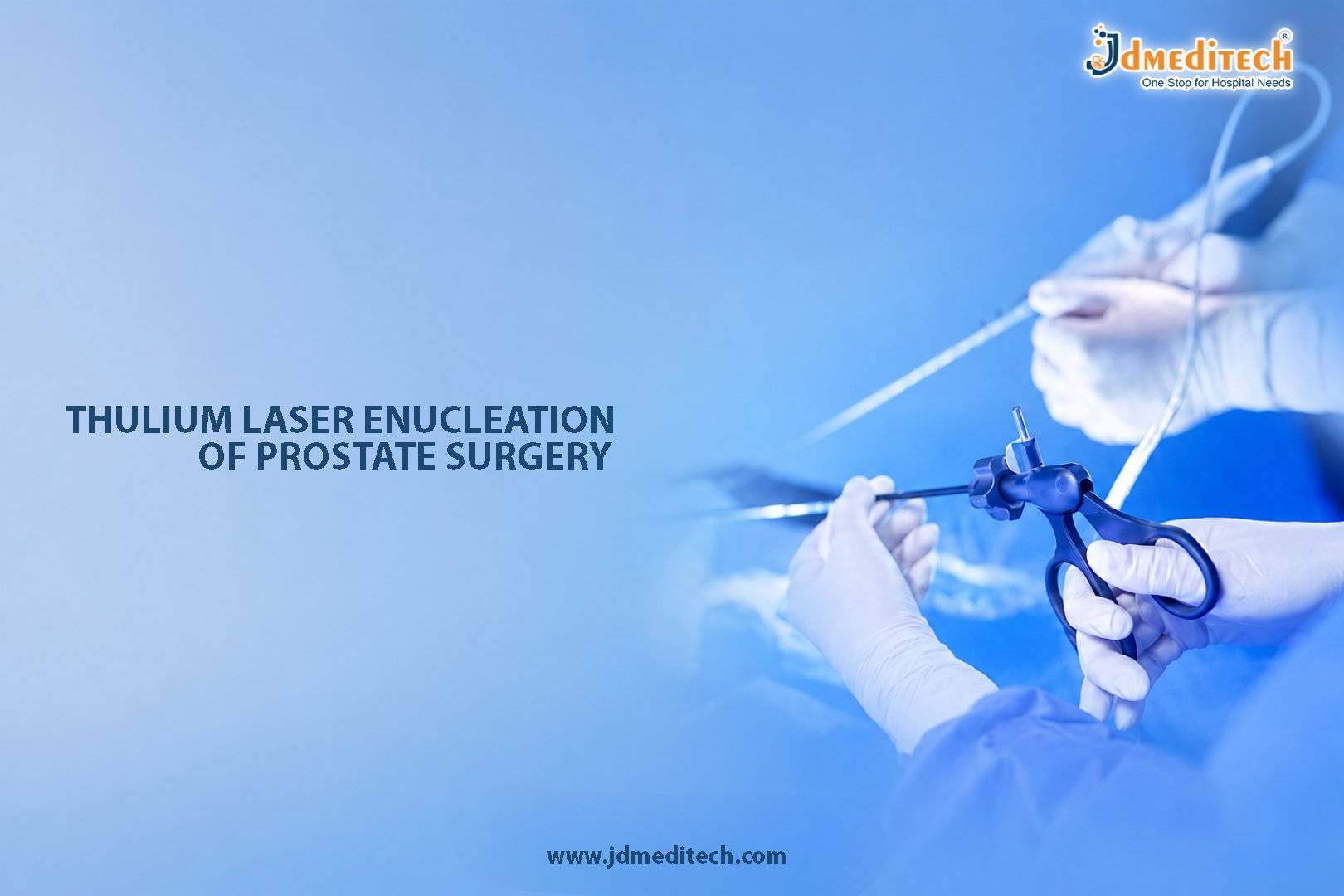
Thulium Laser Enucleation of Prostate SurgerAll Postsy, commonly known as ThuLEP Surgery, is an advanced minimally invasive laser procedure used to treat urinary obstruction caused by an enlarged prostate. This modern surgical technique uses high-precision thulium laser energy to remove excess prostate tissue blocking the urinary passage.
Moreover, ThuLEP surgery provides effective long-term relief from urinary symptoms while minimizing bleeding, tissue damage, and postoperative discomfort. As a result, many patients experience faster recovery, improved urinary flow, and better overall quality of life.
Furthermore, continuous advancements in laser technology and endoscopic urologic systems have significantly improved the safety, precision, and success rates of prostate laser surgery.
What is Thulium Laser Enucleation of Prostate Surgery?
Understanding the Procedure
Thulium Laser Enucleation of Prostate Surgery is a minimally invasive endoscopic procedure in which surgeons use a thulium laser to separate and remove enlarged prostate tissue from the prostate gland.
During the procedure, the laser precisely dissects obstructive tissue while preserving surrounding healthy structures. Afterwards, the removed tissue is fragmented and extracted safely from the bladder.
Consequently, the urinary channel becomes wider, allowing urine to pass more freely and reducing bladder pressure.
Why is ThuLEP Surgery Performed?
Common Medical Indications
ThuLEP surgery is recommended for patients with enlarged prostate glands causing significant urinary symptoms or bladder outlet obstruction.
Common indications include:
- Benign Prostatic Hyperplasia (BPH)
- Weak urine stream
- Difficulty urinating
- Frequent urination
- Nocturia
- Urinary retention
- Incomplete bladder emptying
- Recurrent urinary tract infections
- Bladder stones caused by obstruction
Furthermore, the procedure is suitable for both moderate and large prostate glands requiring durable surgical treatment.
Understanding Benign Prostatic Hyperplasia
How Enlarged Prostate Causes Urinary Problems
Benign Prostatic Hyperplasia is a non-cancerous enlargement of the prostate gland commonly seen in aging men. As the prostate enlarges, it gradually compresses the urethra and obstructs normal urine flow.
As a result, patients may develop worsening urinary symptoms over time. In severe cases, prolonged obstruction may affect bladder and kidney function.
Therefore, early diagnosis and timely treatment are essential for preventing complications.
Symptoms That May Require ThuLEP Surgery
Warning Signs of Enlarged Prostate
Patients with enlarged prostate glands often experience persistent urinary symptoms that interfere with daily life and sleep quality.
Common symptoms include:
- Weak urine stream
- Difficulty starting urination
- Frequent urge to urinate
- Interrupted urine flow
- Dribbling after urination
- Nighttime urination
- Urinary retention
- Feeling of incomplete bladder emptying
Additionally, untreated urinary obstruction may increase the risk of bladder infections and urinary retention.
Preoperative Evaluation Before Surgery
Diagnostic Tests and Surgical Planning
Before ThuLEP surgery, the urologist performs detailed evaluations to assess prostate size, urinary obstruction, and overall patient health.
Common investigations include:
- Physical examination
- Digital rectal examination
- Urine analysis
- Blood investigations
- PSA testing
- Ultrasound imaging
- Uroflowmetry
- Cystoscopy if required
Furthermore, these evaluations help determine whether laser prostate surgery is the most suitable treatment option.
How Thulium Laser Enucleation of Prostate Surgery is Performed
Step-by-Step Surgical Technique
ThuLEP surgery is usually performed under spinal or general anesthesia. First, the surgeon inserts an endoscopic instrument through the urethra to access the prostate gland.
Surgical Procedure
- The patient is placed under anesthesia.
- An endoscope is inserted through the urethra.
- The enlarged prostate tissue is visualized carefully.
- A thulium laser is used to separate obstructing tissue precisely.
- The detached tissue is moved into the bladder.
- Specialized instruments fragment and remove the tissue safely.
- Bleeding control is ensured throughout the procedure.
- Finally, a temporary urinary catheter is placed.
As a result, urinary obstruction is relieved effectively with minimal tissue trauma.
Advantages of ThuLEP Surgery
Benefits of Advanced Laser Prostate Treatment
ThuLEP surgery offers several important advantages over traditional prostate surgery techniques.
Key benefits include:
- Minimally invasive treatment
- Reduced bleeding
- High surgical precision
- Faster recovery
- Shorter hospital stay
- Effective treatment for large prostates
- Reduced postoperative discomfort
- Durable long-term symptom relief
Additionally, the thulium laser provides excellent cutting precision and tissue control during surgery.
ThuLEP Surgery vs Traditional TURP
Comparing Laser and Conventional Prostate Surgery
Although TURP remains a widely performed procedure, ThuLEP offers several modern advantages for selected patients.
Compared to TURP, ThuLEP may provide:
- Better bleeding control
- More precise tissue removal
- Faster catheter removal
- Shorter recovery time
- Lower risk of repeat surgery
- Improved treatment for larger prostates
Therefore, many urologists consider ThuLEP an advanced alternative for long-term BPH management.
Postoperative Recovery and Care
Recovery Guidelines After Surgery
Most patients recover quickly after ThuLEP surgery. However, temporary urinary symptoms may occur during the healing process.
Important recovery recommendations include:
- Drink adequate fluids
- Avoid heavy lifting temporarily
- Take prescribed medications regularly
- Avoid strenuous physical activity
- Follow catheter care instructions carefully
- Attend follow-up appointments
Furthermore, mild urinary burning or temporary blood in the urine may occur during early recovery.
Risks and Possible Complications
Understanding Surgical Safety
Although ThuLEP surgery is considered safe and highly effective, certain complications may occasionally occur.
Possible complications include:
- Mild bleeding
- Temporary urinary discomfort
- Urinary tract infection
- Temporary urinary incontinence
- Retrograde ejaculation
- Urethral narrowing
- Rare urinary retention
Nevertheless, modern laser systems and experienced surgeons significantly reduce these risks.
Importance of Advanced Thulium Laser Technology
Role of Precision Urologic Equipment
Modern ThuLEP procedures rely heavily on advanced laser systems and high-definition endoscopic technology. Consequently, surgeons can perform highly accurate tissue removal with greater safety and efficiency.
Commonly used equipment includes:
- Thulium laser systems
- Endoscopic visualization systems
- Tissue morcellators
- High-definition surgical cameras
- Irrigation systems
- Precision laser fibers
Moreover, advanced technology improves surgical visibility, precision, and patient outcomes.
Long-Term Outcomes After ThuLEP Surgery
Durable Improvement in Urinary Function
Most patients experience excellent long-term improvement following ThuLEP surgery. In particular, urinary symptoms improve significantly after removal of obstructing prostate tissue.
Long-term benefits may include:
- Stronger urine flow
- Better bladder emptying
- Reduced urinary frequency
- Improved sleep quality
- Lower risk of urinary retention
- Reduced need for repeat surgery
Furthermore, patient satisfaction rates remain high because of durable symptom relief and improved quality of life.
Preventing Future Prostate-Related Problems
Maintaining Long-Term Prostate Health
Although prostate enlargement commonly occurs with aging, healthy lifestyle habits may help support urinary health and reduce complications.
Helpful preventive measures include:
- Maintain proper hydration
- Exercise regularly
- Follow a balanced diet
- Limit excessive alcohol intake
- Attend regular urologic checkups
- Seek early treatment for urinary symptoms
Therefore, routine medical care remains essential for long-term prostate health.
Conclusion
Advanced Laser Solution for Enlarged Prostate Treatment
Thulium Laser Enucleation of Prostate Surgery is a modern and highly effective minimally invasive laser procedure designed to treat urinary obstruction caused by enlarged prostate glands. By using precision thulium laser technology, the procedure provides safe tissue removal, improved urinary flow, and durable long-term symptom relief.
Furthermore, continuous advancements in laser technology, endoscopic systems, and surgical techniques continue to improve patient safety, recovery, and clinical outcomes. Therefore, ThuLEP surgery remains one of the most advanced treatment options for Benign Prostatic Hyperplasia and prostate-related urinary obstruction.
Get Connected:
+91 79909 93062 | +91 63513 72032 | exports@jdmeditech.com