



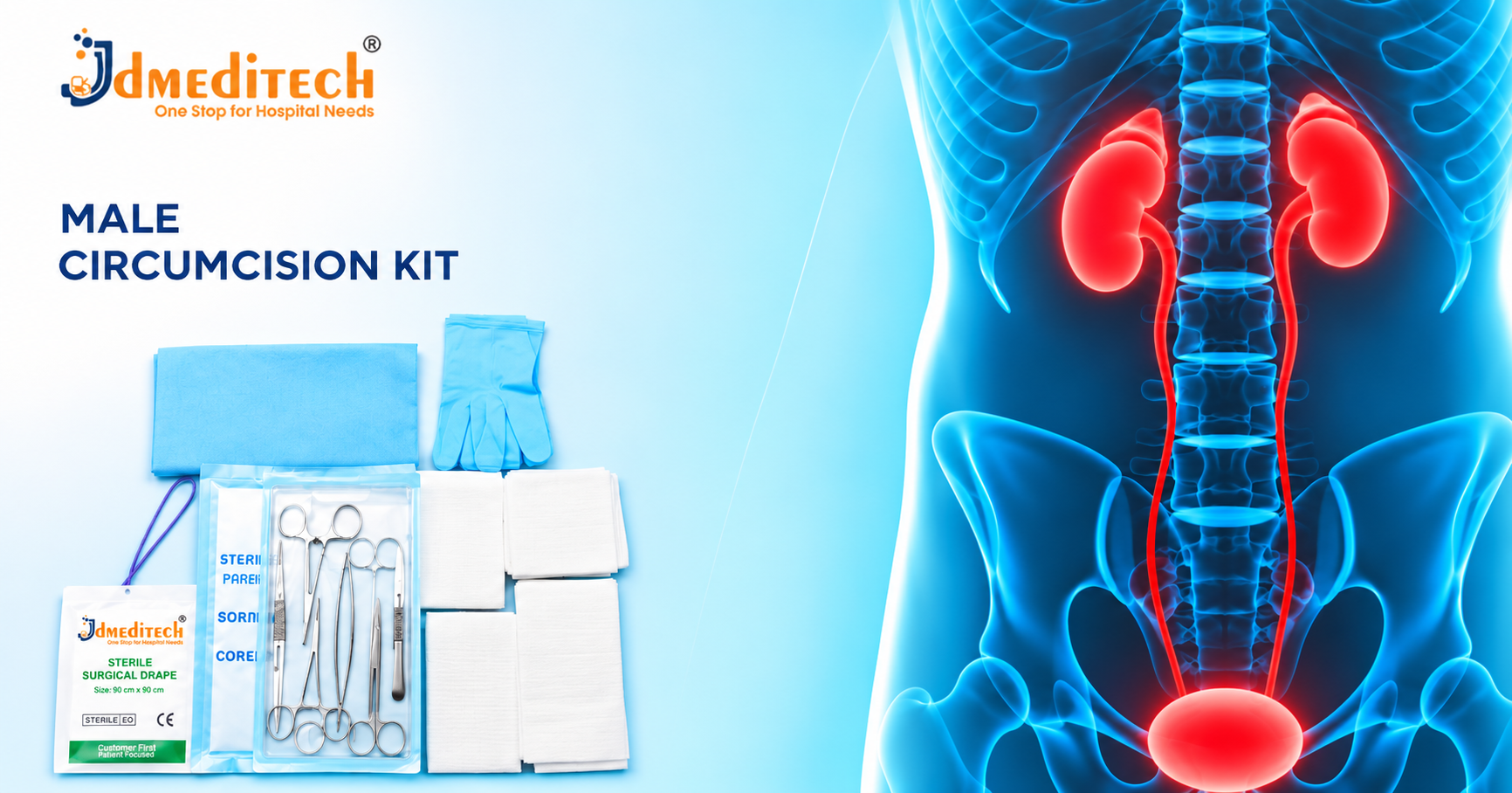
Male Circumcision Kit – Components, Features, Applications and Benefits
The Male Circumcision Kit is a collection of surgical instruments and supplies designed to support male circumcision procedures. It helps healthcare professionals organize suitable equipment for clinical use.
Furthermore, different configurations may include cutting instruments, tissue-handling tools, protective supplies and dressing materials. Therefore, healthcare facilities should select a kit according to their clinical requirements.
JDMeditech supplies urology instruments and surgical equipment for hospitals, clinics and medical distributors.
What Is a Male Circumcision Kit?
A male circumcision kit contains selected instruments and supplies for procedures involving the removal of the penile foreskin. However, the exact contents depend on the surgical method, patient age and product configuration.
For example, adult and pediatric procedures may require different instruments. Consequently, hospitals should review the official packing list before ordering.
What Is Male Circumcision?
Male circumcision is a surgical procedure that removes the foreskin, also known as the prepuce, from the penis.
Doctors may perform circumcision for selected medical, cultural or religious reasons. However, the decision should consider individual circumstances, informed consent and appropriate medical advice.
Common Medical Indications
A qualified clinician may recommend circumcision for selected medical conditions. For example, certain foreskin disorders may require surgical treatment.
- Pathological phimosis
- Recurrent balanitis or balanoposthitis
- Selected recurrent foreskin infections
- Foreskin scarring
- Selected cases of balanitis xerotica obliterans
- Other clinically appropriate indications
Nevertheless, not every foreskin condition requires surgery. Therefore, a medical assessment remains essential.
Key Features of a Circumcision Surgical Kit
- Procedure-specific instrument selection
- Organized surgical components
- Suitable tissue-handling instruments
- Compatible cutting instruments
- Hemostatic instruments where required
- Suturing accessories where included
- Protective supplies where included
- Dressing materials where included
- Disposable or reusable configurations
- Manufacturer-defined packaging
Additionally, selected configurations may combine surgical instruments and consumables. However, buyers must confirm the actual package contents.
Main Components of a Male Circumcision Kit
Conventional surgical sets may contain the following instruments and accessories:
- Surgical scissors
- Artery forceps
- Dissecting forceps
- Needle holder
- Scalpel handle and compatible blade
- Suture materials where included
- Surgical gloves where included
- Surgical drapes where included
- Gauze and dressing materials
- Other procedure-specific accessories
However, these items represent possible components rather than a verified packing list for every model.
Surgical Scissors
Surgical scissors support tissue cutting during appropriate procedures. Furthermore, clinicians can select different blade designs according to the surgical technique.
Artery Forceps
Artery forceps help surgeons grasp tissue and manage selected bleeding points. Additionally, different instrument designs support specific handling requirements.
Dissecting Forceps
Dissecting forceps support controlled tissue handling. As a result, surgeons can select an appropriate instrument for delicate surgical work.
Needle Holder
A needle holder supports suturing when the surgical technique requires it. Moreover, clinicians choose suitable needles and sutures according to patient needs.
Scalpel Handle and Blade
A compatible scalpel supports tissue incision during selected surgical approaches. However, surgeons must follow the approved technique and instrument instructions.
Surgical Gloves and Drapes
Sterile gloves and appropriate drapes help the clinical team maintain an aseptic surgical field. Therefore, healthcare professionals must follow established infection prevention protocols.
Gauze and Dressing Materials
Suitable dressing materials support postoperative wound care. Furthermore, clinicians select dressings according to the patient’s condition and the surgical method.
Types of Circumcision Kits
Healthcare facilities may choose different kit configurations according to their procedural requirements.
- Conventional Surgical Kit: Contains instruments for a conventional surgical approach.
- Disposable Kit: Contains components intended for single-patient use.
- Reusable Instrument Set: Includes instruments suitable for validated reprocessing.
- Pediatric Kit: Uses age-appropriate instruments and configurations.
- Adult Kit: Supports selected adult surgical techniques.
However, disposable status does not automatically establish sterility. Therefore, always verify the product label.
Clinical Applications
- Medically indicated circumcision
- Selected adult circumcision procedures
- Selected pediatric circumcision procedures
- Conventional surgical circumcision
- Specialist urology procedures
- Appropriate surgical training
Additionally, the intended use must match the patient’s age and the selected technique.
Overview of the Circumcision Procedure
First, a qualified clinician evaluates the patient and reviews the medical indication. Next, the clinical team confirms informed consent and prepares suitable anesthesia and sterile equipment.
During surgery, the clinician follows an approved technique to remove the foreskin. Afterward, the team provides wound care instructions and appropriate follow-up guidance.
However, surgical techniques differ according to patient age and clinical circumstances.
Importance of Preoperative Assessment
Preoperative assessment helps identify relevant medical risks. For example, clinicians may review bleeding disorders, current medications and anatomical considerations.
Furthermore, selected anatomical conditions require specialist evaluation. Therefore, treatment planning should reflect each patient’s needs.
Importance of Pain Management
Appropriate pain control is essential during circumcision. Consequently, the clinical team selects anesthesia and analgesia according to the patient’s age, medical condition and planned procedure.
Benefits of an Organized Surgical Kit
- Supports organized instrument preparation
- Helps identify required surgical components
- Offers procedure-specific configurations
- Supports clinical inventory planning
- Facilitates equipment selection
- Offers disposable or reusable options
- Supports standardized procurement
However, the actual benefits depend on the supplied configuration and clinical workflow.
Technical Specifications
Technical specifications vary by model. Therefore, procurement teams should verify the manufacturer’s datasheet and packing list.
| Parameter | Product Information |
|---|---|
| Product Name | Male Circumcision Kit |
| Product Category | Urology Surgical Instrument Set |
| Application | Male Circumcision Procedures |
| Instrument Configuration | Confirm Official Packing List |
| Patient Population | Confirm Approved Intended Use |
| Instrument Material | Confirm Manufacturer Specifications |
| Instrument Sizes | Model-Dependent |
| Disposable or Reusable | Confirm Product Labeling |
| Sterility | Confirm Product Labeling |
| Packaging | Confirm Available Configuration |
| Shelf Life | Confirm Manufacturer Labeling |
| Regulatory Documentation | Verify for Destination Market |
Disposable vs Reusable Circumcision Kits
Both configurations can support appropriate surgical procedures. However, their handling requirements differ.
| Feature | Disposable Kit | Reusable Set |
|---|---|---|
| Intended Use | Single Use | Repeated Use After Reprocessing |
| Reprocessing | Not Intended for Reuse | Required Between Uses |
| Material | Model-Dependent | Model-Dependent |
| Packaging | Manufacturer-Defined | Manufacturer-Defined |
| Sterility | Verify Labeling | Verify Before Each Procedure |
Safety Precautions
- Confirm the clinical indication
- Obtain valid informed consent
- Review patient medical history
- Assess anatomical considerations
- Use appropriate anesthesia
- Follow infection prevention protocols
- Inspect instruments before use
- Verify sterility where required
- Follow approved surgical techniques
- Provide postoperative instructions
- Arrange appropriate follow-up
Possible Risks and Complications
Like other surgical procedures, circumcision carries potential risks. For example, patients may experience bleeding, swelling or infection.
- Bleeding
- Wound infection
- Pain and swelling
- Delayed wound healing
- Scarring
- Removal of too much or too little foreskin
- Injury to nearby structures
- Adverse reactions to anesthesia
- Need for additional treatment
However, individual risks depend on the patient, surgical method and clinical circumstances.
Recovery After Circumcision
Recovery varies according to patient age and surgical technique. Initially, patients may experience mild discomfort and swelling.
Furthermore, clinicians provide instructions for hygiene, dressing care and activity restrictions. Therefore, patients should follow their surgeon’s individualized recovery advice.
Postoperative Wound Care
Appropriate wound care supports healing. Additionally, follow-up appointments allow clinicians to review recovery when necessary.
However, persistent bleeding, fever, worsening pain or difficulty urinating requires prompt medical attention.
Cleaning and Sterilization
Reusable instruments require validated cleaning and sterilization procedures. Furthermore, healthcare staff should inspect instruments before every procedure.
In contrast, single-use components must not be reprocessed for reuse unless specifically permitted by the manufacturer and applicable regulations.
Storage and Handling
- Follow manufacturer storage instructions
- Protect packaging from damage
- Inspect sterile barriers where applicable
- Check expiration dates
- Maintain appropriate inventory records
- Protect instruments from mechanical damage
- Follow applicable disposal requirements
How to Choose the Right Kit
First, hospitals should identify the intended surgical technique and patient population. Next, procurement teams should review instrument sizes, materials and package contents.
Additionally, buyers should confirm sterility, reprocessing requirements and regulatory documentation.
- Approved intended use
- Patient age group
- Surgical technique
- Instrument packing list
- Instrument dimensions
- Material specifications
- Sterility requirements
- Disposable or reusable status
- Packaging configuration
- Regulatory documentation
Why Choose JDMeditech?
JDMeditech supplies urology instruments, surgical accessories and medical equipment for healthcare facilities.
Furthermore, our team assists medical distributors and procurement professionals with product inquiries. Additionally, customers can request information about available instrument configurations and quotations.
Related Surgical Products
- Urology Surgical Instrument Sets
- Surgical Scissors
- Artery Forceps
- Dissecting Forceps
- Needle Holders
- Surgical Drapes
- Surgical Dressing Materials
- Minor Surgical Instruments
Frequently Asked Questions
1. What Is a Male Circumcision Kit?
It is a collection of surgical instruments and supplies for circumcision. However, the contents vary by product configuration.
2. What Is Circumcision?
Circumcision removes the foreskin from the penis. A qualified healthcare professional performs the procedure.
3. What Instruments Are Commonly Used?
Depending on the technique, clinicians may use forceps, scissors, needle holders and other approved instruments.
4. Is the Kit Sterile?
Sterility depends on the product configuration. Therefore, buyers should verify the manufacturer’s labeling.
5. Is the Kit Disposable?
Some configurations are single-use, while others contain reusable instruments. Consequently, customers must confirm the intended use.
6. Can the Kit Be Used for Adults?
Adult use depends on the approved configuration and instrument suitability.
7. Can the Kit Be Used for Children?
Pediatric procedures require age-appropriate equipment, consent and specialist assessment.
8. Does Circumcision Require Anesthesia?
Yes. Appropriate pain control is essential. However, the anesthesia method depends on the patient and procedure.
9. How Long Does Recovery Take?
Recovery varies according to age and surgical technique. Therefore, patients should follow their clinician’s guidance.
10. What Are the Possible Complications?
Possible complications include bleeding, infection, swelling and delayed healing. However, individual risks vary.
11. Can Reusable Instruments Be Sterilized?
Reusable instruments require validated reprocessing methods. Therefore, healthcare facilities must follow manufacturer instructions.
12. Where Can Hospitals Request Product Information?
Hospitals and medical distributors can contact JDMeditech for product specifications and quotations.
Conclusion
In conclusion, the Male Circumcision Kit supports organized surgical instrument preparation for appropriate circumcision procedures.
Furthermore, suitable kit selection depends on the intended technique, patient population and clinical requirements. Therefore, hospitals should verify the product contents, sterility and regulatory documentation before purchasing.
JDMeditech – One Stop for Hospital Needs.
Website:
www.jdmeditech.com
Medical Device Reference
For general medical device information, visit the
World Health Organization – Medical Devices.
Medical Disclaimer
This article provides general educational and product information only. It does not replace professional medical advice, clinical judgment, specialist training or manufacturer instructions. Healthcare professionals must verify approved indications, instrument contents, sterility, reprocessing requirements and regulatory documentation before clinical use.




