Laparoscopic donor nephrectomy surgery is an advanced minimally invasive procedure performed to remove a healthy kidney from a living donor for kidney transplantation. Over the years, living donor kidney transplantation has become one of the most effective treatment options for patients with end-stage kidney disease. Consequently, laparoscopic donor nephrectomy has emerged as the preferred surgical approach because it offers improved donor safety, faster recovery, and reduced postoperative discomfort.
Traditionally, kidney donation surgery required a large open incision, which often resulted in significant pain and prolonged recovery. However, modern laparoscopic techniques now allow surgeons to remove the donor kidney through small incisions using specialized endoscopic instruments and high-definition cameras.
As a result, laparoscopic donor nephrectomy has significantly improved the overall donation experience while maintaining excellent transplant outcomes for recipients.
What Is Laparoscopic Donor Nephrectomy Surgery?
Laparoscopic donor nephrectomy surgery is a minimally invasive surgical procedure used to remove a healthy kidney from a living donor for transplantation into a recipient with kidney failure.
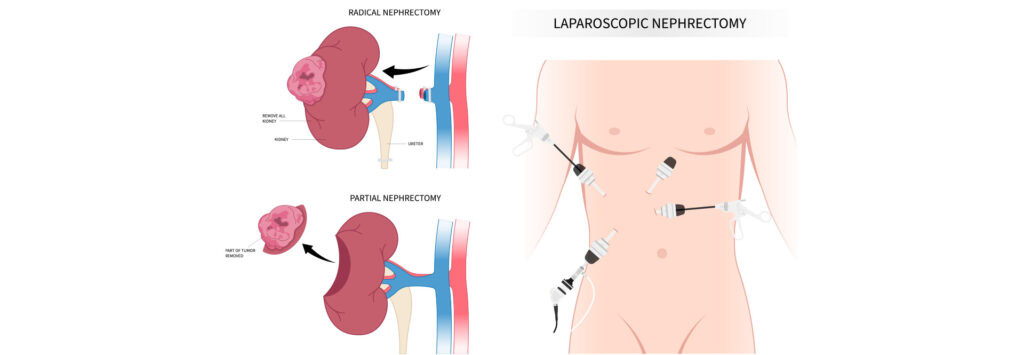
During the procedure, surgeons use a laparoscope, which is a thin camera-equipped instrument inserted through small abdominal incisions. Additionally, specialized surgical tools are used to carefully separate the kidney from surrounding tissues while preserving its blood supply and function.
Afterward, the donor kidney is safely removed through a slightly enlarged incision and prepared immediately for transplantation.
Ultimately, the primary goal of laparoscopic donor nephrectomy is to ensure maximum safety for the donor while providing a healthy functioning kidney for the recipient.
Why Is Laparoscopic Donor Nephrectomy Performed?
Kidney transplantation is often the best long-term treatment for patients with severe kidney failure. Therefore, living kidney donation plays an essential role in improving transplant availability and outcomes.
Common Reasons for Living Kidney Donation Include:
- End-stage kidney disease in a family member
- Chronic kidney failure requiring transplantation
- Reduced waiting time for kidney transplant
- Better transplant success rates
- Improved recipient survival and quality of life
Moreover, kidneys from living donors often function better and last longer compared to kidneys obtained from deceased donors.
Who Can Become a Living Kidney Donor?
Not everyone is eligible to donate a kidney. Therefore, potential donors must undergo extensive medical and psychological evaluation.
Suitable Donor Criteria May Include:
- Good overall physical health
- Normal kidney function
- Absence of major chronic illnesses
- Compatible blood and tissue matching
- Emotional readiness for donation
- Healthy body weight
- No uncontrolled hypertension or diabetes
Importantly, donor safety remains the highest priority throughout the evaluation and surgical process.
Preoperative Evaluation Before Donor Nephrectomy
Before surgery, transplant specialists conduct comprehensive assessments to confirm donor suitability and ensure long-term safety.
Medical History Review
Initially, doctors evaluate:
- Past medical conditions
- Surgical history
- Family medical history
- Lifestyle habits
- Medication use
- Kidney health status
Physical Examination
Furthermore, a detailed physical examination assesses the donor’s overall health and fitness for surgery.
Diagnostic Investigations
Additional tests may include:
- Blood tests
- Urine analysis
- Kidney function tests
- CT angiography
- Tissue compatibility testing
- Cardiac evaluation
Consequently, these assessments help ensure safe donation and successful transplantation.
How Laparoscopic Donor Nephrectomy Surgery Is Performed
Typically, laparoscopic donor nephrectomy is performed under general anesthesia using advanced minimally invasive surgical equipment.
Step-by-Step Surgical Procedure
1. Creation of Small Incisions
First, the surgeon creates several small abdominal incisions for insertion of the laparoscope and specialized instruments.
2. Visualization of the Kidney
Next, the laparoscope provides magnified high-definition views of the kidney and surrounding blood vessels.
3. Kidney Dissection
Afterward, the kidney is carefully separated from nearby tissues while preserving vital blood vessels and the ureter.
4. Blood Vessel Control
Then, the renal artery and renal vein are safely secured and divided.
5. Kidney Removal
Finally, the kidney is removed through a small protected incision and immediately preserved for transplantation.
Overall, the procedure generally takes between 2 and 4 hours depending on anatomical complexity.
Types of Donor Nephrectomy Procedures
Several surgical techniques are available for kidney donation surgery.
| Procedure | Technique | Common Advantages |
| Laparoscopic Donor Nephrectomy | Minimally invasive laparoscopy | Faster recovery and less pain |
| Hand-Assisted Laparoscopic Nephrectomy | Combination technique | Improved surgical control |
| Open Donor Nephrectomy | Traditional open surgery | Used in selected complex cases |
| Robotic Donor Nephrectomy | Robotic-assisted surgery | Enhanced precision and visualization |
Ultimately, the surgical approach is selected based on donor anatomy and surgeon expertise.
Benefits of Laparoscopic Donor Nephrectomy Surgery
Laparoscopic donor nephrectomy offers several important advantages for living kidney donors.
Minimally Invasive Technique
Because the procedure uses small incisions, postoperative pain and tissue trauma are significantly reduced.
Faster Recovery
Additionally, donors usually recover more quickly and return to normal activities sooner than with open surgery.
Reduced Hospital Stay
Most donors can leave the hospital within a few days after surgery.
Better Cosmetic Results
Smaller incisions lead to minimal visible scarring.
Lower Risk of Complications
Furthermore, minimally invasive surgery may reduce the risk of wound complications and infections.
Improved Donor Experience
Consequently, laparoscopic surgery makes kidney donation more comfortable and less physically demanding.
Recovery After Laparoscopic Donor Nephrectomy
Recovery after surgery is generally smooth when postoperative guidelines are followed carefully.
Common Postoperative Symptoms
Initially, donors may experience:
- Mild abdominal discomfort
- Temporary fatigue
- Minor swelling
- Shoulder pain from surgical gas
However, these symptoms usually improve within several days.
Recovery Guidelines
To promote proper healing, donors are advised to:
- Avoid heavy lifting temporarily
- Stay well hydrated
- Walk regularly to improve circulation
- Follow a healthy diet
- Attend follow-up appointments
- Avoid strenuous physical activity for several weeks
As a result, many donors return to work and normal routines within 2 to 6 weeks.
Risks and Complications
Although laparoscopic donor nephrectomy is considered very safe, certain complications may occasionally occur.
Possible Complications Include:
- Bleeding
- Infection
- Injury to surrounding organs
- Blood clots
- Hernia formation
- Anesthesia-related complications
Nevertheless, serious complications are uncommon in experienced transplant centers.
Long-Term Health After Kidney Donation
Most kidney donors continue to live healthy and active lives after donation. In general, the remaining kidney adapts and maintains adequate kidney function.
Important Long-Term Recommendations
Donors are encouraged to:
- Maintain a healthy lifestyle
- Monitor blood pressure regularly
- Stay physically active
- Avoid smoking
- Maintain healthy body weight
- Attend routine medical checkups
Consequently, proper long-term care supports excellent donor health outcomes.
Success Rates of Living Donor Kidney Transplantation
Living donor kidney transplantation typically achieves excellent success rates.
Advantages for Recipients Include:
- Better kidney function
- Reduced waiting time
- Lower rejection risk
- Improved long-term survival
- Faster transplant recovery
Therefore, living kidney donation remains one of the most successful treatments for kidney failure.
Emotional and Psychological Aspects of Kidney Donation
Living kidney donation is both a medical and emotional journey. Therefore, psychological evaluation and support are important parts of the donor process.
Emotional Support Measures Include:
- Pre-donation counseling
- Family support
- Psychological assessment
- Postoperative emotional care
- Long-term follow-up support
As a result, donors often feel emotionally prepared and supported throughout the donation process.
Choosing the Right Transplant Center
Successful laparoscopic donor nephrectomy requires advanced surgical expertise and comprehensive transplant care.
Patients Should Look For:
- Experienced transplant surgeons
- Accredited transplant centers
- Advanced laparoscopic expertise
- Comprehensive donor evaluation programs
- Multidisciplinary transplant teams
Ultimately, specialized transplant centers help maximize both donor safety and recipient outcomes.
Conclusion
Laparoscopic donor nephrectomy surgery is an advanced minimally invasive procedure that has transformed the process of living kidney donation. By combining modern laparoscopic techniques with specialized transplant expertise, the procedure allows safe kidney removal with reduced pain, faster recovery, and excellent long-term outcomes.
Moreover, living kidney donation continues to save lives and significantly improve the quality of life for patients with end-stage kidney disease. Therefore, individuals considering kidney donation should consult experienced transplant specialists to fully understand the evaluation process, surgical procedure, and long-term health considerations.
With expert surgical care, proper follow-up, and comprehensive donor support, laparoscopic donor nephrectomy remains one of the safest and most effective procedures in modern transplant surgery.
Get Connected:
+91 79909 93062 | +91 63513 72032 | exports@jdmeditech.com