Biliary obstruction can significantly impact liver function and overall patient health. When bile cannot flow normally from the liver to the intestine, patients may develop jaundice, cholangitis, abdominal pain, and other serious complications. Therefore, healthcare professionals often rely on endoscopic biliary decompression procedures to restore bile flow and improve patient outcomes.
A Biliary Stenting Set provides an integrated solution for these procedures. By combining essential devices into a single sterile package, the set enables physicians to perform biliary stenting efficiently and safely. Moreover, it helps streamline workflow, reduce preparation time, and support successful clinical outcomes.
What Is a Biliary Stenting Set?
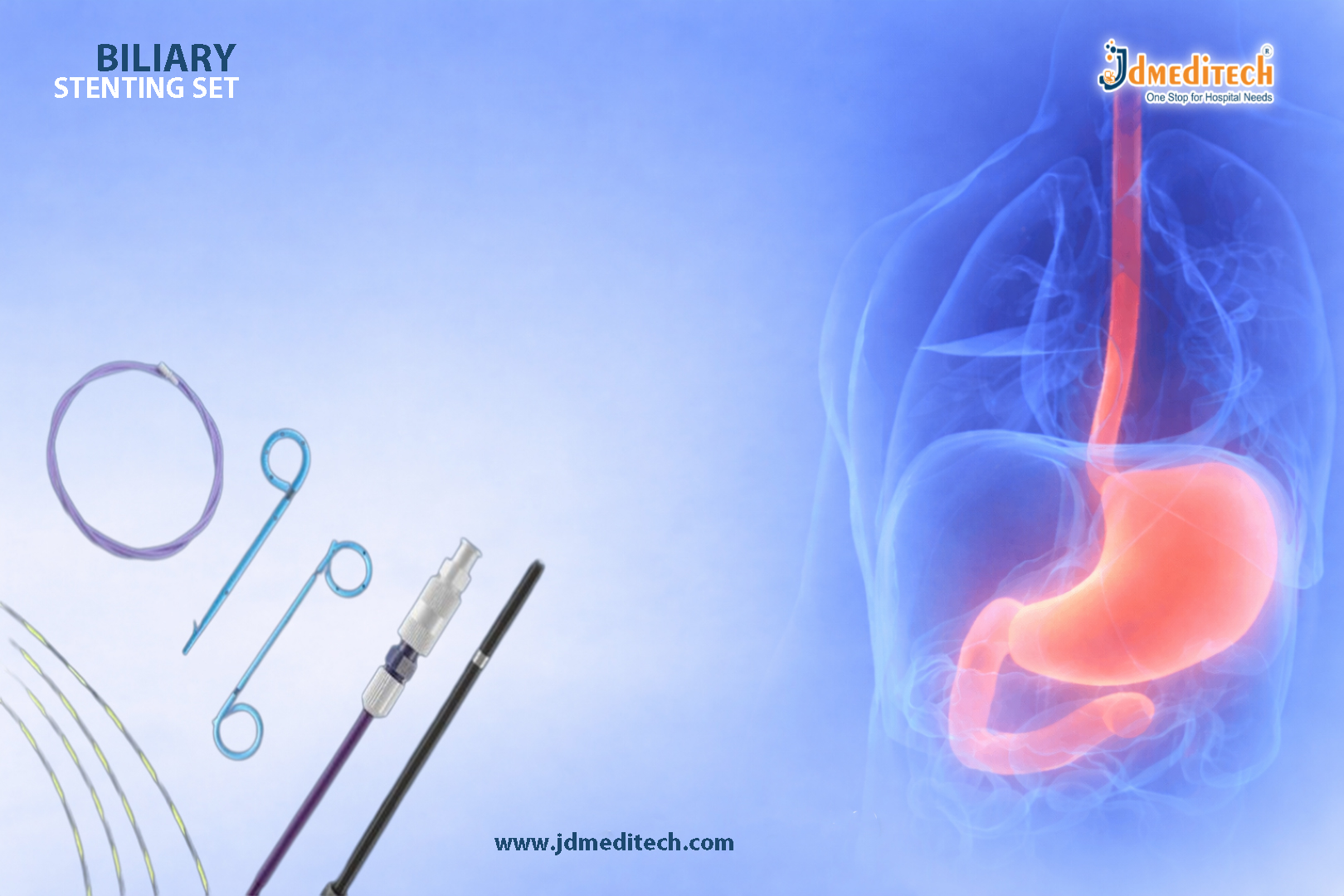
A Biliary Stenting Set is a comprehensive collection of devices designed to facilitate the placement of biliary stents during endoscopic procedures, particularly Endoscopic Retrograde Cholangiopancreatography (ERCP).
Physicians use the set to access the biliary system, navigate strictures or obstructions, and deploy a stent that restores normal bile drainage.
Purpose of a Biliary Stenting Set
Healthcare providers use biliary stenting sets to:
- Relieve biliary obstruction
- Restore bile flow
- Manage biliary strictures
- Treat malignant biliary blockage
- Support post-operative biliary drainage
- Improve patient comfort and quality of life
As a result, biliary stenting has become a standard treatment option in modern gastroenterology and hepatobiliary care.
Understanding Biliary Obstruction
The biliary system transports bile from the liver to the small intestine. However, several conditions can block this pathway and prevent normal bile drainage.
Common Causes of Biliary Obstruction
- Common bile duct stones
- Cholangiocarcinoma
- Pancreatic cancer
- Biliary strictures
- Gallbladder cancer
- Post-surgical complications
- Chronic pancreatitis
Consequently, patients may experience symptoms such as jaundice, dark urine, pale stools, itching, fever, and abdominal pain.
Components of a Biliary Stenting Set
A complete Biliary Stenting Set contains multiple devices that work together during the procedure.
Biliary Stent
The biliary stent serves as the primary therapeutic device. It maintains duct patency and allows continuous bile drainage.
Key features include:
- Flexible construction
- Multiple diameter options
- Smooth deployment
- Long-term drainage support
Guidewire
The guidewire helps physicians navigate the biliary anatomy and cross strictures safely.
Benefits include:
- Enhanced maneuverability
- Improved access control
- Accurate device placement
Delivery System
The delivery system enables controlled stent placement within the bile duct.
Advantages include:
- Precise deployment
- Improved procedural efficiency
- Enhanced physician control
Introducer Catheter
The catheter supports guidewire passage and facilitates stent delivery.
Features include:
- Flexible shaft design
- Smooth navigation
- Excellent trackability
Contrast Injection Accessories
Physicians use these accessories during cholangiography to visualize the biliary anatomy and identify obstruction sites.
Clinical Applications of Biliary Stenting Sets
Healthcare professionals use biliary stenting sets in a wide range of therapeutic procedures.
Malignant Biliary Obstruction
Physicians frequently place biliary stents in patients with pancreatic cancer, cholangiocarcinoma, or metastatic disease. Consequently, the procedure helps relieve jaundice and improve quality of life.
Benign Biliary Strictures
Biliary stenting can restore bile flow in patients with non-cancerous duct narrowing.
Common Bile Duct Stones
When stone extraction remains incomplete, physicians may place a temporary stent to maintain drainage until definitive treatment occurs.
Post-Surgical Biliary Complications
Stenting helps manage bile duct injuries, leaks, and strictures following hepatobiliary surgery.
Chronic Pancreatitis
In selected patients, biliary stenting reduces obstruction caused by inflammatory narrowing of the bile ducts.
Benefits of Using a Biliary Stenting Set
Biliary stenting offers numerous advantages for both healthcare providers and patients.
Minimally Invasive Treatment
Unlike surgical interventions, endoscopic stenting requires no major incision. Therefore, patients often recover more quickly.
Effective Biliary Decompression
The stent restores bile flow immediately after successful deployment. As a result, symptoms often improve rapidly.
Reduced Hospital Stay
Many patients experience shorter hospitalization periods compared to traditional surgical approaches.
Improved Procedural Efficiency
Because the set contains all necessary components, clinicians can prepare and perform procedures more efficiently.
Enhanced Patient Outcomes
Timely biliary decompression reduces complications and supports better overall health.
Key Features to Consider When Selecting a Biliary Stenting Set
Healthcare facilities should evaluate several important factors before choosing a biliary stenting solution.
High-Quality Stent Design
A well-designed stent improves drainage performance and minimizes migration risks.
Excellent Guidewire Compatibility
Smooth guidewire compatibility enhances navigation through complex biliary anatomy.
Reliable Delivery System
A dependable delivery mechanism supports accurate stent placement and procedural confidence.
Sterility Assurance
Single-use sterile packaging helps maintain infection control standards and patient safety.
Regulatory Compliance
Manufacturers should meet applicable international quality and regulatory requirements, including ISO and CE standards.
Best Practices for Endoscopic Biliary Decompression
Healthcare providers can optimize outcomes by following established procedural guidelines.
Perform Thorough Imaging Assessment
Pre-procedure imaging helps identify obstruction characteristics and treatment strategy.
Select the Appropriate Stent Size
Proper stent selection improves drainage efficiency and reduces complications.
Maintain Sterile Technique
Strict aseptic protocols support patient safety and infection prevention.
Monitor Post-Procedure Outcomes
Regular follow-up helps detect complications and evaluate stent performance.
Advancements in Biliary Stenting Technology
Medical technology continues to improve biliary intervention outcomes. Furthermore, manufacturers now offer advanced stent designs that enhance flexibility, drainage efficiency, and long-term patency.
In addition, improved delivery systems provide greater control during placement. Consequently, physicians can achieve more predictable and successful procedural results.
Conclusion
A Biliary Stenting Set provides an integrated and reliable solution for endoscopic biliary decompression. By combining essential devices such as guidewires, delivery systems, catheters, and biliary stents into a single package, the set simplifies procedures and supports optimal clinical outcomes.
Moreover, biliary stenting remains one of the most effective minimally invasive treatments for biliary obstruction. As healthcare providers continue to adopt advanced endoscopic techniques, high-quality biliary stenting sets will play an increasingly important role in improving patient care, procedural efficiency, and long-term treatment success.
Get Connected:
+91 79909 93062 | +91 63513 72032 | exports@jdmeditech.com