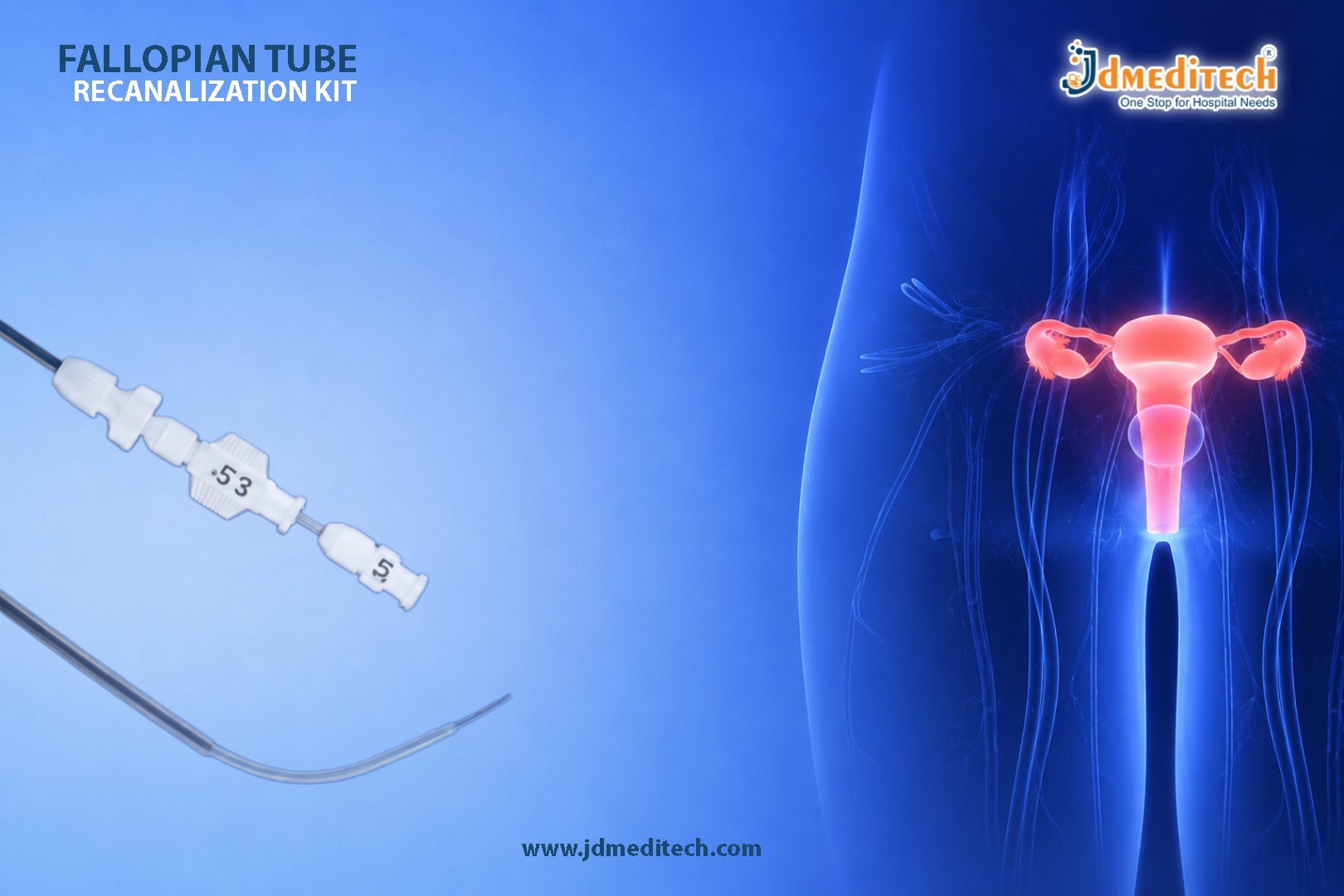
Infertility caused by blocked fallopian tubes is a common challenge affecting many women worldwide. Advances in interventional gynecology have introduced safer and less invasive treatment methods that improve the chances of conception while reducing patient discomfort. One such innovation is the Fallopian Tube Recanalization Kit, a precision-designed medical solution used to restore patency in obstructed fallopian tubes.
This minimally invasive procedure allows physicians to diagnose and treat proximal tubal blockage efficiently without requiring major surgery. With enhanced catheter control, guidewire precision, and fluoroscopic compatibility, the Fallopian Tube Recanalization Kit has become an essential tool in fertility restoration procedures.
What is a Fallopian Tube Recanalization Kit?
Understanding the Device
A Fallopian Tube Recanalization Kit is a specialized interventional gynecology instrument set used to open blocked fallopian tubes through a catheter-based procedure. It typically includes microcatheters, guidewires, introducers, and support components designed for accurate navigation within the reproductive tract.
The kit enables physicians to perform tubal recanalization under imaging guidance, helping restore natural fertility in patients experiencing proximal tubal occlusion.
Importance of Tubal Recanalization in Fertility Treatment
Addressing Fallopian Tube Blockage
Blocked fallopian tubes can prevent sperm from reaching the egg, making conception difficult. Tubal obstruction may occur due to:
- Pelvic inflammatory disease
- Endometriosis
- Post-surgical adhesions
- Infection-related scarring
- Mucus plugs or debris
The Fallopian Tube Recanalization Kit provides a minimally invasive alternative to open surgery, offering improved patient comfort and reduced recovery time.
Supporting Natural Conception
Unlike more invasive fertility treatments, tubal recanalization aims to restore the natural reproductive pathway. Successful recanalization may allow patients to conceive naturally without extensive surgical intervention.
Key Components of a Fallopian Tube Recanalization Kit
Microcatheter System
The microcatheter is designed for smooth navigation through delicate reproductive anatomy. Its flexible structure allows precise advancement into obstructed segments of the fallopian tube.
Guidewire
The guidewire assists in crossing the blockage safely and effectively. High maneuverability and atraumatic design help reduce tissue injury during the procedure.
Introducer and Access Components
These components provide controlled entry and stable positioning, ensuring smooth procedural workflow for gynecologists and interventional radiologists.
Radiopaque Markers
Radiopaque visibility under fluoroscopy helps clinicians monitor catheter movement and positioning accurately throughout the recanalization process.
Features of a High-Quality Fallopian Tube Recanalization Kit
Minimally Invasive Design
The kit is engineered to reduce surgical trauma and support outpatient-based fertility procedures.
Excellent Flexibility and Trackability
Smooth catheter movement and flexible guidewire navigation improve procedural precision in narrow anatomical pathways.
Sterile and Single-Use Construction
Sterile packaging helps maintain infection control standards while supporting patient safety.
Imaging Compatibility
The kit is optimized for fluoroscopic guidance, ensuring accurate placement and controlled intervention.
Reliable Clinical Performance
Precision-engineered components support consistent procedural outcomes and physician confidence.
Clinical Applications
Treatment of Proximal Tubal Occlusion
The primary use of the Fallopian Tube Recanalization Kit is reopening blocked proximal fallopian tubes to restore fertility potential.
Diagnostic and Therapeutic Procedures
The device can assist in both identifying the location of obstruction and performing targeted recanalization.
Fertility Preservation Procedures
In selected patients, recanalization may help preserve reproductive function without requiring major surgical intervention.
Advantages of Using a Fallopian Tube Recanalization Kit
Reduced Need for Surgery
The minimally invasive nature of the procedure helps avoid open abdominal surgery in many cases.
Faster Recovery Time
Patients usually experience shorter recovery periods and less post-procedural discomfort compared to traditional surgical techniques.
Improved Patient Comfort
Smaller instruments and minimally invasive access contribute to better patient tolerance.
Cost-Effective Fertility Solution
Tubal recanalization may provide a more economical option compared to advanced assisted reproductive treatments in selected cases.
Enhanced Precision for Clinicians
The combination of guidewire control and imaging visibility supports accurate navigation and successful recanalization.
Procedure Overview
Patient Preparation
The patient is evaluated through imaging and fertility assessment before the procedure. Proper sterilization and preparation protocols are followed.
Catheter Navigation
Under fluoroscopic guidance, the catheter and guidewire are advanced through the cervix and uterus into the blocked fallopian tube.
Recanalization Process
The guidewire carefully traverses the obstruction, restoring tubal patency and allowing normal flow.
Post-Procedure Assessment
Imaging confirms successful recanalization and evaluates tube functionality.
Safety Considerations
Sterility and Infection Prevention
Using sterile, single-use components minimizes contamination risks and supports patient safety.
Gentle Instrumentation
Atraumatic catheter and guidewire designs help reduce the risk of tissue damage or perforation.
Imaging-Guided Accuracy
Continuous fluoroscopic monitoring improves procedural control and minimizes complications.
Choosing the Right Fallopian Tube Recanalization Kit
Evaluate Device Flexibility
Flexible components improve navigation through delicate and narrow anatomy.
Check Imaging Compatibility
High radiopacity ensures better visualization and procedural accuracy.
Prioritize Quality Manufacturing
Medical-grade materials and precision engineering contribute to reliable clinical outcomes.
Ensure Sterile Packaging
Proper sterile packaging is essential for maintaining infection control standards.
Future Trends in Tubal Recanalization Technology
Improved Catheter Technology
Advancements in microcatheter engineering continue to enhance flexibility and procedural success.
Enhanced Imaging Integration
Modern imaging systems provide better visualization for safer and more accurate recanalization procedures.
Increased Adoption in Fertility Care
As minimally invasive fertility treatments gain popularity, fallopian tube recanalization kits are becoming increasingly important in gynecological practice.
Conclusion
The Fallopian Tube Recanalization Kit is a reliable and minimally invasive solution designed to restore fallopian tube patency with precision and safety. By combining advanced catheter technology, guidewire maneuverability, and imaging-guided accuracy, these kits help clinicians perform effective tubal recanalization procedures while improving patient comfort and recovery.
As fertility preservation and minimally invasive gynecological interventions continue to evolve, the Fallopian Tube Recanalization Kit remains an essential tool for supporting successful reproductive healthcare outcomes.
Get Connected:
+91 79909 93062 | +91 63513 72032 | exports@jdmeditech.com