In healthcare facilities, effective disinfection plays a critical role in preventing infections and ensuring patient safety. Hospitals, dialysis centers, laboratories, and surgical units must disinfect medical devices properly to minimize the risk of healthcare-associated infections (HAIs).
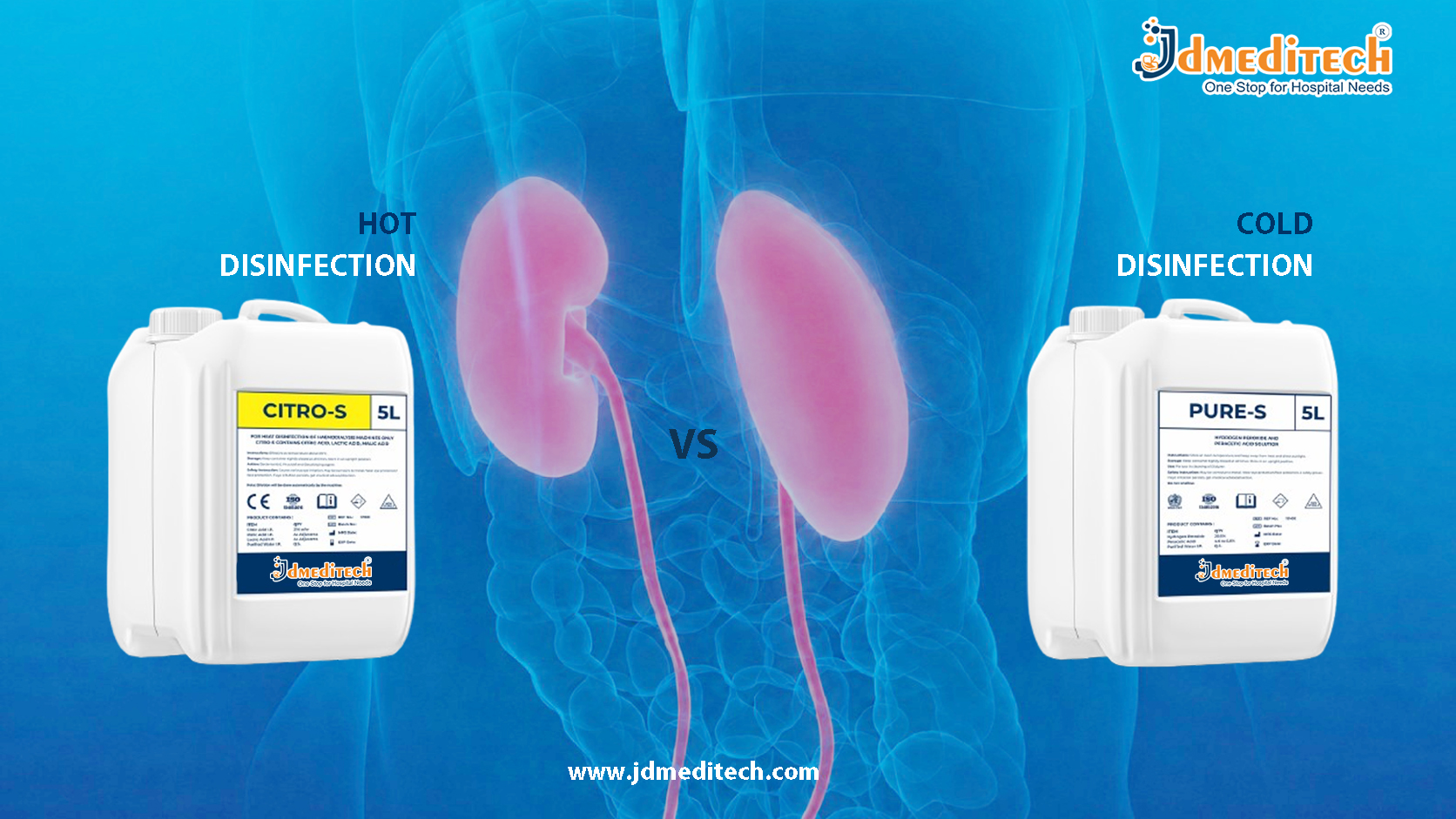
Among the various disinfection methods available, hot disinfection and cold disinfection remain two widely used approaches. Although both methods aim to eliminate harmful microorganisms, they differ significantly in terms of process, effectiveness, cost, and application.
Therefore, healthcare professionals must understand the differences between these two methods to select the most suitable disinfection solution for their clinical settings.
What is Hot Disinfection?
Hot disinfection is a process that uses high temperatures, usually in combination with purified water, to eliminate bacteria, viruses, fungi, and other microorganisms from medical equipment.
Typically, automated medical devices such as dialysis machine reprocessing systems, endoscope washers, and sterilization units use hot disinfection cycles. During the process, the equipment heats water to a predetermined temperature for a specific duration to achieve effective microbial reduction.
As a result, hot disinfection provides reliable and reproducible disinfection outcomes without requiring chemical agents.
What is Cold Disinfection?
Cold disinfection uses chemical disinfectants at room temperature to destroy or inactivate microorganisms on medical devices and equipment.
Healthcare professionals commonly use chemicals such as peracetic acid, glutaraldehyde, hydrogen peroxide, and other approved disinfectants for cold disinfection procedures.
Moreover, cold disinfection allows clinicians to disinfect heat-sensitive instruments that cannot tolerate high temperatures.
Hot Disinfection vs Cold Disinfection: Key Differences
Disinfection Method
Hot Disinfection: Uses heat and water to destroy microorganisms.
Cold Disinfection: Uses chemical disinfectants to eliminate microorganisms.
Effectiveness
Hot disinfection delivers highly consistent and automated results. Consequently, healthcare facilities can standardize their infection control protocols more effectively.
In contrast, the effectiveness of cold disinfection often depends on the concentration of chemicals, contact time, and operator compliance.
Chemical Usage
Hot disinfection generally does not require additional disinfectant chemicals. Therefore, healthcare facilities can reduce chemical exposure and disposal concerns.
Conversely, cold disinfection relies heavily on chemical agents. As a result, facilities must manage chemical storage, handling, and disposal carefully.
Equipment Compatibility
Hot disinfection works best for heat-resistant medical devices and equipment.
However, healthcare professionals prefer cold disinfection for heat-sensitive instruments such as certain endoscopes, catheters, and plastic components.
Process Automation
Most hot disinfection systems operate automatically. Consequently, they minimize operator intervention and reduce the risk of human error.
On the other hand, cold disinfection procedures often require manual preparation, monitoring, and documentation.
Turnaround Time
Automated hot disinfection systems frequently complete the process quickly and consistently.
In comparison, cold disinfection may require extended soaking times depending on the disinfectant used.
Advantages of Hot Disinfection
- Eliminates microorganisms effectively
- Reduces dependence on chemicals
- Minimizes operator exposure to hazardous substances
- Supports automated workflows
- Provides reproducible disinfection results
- Reduces environmental chemical burden
- Enhances infection control practices
Advantages of Cold Disinfection
- Suitable for heat-sensitive medical devices
- Requires relatively simple equipment
- Offers flexibility in various healthcare settings
- Supports disinfection of delicate instruments
- Enables point-of-care disinfection when necessary
Limitations of Hot Disinfection
Although hot disinfection offers numerous benefits, it also has certain limitations.
- Requires specialized equipment
- Cannot process heat-sensitive devices
- Involves higher initial capital investment
- Depends on electrical power and automated systems
Limitations of Cold Disinfection
Similarly, cold disinfection presents several challenges.
- Requires strict adherence to contact times
- Involves chemical handling risks
- May expose staff to hazardous fumes
- Requires regular monitoring of disinfectant concentration
- Generates chemical waste
Which Disinfection Method is Better?
Neither method is universally superior. Instead, healthcare professionals should select the disinfection approach according to the type of medical device, infection control requirements, equipment compatibility, and operational workflow.
For example, facilities often choose hot disinfection for automated dialysis reprocessing systems because it delivers consistent and chemical-free disinfection.
However, clinicians typically prefer cold disinfection for delicate and heat-sensitive instruments that cannot withstand elevated temperatures.
Ultimately, the best choice depends on the specific clinical application.
Applications in Dialysis Centers
Dialysis centers frequently use both hot and cold disinfection methods to maintain patient safety and machine performance.
For instance, many modern dialysis machines incorporate automated hot disinfection cycles to disinfect internal fluid pathways. Meanwhile, healthcare professionals may use approved chemical disinfectants to clean external components and certain accessories.
Therefore, combining both methods often provides comprehensive infection control in dialysis environments.
Why Choose JDMeditech Dialysis Solutions?
JDMeditech offers advanced dialysis consumables, dialysis machine accessories, and reprocessing solutions designed to support effective infection prevention and patient safety.
Key Features
- High-quality medical-grade products
- Reliable clinical performance
- Compliance with international standards
- Cost-effective solutions
- Global supply capabilities
- Dedicated technical support
Conclusion
Both hot disinfection and cold disinfection play essential roles in modern healthcare infection control. While hot disinfection offers automated, consistent, and chemical-free microbial reduction, cold disinfection provides flexibility for heat-sensitive devices.
Therefore, healthcare facilities should carefully evaluate their equipment, workflow, and infection control requirements before selecting a disinfection strategy.
By implementing appropriate disinfection protocols, hospitals and dialysis centers can improve patient safety, enhance operational efficiency, and maintain high standards of clinical care.
Get Connected:
+91 79909 93062 | +91 63513 72032 | exports@jdmeditech.com