Cardiac catheterization has revolutionized the diagnosis and treatment of cardiovascular diseases. Whether performing a routine coronary angiogram or a complex percutaneous coronary intervention (PCI), selecting the appropriate catheter is critical for procedural success.
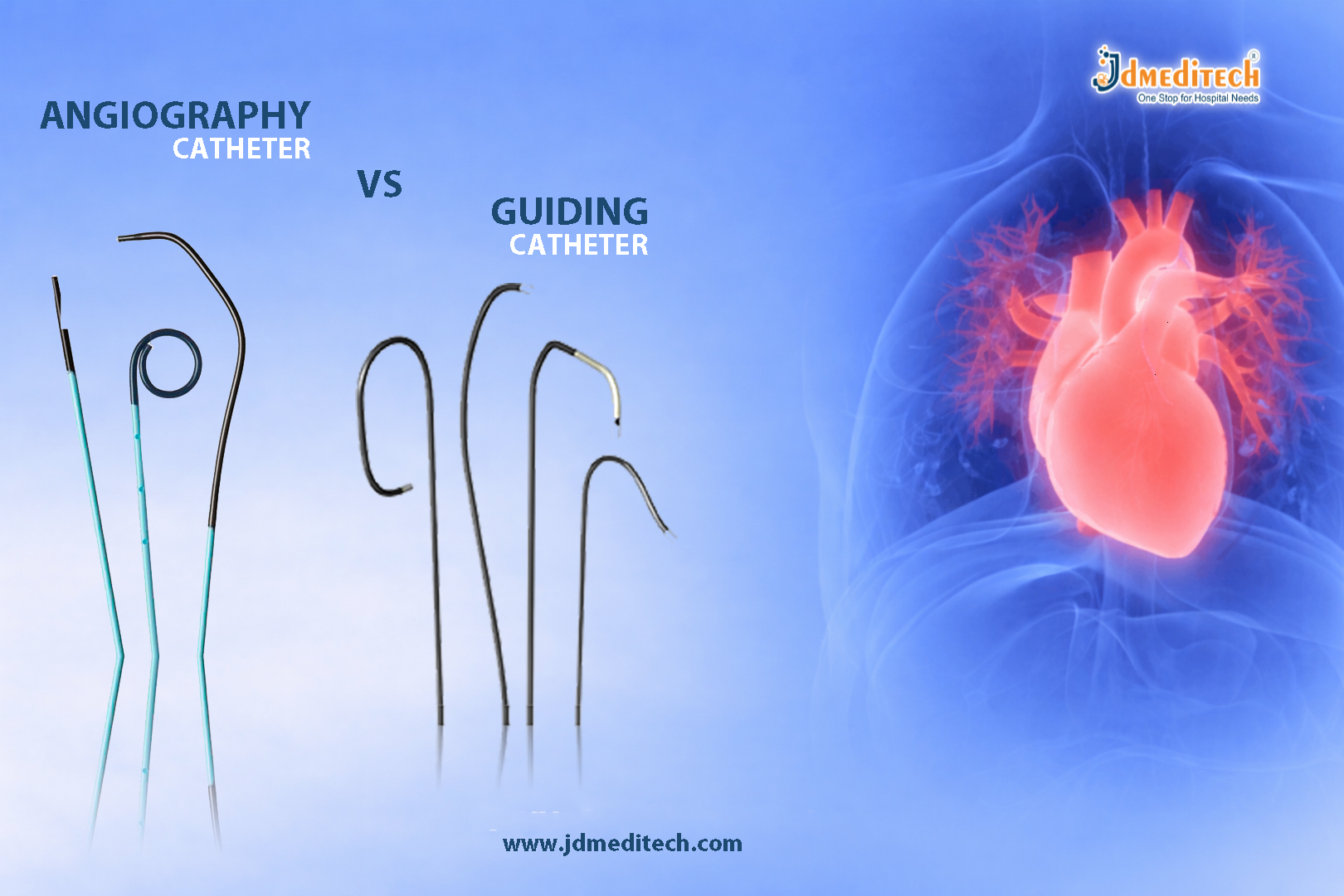
Among the most commonly used devices are the Angiography (Diagnostic) Catheter and the Guiding Catheter. Although both are inserted through the vascular system to access the coronary arteries, they serve different purposes. Diagnostic catheters are designed to visualize blood vessels using contrast media, whereas guiding catheters provide stable access and support during therapeutic interventions.
Understanding the differences between these two catheter types enables cardiologists to improve procedural efficiency, enhance patient safety, and achieve better clinical outcomes.
What Is an Angiography (Diagnostic) Catheter?
Purpose and Overview
An Angiography (Diagnostic) Catheter is a thin, flexible catheter used to inject contrast media into the coronary arteries or other blood vessels during diagnostic angiography. The contrast agent allows physicians to visualize vessel anatomy, identify blockages, and evaluate blood flow under fluoroscopy.
Diagnostic catheters are primarily designed for imaging rather than device delivery.
Common applications include:
- Coronary angiography
- Peripheral angiography
- Renal angiography
- Cerebral angiography
- Aortic angiography
- Vascular assessment before intervention
What Is a Guiding Catheter?
Purpose and Overview
A Guiding Catheter is specifically designed for interventional cardiology procedures. Unlike diagnostic catheters, guiding catheters provide a stable pathway for guidewires, balloon catheters, stents, atherectomy devices, and other interventional tools.
Additionally, guiding catheters offer superior backup support while maintaining adequate contrast injection during treatment.
Common applications include:
- Percutaneous Coronary Intervention (PCI)
- Coronary stent placement
- Balloon angioplasty
- Chronic total occlusion (CTO) procedures
- Structural heart interventions
- Complex coronary interventions
Angiography Catheter vs Guiding Catheter
Key Differences
| Feature | Angiography (Diagnostic) Catheter | Guiding Catheter |
| Primary Purpose | Diagnostic imaging | Therapeutic intervention |
| Contrast Injection | Excellent | Good |
| Device Delivery | Not intended | Designed for device delivery |
| Backup Support | Minimal | High |
| Internal Lumen | Smaller | Larger |
| Wall Thickness | Thinner | Thicker |
| Flexibility | Higher | Moderate |
| Torque Control | Excellent | Excellent |
| Common Procedures | Coronary angiography | PCI and angioplasty |
Design Differences
Construction and Performance
Although both catheter types appear similar, their construction differs significantly.
Diagnostic catheters feature:
- Thin catheter walls
- Smaller outer diameter
- High flexibility
- Excellent torque response
- Optimized contrast flow
Guiding catheters include:
- Reinforced shaft construction
- Larger internal lumen
- Increased stiffness
- Superior backup support
- Enhanced device compatibility
These structural differences directly influence their clinical performance.
Advantages of Angiography Catheters
Why Use a Diagnostic Catheter?
Diagnostic catheters offer several important benefits.
These include:
- Excellent vascular visualization
- Smooth vessel navigation
- High flexibility
- Reduced vessel trauma
- Precise contrast delivery
- Easy catheter manipulation
- Fast diagnostic evaluation
Therefore, they remain the preferred choice for diagnostic imaging procedures.
Advantages of Guiding Catheters
Why Use a Guiding Catheter?
Guiding catheters are specifically engineered to support complex interventions.
Their advantages include:
- Strong backup support
- Large inner lumen
- Efficient guidewire delivery
- Improved stent deployment
- Excellent device compatibility
- Stable coronary engagement
- Better procedural control
As a result, they are indispensable during PCI procedures.
Common Catheter Shapes
Popular Configurations
Both catheter types are available in multiple curve designs to accommodate different anatomical variations.
Common configurations include:
- Judkins Left (JL)
- Judkins Right (JR)
- Amplatz Left (AL)
- Amplatz Right (AR)
- Multipurpose (MP)
- Internal Mammary (IMA)
- Tiger Catheter
- Jacky Catheter
Selecting the correct shape improves coronary engagement and procedural success.
Clinical Applications of Diagnostic Catheters
When Are They Used?
Diagnostic catheters are commonly used for:
- Coronary artery disease diagnosis
- Chest pain evaluation
- Preoperative cardiac assessment
- Congenital heart disease evaluation
- Peripheral vascular imaging
- Follow-up angiography
They provide accurate vascular imaging while minimizing procedural complexity.
Clinical Applications of Guiding Catheters
When Are They Used?
Guiding catheters are essential for therapeutic procedures, including:
- Coronary angioplasty
- Drug-eluting stent placement
- Balloon dilation
- CTO interventions
- Rotational atherectomy
- Bifurcation lesion treatment
- Structural heart procedures
These procedures require stable catheter positioning and excellent device support.
Choosing the Right Catheter
Factors to Consider
Several factors influence catheter selection.
These include:
- Procedure type
- Coronary anatomy
- Access site (radial or femoral)
- Vessel tortuosity
- Lesion complexity
- Device compatibility
- Required backup support
- Operator preference
Consequently, selecting the right catheter improves procedural safety and efficiency.
Material and Manufacturing Quality
Why Quality Matters
High-quality cardiology catheters are manufactured using advanced materials to ensure excellent performance.
Premium catheters typically provide:
- Smooth atraumatic tip
- High kink resistance
- Excellent torque transmission
- Radiopaque markers
- Biocompatible polymers
- Braided shaft reinforcement
- Hydrophilic coating options
These features contribute to safer navigation and improved procedural outcomes.
Why Choose Premium Cardiology Catheters?
Clinical Benefits
Premium-quality angiography and guiding catheters offer:
- Reliable vascular access
- Superior handling
- Consistent performance
- Excellent trackability
- Improved procedural efficiency
- Enhanced physician control
- Reduced procedural complications
- High patient safety
Investing in high-quality catheters supports better outcomes in both diagnostic and interventional cardiology.
Frequently Asked Questions
What is the main difference between an angiography catheter and a guiding catheter?
An angiography catheter is designed for diagnostic imaging using contrast media, whereas a guiding catheter provides support for guidewires, balloons, and stents during interventional procedures.
Can a diagnostic catheter be used for PCI?
No. Diagnostic catheters are not intended to provide the backup support or internal lumen required for PCI devices.
Why do guiding catheters have a larger lumen?
The larger lumen allows guidewires, balloons, stents, and other interventional devices to pass through the catheter efficiently.
Which catheter is more flexible?
Diagnostic catheters are generally more flexible, making them ideal for vessel imaging and selective coronary engagement.
Conclusion
Final Thoughts
Both Angiography (Diagnostic) Catheters and Guiding Catheters are fundamental tools in modern cardiology. While diagnostic catheters excel in imaging coronary anatomy and evaluating vascular disease, guiding catheters provide the stability and support required for life-saving interventional procedures.
Choosing the appropriate catheter depends on the clinical objective, patient anatomy, lesion complexity, and the devices required during treatment. By understanding the unique strengths of each catheter type, healthcare professionals can improve procedural efficiency, reduce complications, and achieve optimal cardiovascular outcomes.
Get Connected:
+91 79909 93062 | +91 63513 72032 | exports@jdmeditech.com