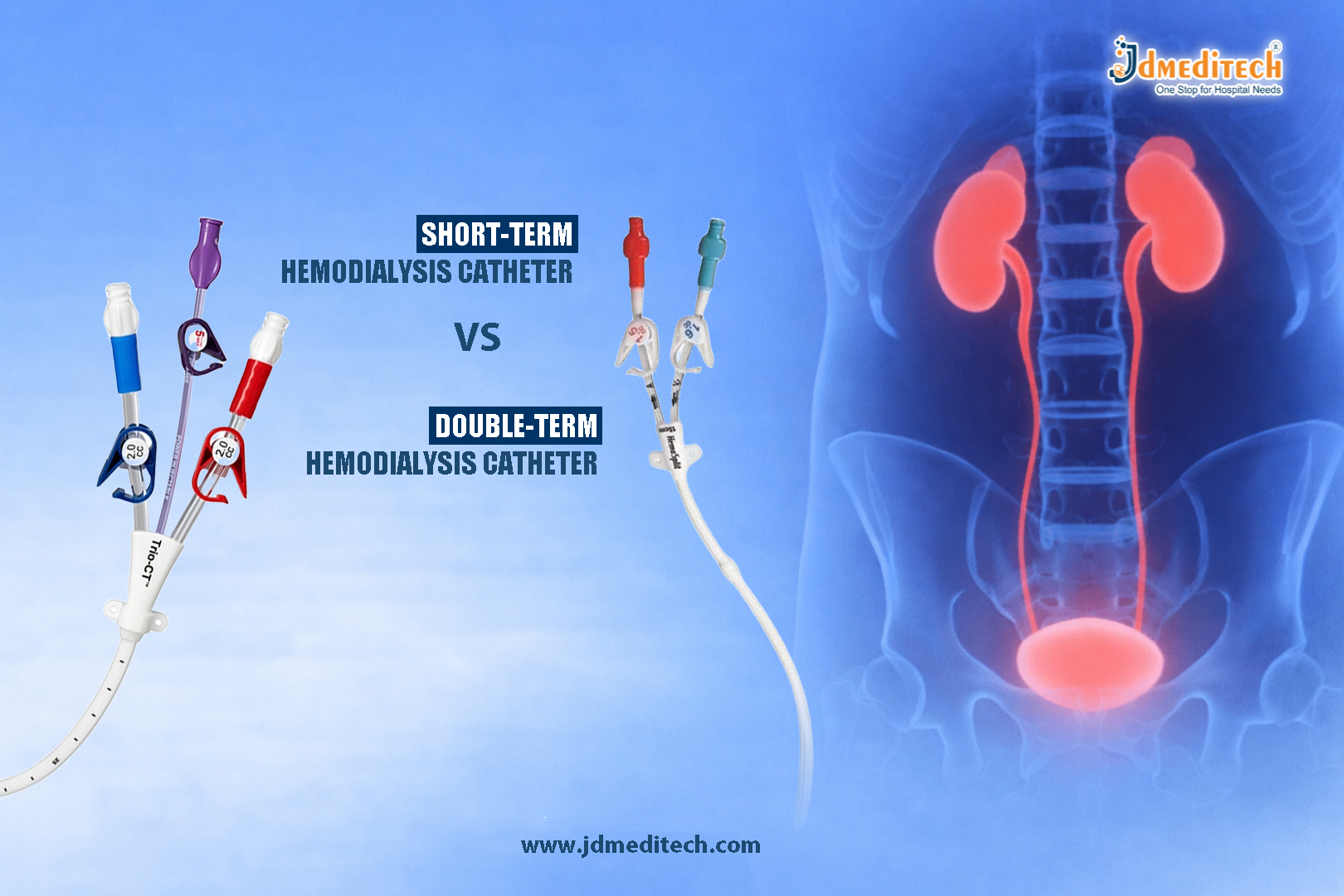
A Hemodialysis Catheter is a dual-lumen vascular access device that allows blood to flow from the patient’s body to the dialysis machine and back again. Primarily, it provides immediate vascular access when permanent access is unavailable. Additionally, it is commonly inserted into a large central vein, such as the internal jugular, femoral, or subclavian vein. As a result, patients can begin dialysis without unnecessary delays.
Hemodialysis catheters are typically used when:
- Emergency dialysis is required
- Permanent vascular access is not yet available
- An AV fistula is still maturing
- Temporary dialysis support is needed
- Patients are unsuitable for AV fistulas or grafts
What Is a Short-Term Hemodialysis Catheter?
Purpose and Design
A Short-Term Hemodialysis Catheter is a non-tunneled catheter designed for immediate vascular access. Therefore, it is commonly selected during emergency situations. In addition, it can be inserted quickly, allowing dialysis treatment to begin without delay. However, because it is intended for temporary use, it should be replaced with more permanent vascular access whenever possible.
Typical insertion sites include:
- Internal jugular vein
- Femoral vein
- Subclavian vein
What Is a Long-Term Hemodialysis Catheter?
Purpose and Design
A Long-Term Hemodialysis Catheter, also known as a tunneled dialysis catheter, is intended for patients who require prolonged dialysis treatment. Unlike short-term catheters, it is tunneled beneath the skin before entering the vein. Furthermore, it contains a polyester cuff that encourages tissue growth around the catheter. Consequently, the catheter becomes more stable while the risk of infection is reduced.
Design Differences
Construction Comparison
Although both catheter types perform the same function, their construction differs considerably. For example, short-term catheters are designed for rapid placement and immediate use. On the other hand, long-term catheters include a subcutaneous tunnel and tissue cuff for improved stability.
Short-term catheters feature:
- Straight design
- No tissue cuff
- Simple insertion
- Immediate use
Meanwhile, long-term catheters include:
- Subcutaneous tunnel
- Polyester cuff
- Flexible catheter body
- Improved fixation
- Enhanced infection protection
Therefore, each design is intended for different clinical situations.
Advantages of Short-Term Hemodialysis Catheters
Benefits
Short-term catheters offer several important advantages. First, they provide rapid vascular access during emergencies. Additionally, they allow dialysis to begin immediately after insertion. Moreover, the placement procedure is relatively simple. As a result, these catheters are widely used in emergency departments and intensive care units.
Advantages of Long-Term Hemodialysis Catheters
Benefits
Long-term catheters provide numerous advantages for patients requiring ongoing dialysis. Most importantly, they significantly reduce infection risk compared with non-tunneled catheters. Furthermore, they provide greater stability during repeated dialysis sessions. In addition, patients often experience better comfort over extended treatment periods. Consequently, they are the preferred option when long-term vascular access is necessary.
Which Catheter Is Safer?
Infection and Complication Risk
Long-term tunneled catheters generally have a lower infection risk because the tissue cuff acts as a barrier against bacterial migration. However, proper catheter care remains essential regardless of catheter type. Therefore, healthcare providers should follow strict aseptic techniques during insertion and maintenance. Likewise, patients should receive education on catheter hygiene to minimize complications.
Potential complications include:
- Catheter-related bloodstream infection
- Thrombosis
- Catheter dysfunction
- Mechanical damage
- Venous stenosis
Factors to Consider When Choosing a Hemodialysis Catheter
Selection Criteria
Several factors should be evaluated before selecting a catheter. First, physicians should determine how long dialysis access will be required. Next, the patient’s vascular anatomy should be assessed. Additionally, infection risk and overall health status should be considered. Finally, physician preference and available vascular access options also influence the final decision.
Features of High-Quality Hemodialysis Catheters
Product Characteristics
Premium hemodialysis catheters are manufactured using advanced medical-grade materials. Moreover, they are designed to deliver consistent blood flow while minimizing complications. In addition, high-quality catheters include soft atraumatic tips and kink-resistant shafts. As a result, they improve both procedural safety and dialysis efficiency.
Why Choose Premium Hemodialysis Catheters?
Clinical Benefits
Choosing premium dialysis catheters offers several important clinical advantages. Not only do they provide reliable blood flow, but they also improve patient comfort. Furthermore, they reduce the likelihood of catheter-related complications. Consequently, hospitals can improve treatment quality while reducing replacement frequency.
Conclusion
Final Thoughts
Both Short-Term and Long-Term Hemodialysis Catheters play essential roles in dialysis treatment. While short-term catheters provide immediate vascular access during emergencies, long-term catheters offer greater stability for prolonged therapy. Therefore, selecting the appropriate catheter depends on the patient’s medical condition and expected duration of dialysis. Ultimately, using the right catheter improves treatment efficiency, reduces complications, and enhances patient outcomes.
Get Connected:
+91 79909 93062 | +91 63513 72032 | exports@jdmeditech.com