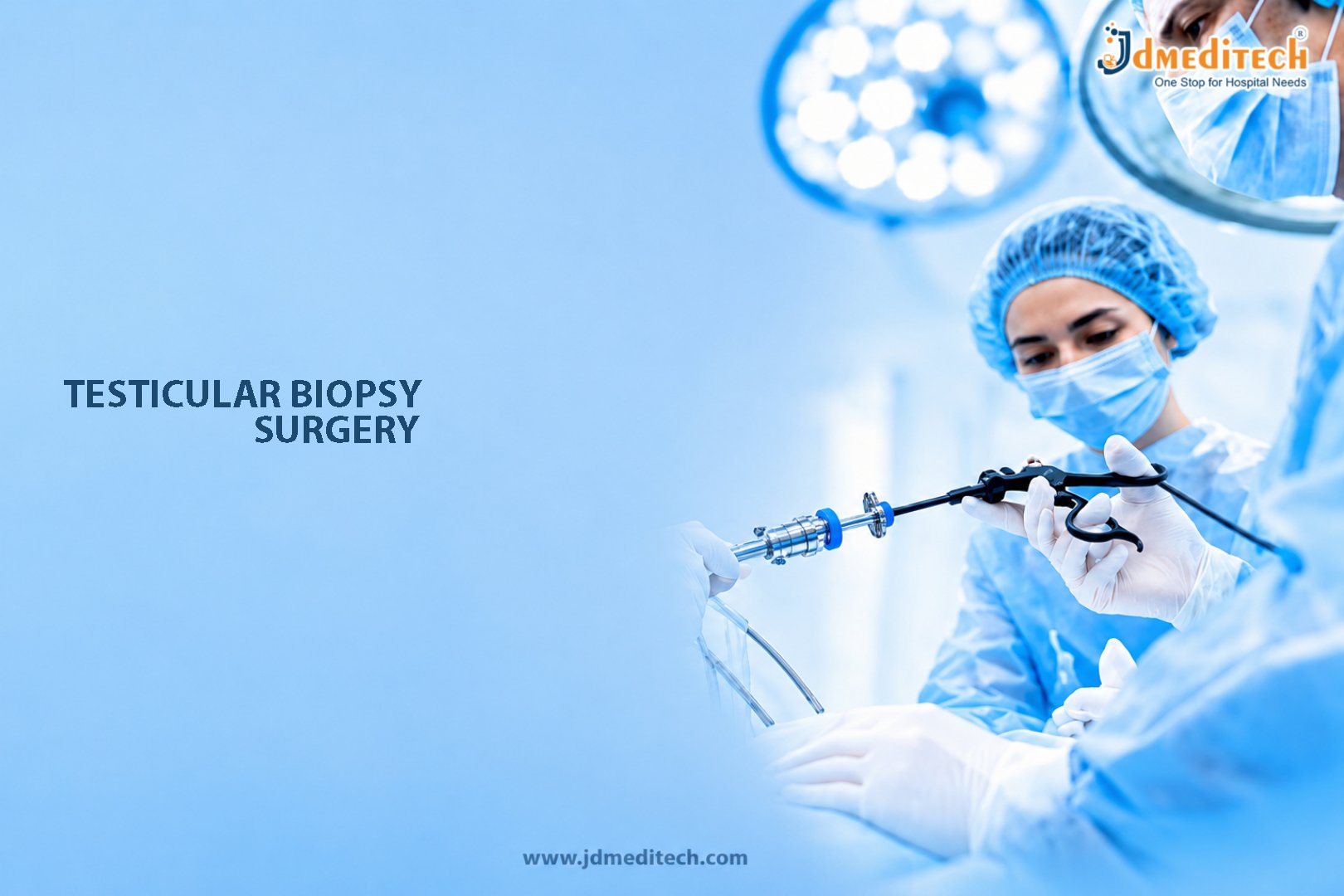
Testicular biopsy surgery is a specialized urologic procedure performed to evaluate testicular tissue and assess sperm production or underlying testicular abnormalities. The procedure plays an important role in diagnosing male infertility, hormonal disorders, and certain testicular conditions. Additionally, it may help retrieve sperm directly from the testicle for assisted reproductive techniques.
Although the surgery is minimally invasive, it provides valuable diagnostic information that helps doctors determine the most appropriate treatment plan. Therefore, testicular biopsy surgery remains an important tool in modern reproductive and urologic care.
Moreover, advancements in microsurgical techniques and minimally invasive approaches have significantly improved procedural safety, precision, and patient recovery.
What Is Testicular Biopsy Surgery?
Understanding the Procedure
Testicular biopsy surgery involves removing a small sample of testicular tissue for laboratory examination. The tissue is carefully analyzed to evaluate sperm production, cellular structure, and overall testicular function.
The procedure may be performed for:
- Male infertility evaluation
- Sperm retrieval procedures
- Investigation of abnormal testicular conditions
- Hormonal assessment
- Detection of testicular abnormalities
In many cases, the procedure is completed on an outpatient basis under local or general anesthesia.
Why Is Testicular Biopsy Surgery Performed?
Common Medical Indications
Doctors may recommend testicular biopsy surgery for several important reasons. Most commonly, the procedure is used when semen analysis shows absent or severely reduced sperm production.
Common indications include:
- Male infertility
- Azoospermia (absence of sperm in semen)
- Obstructive infertility evaluation
- Non-obstructive infertility assessment
- Hormonal imbalance investigation
- Sperm retrieval for IVF or ICSI
- Suspicious testicular abnormalities
Consequently, the procedure helps determine whether the testicles are producing healthy sperm cells.
Types of Testicular Biopsy Procedures
Different Surgical Approaches
Several biopsy techniques may be used depending on the patient’s condition and treatment goals.
Common types include:
Open Testicular Biopsy
In this method, the surgeon makes a small incision in the scrotum and removes a tissue sample directly from the testicle.
Needle Biopsy
A special needle is inserted into the testicle to obtain tissue or sperm samples with minimal incision.
Microsurgical Testicular Sperm Extraction (Micro-TESE)
This advanced microsurgical technique uses high-powered magnification to identify sperm-producing tubules with greater precision.
As a result, microsurgical approaches often improve sperm retrieval success while minimizing tissue damage.
Symptoms and Conditions That May Require Testicular Biopsy
Signs Requiring Further Evaluation
Doctors may recommend further investigation if patients experience:
- Infertility
- Low sperm count
- Abnormal hormone levels
- Small testicular size
- History of undescended testes
- Previous testicular injury
- Genetic or reproductive concerns
Additionally, biopsy findings may help guide fertility treatment decisions.
Preoperative Evaluation Before Testicular Biopsy
Diagnostic Assessment and Preparation
Before surgery, the urologist performs a detailed evaluation to assess reproductive health and identify possible underlying causes.
Preoperative investigations may include:
- Physical examination
- Semen analysis
- Hormonal testing
- Scrotal ultrasound
- Blood investigations
- Genetic testing in selected cases
Furthermore, these tests help determine the most suitable biopsy technique for the patient.
How Testicular Biopsy Surgery Is Performed
Step-by-Step Surgical Procedure
Testicular biopsy surgery is usually performed under local, regional, or general anesthesia depending on the complexity of the procedure.
The surgical process generally includes:
- First, the scrotal area is cleaned and prepared.
- Local or general anesthesia is administered.
- A small incision or needle entry point is created.
- Testicular tissue or sperm samples are collected carefully.
- Bleeding is controlled precisely.
- Finally, the incision is closed with sutures if necessary.
Typically, the procedure takes between 20 and 60 minutes.
Microsurgical Techniques in Testicular Biopsy
Advanced Precision and Fertility Preservation
Modern microsurgical techniques have significantly improved the safety and effectiveness of testicular biopsy procedures.
Advantages of microsurgical methods include:
- Greater surgical precision
- Improved sperm retrieval rates
- Reduced tissue trauma
- Lower complication risk
- Better preservation of testicular function
- Faster recovery
Therefore, microsurgical approaches are increasingly preferred in male infertility treatment.
Recovery After Testicular Biopsy Surgery
Postoperative Care and Healing
Most patients recover quickly after testicular biopsy surgery. However, proper postoperative care remains important for smooth healing.
Doctors commonly advise patients to:
- Wear scrotal support garments
- Avoid heavy physical activity
- Keep the surgical area clean and dry
- Take prescribed medications as directed
- Apply cold packs if recommended
Although mild swelling, bruising, or discomfort may occur initially, these symptoms usually improve within a few days.
In most cases, patients can return to normal daily activities within 1 week.
Possible Risks and Complications
Understanding Surgical Safety
Testicular biopsy surgery is generally considered safe. Nevertheless, some potential risks may include:
- Bleeding
- Infection
- Temporary scrotal swelling
- Mild pain or discomfort
- Bruising
- Rare injury to testicular structures
- Temporary fertility-related concerns
Fortunately, experienced surgeons and modern surgical techniques help minimize complication rates significantly.
Benefits of Testicular Biopsy Surgery
Advantages of the Procedure
Testicular biopsy surgery offers several important clinical benefits, including:
- Accurate assessment of sperm production
- Diagnosis of infertility causes
- Direct sperm retrieval for assisted reproduction
- Evaluation of testicular function
- Support for personalized fertility treatment planning
- Improved reproductive management
Consequently, the procedure plays a major role in advanced male fertility care.
Testicular Biopsy and Male Infertility Treatment
Role in Assisted Reproductive Techniques
Testicular biopsy procedures are commonly used in combination with fertility treatments such as:
- In vitro fertilization (IVF)
- Intracytoplasmic sperm injection (ICSI)
- Sperm cryopreservation
In many cases, sperm retrieved directly from the testicle can successfully support assisted conception.
Therefore, the procedure provides hope for many couples facing infertility challenges.
Who Is a Suitable Candidate for Testicular Biopsy?
Patient Eligibility Factors
Patients may benefit from testicular biopsy surgery if they have:
- Azoospermia
- Severe male infertility
- Suspected sperm production disorders
- Obstructive reproductive conditions
- Unexplained infertility
- Need for sperm retrieval procedures
Ultimately, the urologist determines the most appropriate approach based on individual fertility evaluation and medical history.
Importance of Early Fertility Evaluation
Improving Reproductive Outcomes
Early fertility assessment can help:
- Identify treatable reproductive conditions
- Improve fertility planning
- Support timely treatment decisions
- Increase chances of successful conception
- Prevent delays in infertility management
Therefore, men experiencing fertility concerns should seek prompt evaluation from a qualified urologist or fertility specialist.
Conclusion
Testicular biopsy surgery is a safe, controlled, and highly valuable urologic procedure used to assess testicular function and evaluate male fertility. By obtaining tissue or sperm samples directly from the testicle, the procedure helps diagnose reproductive disorders and supports advanced fertility treatment planning.
Additionally, modern microsurgical techniques have improved procedural precision, minimized complications, and enhanced patient outcomes. As a result, testicular biopsy surgery remains an essential component of contemporary male reproductive medicine.
Patients experiencing infertility or reproductive concerns should consult an experienced urologist for comprehensive evaluation and personalized treatment guidance.
Get Connected:
+91 79909 93062 | +91 63513 72032 | exports@jdmeditech.com