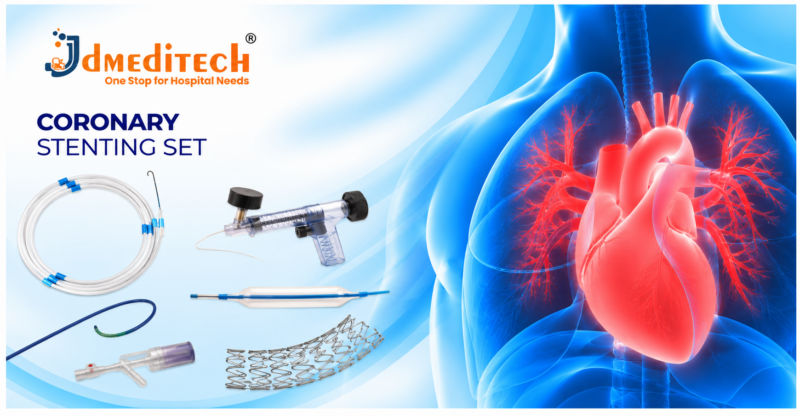
Coronary artery disease develops when atherosclerotic plaque builds up inside the arteries supplying blood to the heart muscle. Consequently, blood flow may become restricted, causing symptoms such as chest discomfort or shortness of breath.
In suitable patients, coronary angioplasty and stenting may improve blood flow through a narrowed artery. However, not every patient with coronary artery disease requires stent implantation.
JDMeditech offers selected interventional cardiology devices and catheter-based accessories for hospitals, cardiac centers, and international medical distributors. This guide explains coronary stenting equipment, common components, applications, benefits, and safety considerations.
What Is a Coronary Stenting Set?
A Coronary Stenting Set refers to a collection of specialized devices used to support coronary angioplasty and stent implantation.
During PCI, an interventional cardiologist introduces compatible catheters into the coronary circulation. Subsequently, a suitable balloon-expandable coronary stent may be positioned at a selected narrowing.
The stent acts as a small expandable scaffold that helps keep the treated artery open. As a result, blood flow through the affected segment may improve.
However, coronary stenting is an invasive treatment. Therefore, specialists must evaluate the patient’s condition, coronary anatomy, and available treatment alternatives.
Understanding Coronary Artery Disease
Coronary artery disease occurs when atherosclerotic plaque accumulates inside the coronary arteries.
Over time, plaque may narrow the arterial passage and reduce blood supply to the heart muscle.
For example, some patients develop angina during physical activity. In addition, sudden plaque disruption and clot formation may cause an acute coronary syndrome, including a heart attack.
Nevertheless, treatment depends on the severity of disease, symptoms, clinical presentation, and individual risk factors.
Why Is Coronary Stenting Performed?
Coronary stenting may be performed to treat selected significant coronary artery narrowings.
In particular, PCI can play an important role during certain acute coronary syndromes and in selected patients with persistent symptoms despite appropriate medical therapy.
Moreover, coronary stenting may be considered when coronary anatomy and clinical circumstances favor catheter-based treatment.
However, some patients benefit more from medication or coronary artery bypass grafting. Consequently, clinicians must choose treatment according to evidence-based guidelines and individual needs.
Common Components of a Coronary Stenting Set
Coronary intervention requires specialized devices that must work together safely. However, the exact components of a commercial set vary by manufacturer and configuration.
1. Coronary Stent Delivery System
A coronary stent delivery system carries a compatible stent to the intended treatment site.
Most contemporary coronary stents are balloon-expandable devices. Therefore, the stent is expanded using the delivery balloon during implantation.
Moreover, the stent diameter, length, and approved indications must match the patient’s clinical requirements.
2. Coronary Balloon Catheter
A coronary balloon catheter supports selected angioplasty procedures.
For example, specialists may use an appropriate balloon to prepare a narrowed lesion before stent placement.
In addition, selected noncompliant balloons may support post-dilation when clinically necessary.
3. PTCA Guide Wire
A percutaneous transluminal coronary angioplasty (PTCA) guide wire provides a pathway for compatible coronary intervention devices.
Furthermore, different guide wire designs support different anatomical and procedural requirements.
However, clinicians must select a guide wire according to its approved specifications.
4. Guiding Catheter
A guiding catheter provides access and support for selected coronary intervention devices.
Moreover, its configuration depends on the coronary anatomy and planned procedure.
5. Inflation Device
A compatible inflation device supports controlled inflation and deflation of selected angioplasty balloons.
In addition, many inflation devices include a pressure gauge.
Therefore, the clinical team must confirm compatibility with the selected balloon catheter and follow the approved pressure limits.
6. Hemostatic Y-Connector
A compatible Y-connector helps manage the catheter access system during selected interventions.
Furthermore, its valve design supports device passage while helping limit blood loss.
7. Introducer Sheath
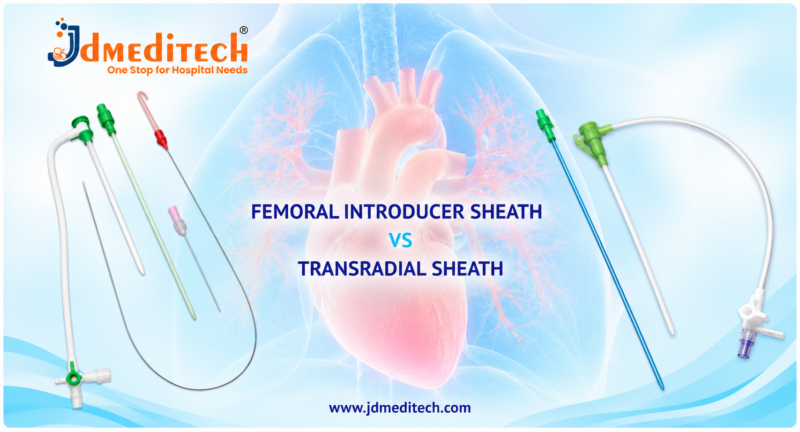
A suitable introducer sheath provides vascular access for compatible catheter-based equipment.
However, the sheath dimensions and access configuration depend on the selected procedure.
8. Torque Device
A compatible torque device may support controlled handling of selected guide wires.
Consequently, clinicians should verify its compatibility with the intended guide wire.
9. Contrast Injection Accessories
Selected procedures use suitable syringes, manifolds, and connection tubing for contrast administration.
Moreover, contrast administration requires appropriate clinical assessment and monitoring.
10. Intravascular Imaging Equipment
Intravascular ultrasound (IVUS) or optical coherence tomography (OCT) may support selected coronary interventions.
For example, intravascular imaging can help assess vessel dimensions and stent expansion.
Importantly, imaging systems are generally supplied separately from disposable coronary stenting kits.
Coronary Stenting Set Components and Functions
The following table summarizes commonly associated PCI devices and their primary functions.
| Component | Primary Function |
|---|---|
| Coronary Stent Delivery System | Delivers and expands a coronary stent |
| Coronary Balloon Catheter | Supports lesion preparation or selected post-dilation |
| PTCA Guide Wire | Provides a pathway for compatible intervention devices |
| Guiding Catheter | Provides coronary access and device support |
| Inflation Device | Supports controlled balloon inflation |
| Hemostatic Y-Connector | Supports catheter access and helps manage blood loss |
| Introducer Sheath | Provides vascular access |
| Torque Device | Supports selected guide wire handling |
| Contrast Accessories | Support contrast administration |
| Intravascular Imaging | Supports selected vessel and stent assessments |
Importantly, this table is educational and does not represent a verified JDMeditech packing list. Customers should confirm which components are supplied together and which require separate purchase.
Types of Coronary Stents
Different coronary stent technologies are available for selected clinical applications.
1. Drug-Eluting Stents
Drug-eluting stents release medication intended to reduce excessive tissue growth within the treated segment.
Consequently, contemporary drug-eluting stents are widely used during suitable PCI procedures.
However, device selection must follow the approved indications and relevant clinical guidance.
2. Bare-Metal Stents
Bare-metal stents provide mechanical support without a drug-eluting coating.
Nevertheless, they are used much less frequently in contemporary coronary intervention because modern drug-eluting stents generally offer better protection against restenosis.
3. Specialized Coronary Stent Designs
Different stent platforms offer various structural designs, materials, and delivery characteristics.
Therefore, specialists select a suitable device according to vessel anatomy, lesion characteristics, and approved product specifications.
Key Features of Coronary Stenting Equipment
1. Balloon-Expandable Stent Delivery
Suitable delivery systems support the placement and expansion of coronary stents.
Moreover, balloon and stent dimensions are selected according to the intended treatment site.
2. Compatibility With Guide Wires
Coronary intervention devices are designed for use with specified guide wire configurations.
Therefore, clinicians must confirm the relevant compatibility requirements.
3. Catheter-Based Treatment
PCI uses vascular access rather than conventional open-chest surgery.
As a result, suitable patients may undergo coronary revascularization through a minimally invasive approach.
4. Different Stent Sizes
Coronary stents are available in different diameters and lengths.
However, exact available dimensions depend on the manufacturer and product model.
5. Compatibility With Imaging Technologies
Selected procedures use angiography, IVUS, or OCT to support device selection and treatment assessment.
Furthermore, imaging may be particularly valuable during complex coronary interventions.
Clinical Applications of Coronary Stenting
Coronary stenting supports selected treatments for coronary artery disease.
1. Acute Coronary Syndromes
PCI is an important treatment option for selected patients experiencing acute coronary syndromes.
For example, emergency PCI may restore blood flow in an occluded coronary artery during certain heart attacks.
2. Symptomatic Coronary Artery Narrowing
Some patients experience angina because of significant coronary artery narrowing.
When appropriate medical therapy does not adequately control symptoms, PCI may provide additional relief in selected cases.
3. Selected Complex Coronary Lesions
Specialists may use PCI for selected complex coronary artery lesions.
However, the choice between PCI and coronary bypass surgery depends on anatomy, clinical risk, and expected outcomes.
4. Selected Restenotic Lesions
Restenosis occurs when a previously treated arterial segment becomes narrowed again.
Consequently, clinicians may consider further intervention according to the cause and severity of the narrowing.
5. Selected Multivessel Coronary Disease
Some patients with disease affecting multiple coronary arteries may undergo PCI.
Nevertheless, coronary bypass surgery may provide better outcomes for certain patients, particularly when coronary anatomy is complex.
How Is Coronary Stenting Performed?
A qualified interventional cardiologist performs coronary stenting in an appropriately equipped cardiac catheterization laboratory.
First, the clinical team reviews the patient’s symptoms, diagnostic findings, and overall medical condition.
Next, specialists select suitable vascular access equipment and coronary intervention devices.
During the procedure, coronary angiography helps identify the relevant arterial narrowing.
Afterward, the operator may use compatible guide wires and balloon catheters to prepare the selected treatment area.
When clinically appropriate, a suitable coronary stent is deployed within the narrowed segment.
Subsequently, the specialist assesses the result using angiography and, in selected cases, intravascular imaging.
Finally, the healthcare team monitors the patient and establishes an appropriate post-procedure treatment plan.
However, the exact technique depends on coronary anatomy, lesion characteristics, and clinical circumstances.
Potential Benefits of Coronary Stenting
1. Improved Coronary Blood Flow
Successful stent implantation can widen a significantly narrowed coronary artery.
As a result, blood flow through the treated segment may improve.
2. Relief of Angina Symptoms
PCI may reduce angina in selected patients with significant coronary artery disease.
Consequently, some patients experience improved exercise tolerance and quality of life.
3. Important Role During Heart Attack Treatment
Emergency PCI can be lifesaving in appropriate acute coronary syndromes.
Moreover, timely restoration of coronary blood flow may limit heart muscle injury in suitable patients.
4. Minimally Invasive Revascularization
Coronary stenting uses catheter-based vascular access.
Therefore, suitable patients may avoid open-chest surgery for selected coronary lesions.
5. Different Device Options
Modern PCI equipment includes various stent platforms, balloon catheters, and guide wires.
However, device selection must reflect clinical evidence and approved specifications.
Drug-Eluting Stent vs Bare-Metal Stent
Both stent types provide mechanical support to the treated coronary artery. However, their characteristics differ.
| Feature | Drug-Eluting Stent | Bare-Metal Stent |
|---|---|---|
| Medication Coating | Contains a drug-eluting system | No drug-eluting coating |
| Primary Function | Supports the artery and reduces tissue overgrowth | Provides mechanical support |
| Restenosis | Generally lower with contemporary devices | Generally higher |
| Current Clinical Use | Widely preferred for suitable PCI | Used much less frequently |
| Selection | Based on clinical and device requirements | Based on selected circumstances |
Importantly, the patient’s treatment plan must account for bleeding risk, antiplatelet medication requirements, and clinical circumstances.
Coronary Angioplasty vs Coronary Stenting
Balloon angioplasty and coronary stenting are related procedures, but they are not identical.
Balloon angioplasty uses a compatible balloon catheter to expand a narrowed coronary segment.
In contrast, coronary stenting also places a scaffold within the treated artery.
Moreover, balloon angioplasty may be performed before stent implantation or during selected procedures without an additional stent.
Therefore, clinicians must select the appropriate treatment strategy according to the patient’s coronary disease.
Risks and Safety Considerations
Coronary stenting is an invasive procedure that carries important risks.
Potential complications include bleeding, vascular injury, coronary artery dissection, perforation, and contrast-related adverse effects.
In addition, serious complications may include heart attack, stroke, or death.
Furthermore, a stent may become blocked by a blood clot, known as stent thrombosis.
Restenosis can also develop when the treated artery becomes narrowed again.
Consequently, clinicians must carefully assess the patient and select appropriate equipment, medications, and monitoring.
Why Is Antiplatelet Therapy Important After Coronary Stenting?
Antiplatelet medication helps reduce the risk of clot formation after coronary stent implantation.
For many patients, clinicians prescribe a combination of antiplatelet medicines for a defined period following PCI.
However, the medication choice and duration depend on the clinical presentation, bleeding risk, and other medical conditions.
Therefore, patients should never stop prescribed antiplatelet treatment without advice from their treating healthcare professional.
Recovery After Coronary Stenting
Recovery depends on the patient’s clinical condition and whether PCI was performed electively or during an emergency.
After the procedure, the healthcare team monitors the vascular access site, cardiac status, and potential complications.
Moreover, patients receive individualized instructions about medications, activity, wound care, and follow-up appointments.
Long-term management also includes attention to cholesterol, blood pressure, smoking, diabetes, and other cardiovascular risk factors.
However, new or severe chest pain, breathlessness, fainting, or other concerning symptoms require urgent medical evaluation.
How to Choose a Coronary Stenting Set
Hospitals and medical distributors should review the intended coronary intervention before purchasing equipment.
First, confirm whether the requirement involves a coronary stent delivery system, a PTCA accessory kit, or a broader PCI equipment configuration.
Next, verify the approved specifications and compatibility of all components.
Important Equipment Selection Factors
- Approved intended use
- Stent type and delivery system
- Stent diameter and length
- Balloon catheter dimensions
- Balloon pressure ratings
- Guide wire compatibility
- Guiding catheter compatibility
- Introducer sheath requirements
- Inflation device specifications
- Y-connector compatibility
- Radiopaque marker configuration
- Sterile packaging and labeling
- Single-use device classification
- Product shelf life
- Manufacturer instructions for use
- Applicable regulatory documentation
Furthermore, purchasing teams should confirm the exact packing list, available sizes, and product model before ordering.
Coronary Stenting Equipment and Cardiology Devices by JDMeditech
JDMeditech offers selected interventional cardiology devices and accessories for hospitals, cardiac catheterization laboratories, and international medical distributors.
Our cardiology product range includes selected PTCA guide wires, balloon-related accessories, introducer sheaths, connectors, and other catheter-based devices.
Moreover, customers can contact JDMeditech to discuss coronary stenting equipment availability, compatible product configurations, and technical documentation.
For more information, visit www.jdmeditech.com.
Frequently Asked Questions About Coronary Stenting Set
1. What is a Coronary Stenting Set?
A Coronary Stenting Set refers to selected medical devices used to support coronary stent implantation during PCI. However, exact components vary by manufacturer.
2. What is the purpose of a coronary stent?
A coronary stent helps maintain the opening of a treated coronary artery and supports blood flow through the segment.
3. Which instruments are used during coronary stenting?
Common equipment includes a coronary stent delivery system, guide wire, guiding catheter, balloon catheter, and compatible inflation accessories.
4. What is a drug-eluting stent?
A drug-eluting stent releases medication intended to reduce excessive tissue growth within the treated arterial segment.
5. Is coronary stenting the same as angioplasty?
Not exactly. Angioplasty involves balloon dilation, while stenting additionally places a scaffold inside the artery.
6. Does every coronary stenting kit include a stent?
Not necessarily. Product configurations vary. Therefore, customers must verify the actual supplied components.
7. Can a coronary artery become narrowed again after stenting?
Yes. Restenosis may occur, although contemporary drug-eluting stents reduce this risk compared with older bare-metal designs.
8. What is stent thrombosis?
Stent thrombosis is the formation of a blood clot within or near an implanted stent. It is a potentially serious complication.
9. Are antiplatelet medicines required after stenting?
Antiplatelet therapy is generally an important part of care after PCI. However, the exact regimen depends on the patient’s clinical circumstances.
10. Where can hospitals inquire about JDMeditech cardiology devices?
Hospitals and medical distributors can visit JDMeditech to request available product details and quotations.
Conclusion
A Coronary Stenting Set supports selected catheter-based procedures used to treat significant coronary artery narrowings.
Moreover, compatible stent delivery systems, balloon catheters, guide wires, and related accessories are important components of modern PCI.
However, coronary stenting carries significant risks and is not appropriate for every patient with coronary artery disease.
Therefore, healthcare professionals must select suitable devices and treatment approaches according to patient needs, clinical guidelines, and manufacturer specifications.
Contact JDMeditech for interventional cardiology instruments, PCI accessories, and international medical device inquiries.
Medical Disclaimer: This article provides general educational information and is not a procedural training guide. Qualified healthcare professionals must make all treatment and device-selection decisions according to clinical judgment, applicable guidelines, and approved manufacturer instructions.